



Key Takeaways
A careful Hb test depends on more than placing a tube in an analyzer. The technician must connect the request, specimen, instrument, quality controls, and clinical context into one reliable workflow.
- Confirm the request, patient identity, specimen type, and collection requirements before starting.
- Use clean collection and handling practices to protect sample integrity and staff safety.
- Mix and analyze the specimen according to the instrument’s validated instructions.
- Review controls, flags, reference ranges, and patient context before releasing a result.
- Document problems clearly and escalate results that remain technically or clinically inconsistent.
Understand the purpose of an Hb test
Hemoglobin testing is a focused laboratory measurement with a simple-looking workflow and a high need for consistency. It measures the amount of hemoglobin in blood, helping clinicians assess oxygen-carrying capacity and possible blood disorders. For technicians learning how to do hb test in lab, understanding the purpose comes before memorizing instrument steps.
What hemoglobin measures
Hemoglobin is an iron-containing protein inside red blood cells that carries oxygen from the lungs to the body’s tissues. The result is usually reported as a concentration, commonly in grams per deciliter, although the reporting unit depends on the laboratory system. The number describes the hemoglobin present in the sample; it does not, by itself, identify the cause of an abnormal result. A useful overview of the test’s clinical meaning is available in this guide to the hemoglobin test.
When clinicians order the test
Clinicians may request Hb testing during a routine evaluation, when anemia is suspected, or when symptoms such as weakness, dizziness, or unusual fatigue need investigation. The test can also support monitoring after blood loss or during treatment for a condition affecting hemoglobin. The order should be read in context rather than treated as an isolated number, especially when the patient has a known blood disorder or an ongoing illness.
Hb testing versus a complete blood count
An Hb test focuses on hemoglobin concentration, while a complete blood count includes several measurements of blood cells, such as red cell count, hematocrit, and white blood cell and platelet results. In many laboratories, Hb is measured as one component of a CBC rather than as a separate standalone procedure. A technician should confirm whether the request is for Hb alone or for the full panel so the correct specimen, test menu, and reporting workflow are used.
Factors that can affect hemoglobin levels
Hemoglobin values can shift with age, sex, pregnancy, altitude, hydration, diet, exercise, medications, and underlying disease. Collection conditions and specimen quality can also affect confidence in the result. The table below is a practical reminder of why the number should be interpreted alongside the request and patient information.
| Factor | Possible effect on interpretation | What the technician should do |
|---|---|---|
| Age or pregnancy | Reference intervals may differ | Use the laboratory’s approved interval |
| Hydration status | Concentration may appear higher or lower | Note relevant clinical information when available |
| Altitude or lifestyle | Physiologic adaptation may affect values | Avoid comparing with an unsuitable reference group |
| Collection or transport delay | Sample integrity may be compromised | Follow stability and rejection procedures |
These factors do not replace clinical judgment, but they explain why a result that seems unexpected should be reviewed rather than automatically corrected or repeated.
Prepare the patient and laboratory setup
Preparation reduces preventable errors before blood ever reaches the analyzer. Start by matching the order to the patient, then make sure the collection area, supplies, instrument, and reagents are ready. Clear preparation also gives aspiring technicians a repeatable routine instead of relying on memory under pressure.

Confirm the test request and patient identity
Check the patient’s identifiers against the request and the information on the collection label. Confirm the requested test, any priority status, and whether additional tests are being collected in the same draw. Identification errors are not minor administrative issues; they can attach an accurate measurement to the wrong person.
Explain the procedure and obtain cooperation
Explain that a small blood sample will be collected and describe what the patient may feel, using plain language. Ask about relevant concerns such as fainting during blood draws, and position the patient safely when needed. Calm, direct communication improves cooperation and helps the collector notice problems early.
Apply standard infection-control precautions
Use hand hygiene, appropriate gloves, sharps safety, and approved cleaning procedures for the collection and testing areas. Treat every blood specimen as potentially infectious, and dispose of needles immediately in the correct sharps container. The laboratory’s written safety policy should guide details such as spill response and personal protective equipment.
Check analyzer readiness and reagent status
Before accepting specimens, verify that the analyzer has completed required startup checks and that controls, reagents, waste containers, and maintenance status are acceptable. Detec’s nearly 30 years of laboratory experience and dedicated Dental School reflect the broader lesson that technical skill depends on disciplined preparation and training. Although Hb testing is a clinical laboratory task, the same precision mindset supports modern digital dentistry, where small process errors can affect an entire workflow.
Collect and handle the blood sample
A good analytical method cannot rescue a poorly collected specimen. Collection must preserve the blood’s condition, maintain traceability, and get the sample to testing within the laboratory’s stated limits. The exact tube, volume, and transport conditions should always come from the laboratory procedure and analyzer instructions.
Choose the appropriate specimen type
Many routine Hb measurements use anticoagulated whole blood, commonly collected in an EDTA tube, but the approved specimen type depends on the method and laboratory. Point-of-care systems may accept a capillary sample, while an automated hematology analyzer may require venous whole blood. Never substitute a specimen type simply because it is convenient; confirm acceptance criteria first.
Perform venous or capillary collection
For venous collection, identify the patient, select the site, disinfect it, allow the area to dry, and fill the tube to the required volume. For capillary collection, warm and clean the site as directed, use the correct puncture technique, and avoid excessive squeezing that can dilute or contaminate the sample with tissue fluid. Keep the procedure consistent, because collection technique can influence the reliability of the measurement.
A compact collection sequence helps new technicians build safe habits:
- Verify identity and the requested test before puncture.
- Prepare the site and collection materials without breaking clean technique.
- Fill the approved tube or device to its required volume.
- Mix anticoagulated blood gently according to the procedure.
- Inspect, label, and send the specimen without unnecessary delay.
This sequence is a guide to order, not a substitute for local policy. The laboratory’s collection manual remains the controlling document, particularly for difficult draws or pediatric specimens.
Label and transport the sample correctly
Label the specimen at the point of collection using the required identifiers, collection time, and any other mandated information. Compare the label with the request before transport, then use the approved container or carrier system. Protect the tube from extremes of temperature, agitation, and delays that fall outside the method’s stability limits.
Recognize unsuitable or compromised specimens
Clots, insufficient volume, leakage, incorrect labeling, severe hemolysis, and prolonged storage can make a specimen unsuitable. A tube that appears unusual should not be quietly placed on the analyzer and explained afterward. Follow the rejection policy, record the reason, and request recollection when the result cannot be trusted.
Perform the Hb test in the laboratory
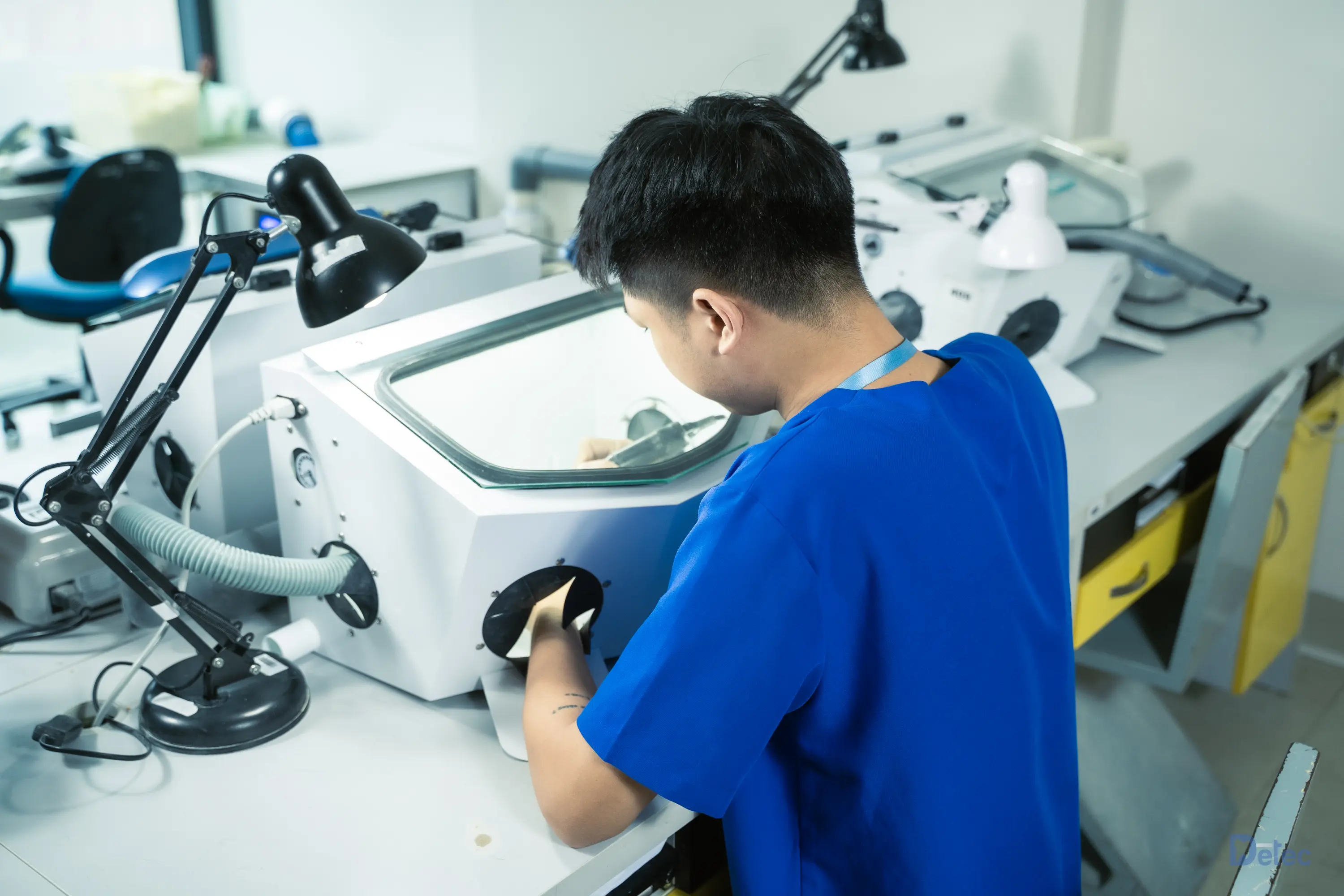
Once the specimen is accepted, analysis should follow a controlled sequence from mixing through documentation. Automated systems can make the measurement efficient, but they do not remove the technician’s responsibility to inspect the sample and review the output. This is where the practical question of how to do hb test in lab becomes an exercise in both instrument operation and judgment.
Mix the sample before analysis
Allow the specimen to reach the condition required by the laboratory procedure, then mix it gently and thoroughly. Inadequate mixing can leave cells unevenly distributed, while vigorous shaking can contribute to damage or bubbles. Inspect the tube again for clots, leakage, inadequate volume, or other reasons to stop before loading.
Load the specimen into an automated analyzer
Enter or scan the accession information, select the correct test or profile, and place the tube in the designated rack or sampling position. Confirm that the analyzer identifies the specimen correctly and that the requested test matches the loaded sample. If the system displays a mismatch, do not override it casually; resolve the identification or order problem first.
Use a point-of-care or manual method when appropriate
Point-of-care or manual methods may be appropriate when the laboratory has validated them for the intended setting, when access to a central analyzer is limited, or when a rapid result is needed under an approved protocol. These methods still require training, quality control, correct timing, and careful documentation. A different method is not automatically an inferior method, but it must be used within its validated scope.
Follow the instrument’s operating instructions
Use the current procedure for aspiration, reagent handling, maintenance, error recovery, and result review. Do not improvise dilution, recalibration, or repeat rules because a single result looks unusual. For broader background on available Hb methods and analyzers, technicians can review this methods and analyzers overview.
The instrument’s instructions should be paired with the laboratory’s quality system. That combination establishes what the analyzer can report, when it should flag a specimen, and when a supervisor must be involved.
Document the test run and sample details
Record the accession number, operator, analyzer or method, date and time, control status, relevant flags, and any corrective action. If a result is repeated, retain the original information and document why the repeat was performed. Good records make troubleshooting possible and allow another qualified person to reconstruct what happened.
Apply quality control and verify accuracy
Quality control is the bridge between an instrument reading and a reportable laboratory result. It checks whether the system is behaving as expected before patient values are accepted. The goal is not to make every result look normal; it is to recognize when the method is stable and when it needs attention.
Run normal and abnormal control materials
Run the required control levels at the frequency specified by the laboratory procedure, including after relevant maintenance, reagent changes, or calibration events. Review the values against the assigned ranges and apply the laboratory’s rules for acceptance. Patient results should not be released when controls indicate that the analytical run is not reliable.
Review calibration and maintenance records
Check that calibration is current and that scheduled maintenance has been completed and documented. Reagent lot numbers, expiration dates, storage conditions, and open-vial stability can all matter. Detec’s emphasis on advanced digital equipment and precision in its own laboratory context illustrates why technology must be supported by routine verification, not just purchased and left unattended.
Identify flags, errors, and unexpected results
Instrument flags may indicate sample interference, measurement limits, clots, aspiration problems, or a result that needs review. Compare the flag with the specimen appearance and the patient’s previous results when available. A technically valid number can still deserve a conversation if it is sharply inconsistent with the clinical picture.
Repeat testing when confirmation is needed
Repeat analysis only according to an approved rule, such as a control failure, instrument flag, specimen concern, or clinically significant discrepancy. First identify and correct the likely source of error; simply running the same problem again may reproduce the same unreliable result. If repeat testing remains inconclusive, involve the supervisor or laboratory director.
Interpret and report Hb results
Reporting is more than copying a number from the analyzer screen. The result must be checked against the correct reference interval, reviewed for flags, and considered with the information available on the request. Technicians generally do not diagnose the patient, but they do have a responsibility to communicate reliable findings and technical limitations.
Compare results with the laboratory reference range
Use the reference interval attached to the laboratory’s method and patient category rather than relying on a remembered “normal” value. Confirm the unit, decimal placement, and report comments before release. Reference intervals are tools for interpretation, not absolute boundaries that explain every patient’s condition.
Consider age, sex, pregnancy, and clinical context
Age, sex, pregnancy, altitude, hydration, symptoms, medical history, and treatment status can all shape the meaning of Hb. The same numerical value may require different interpretation in different patient groups. If a necessary demographic or clinical detail is missing, follow the laboratory process for clarification rather than guessing.
Distinguish possible anemia from elevated Hb
A low Hb result may be consistent with anemia, but the test alone does not establish its cause. A high result may reflect a physiologic or medical condition, or sometimes a concentration effect such as dehydration. The laboratory should report the measured result and appropriate comments or alerts, while the clinician determines the diagnosis and next steps.
Communicate critical or inconsistent findings
Follow the laboratory’s critical-value policy for urgent results and document who was contacted, when, and what information was communicated. If the result conflicts with specimen quality, controls, previous data, or the patient’s apparent condition, pause and investigate before final release when policy requires it. Clear escalation is part of accuracy, not a sign that the technician has failed.
Troubleshoot common Hb testing problems
Most Hb testing problems fall into a few recognizable groups: specimen quality, instrument performance, quality-control failure, or a mismatch between the result and the clinical situation. Troubleshooting works best when the technician changes one variable at a time and records each observation. Guessing can create a second error while hiding the first.
Resolve clotting, hemolysis, or insufficient volume
Inspect the tube and compare its volume and appearance with acceptance criteria. A clotted or badly compromised specimen may require recollection rather than further analysis, while a minor issue may be handled under a documented laboratory rule. Never add blood, dilute a patient sample, or transfer it to another tube unless the validated procedure specifically allows it.
Investigate analyzer alerts and failed controls
Read the exact alert, check the specimen position and aspiration path, and review reagent, waste, maintenance, and control status. If controls fail, stop patient reporting and follow the corrective-action procedure. Repeating controls after an undocumented adjustment does not demonstrate that the problem has been resolved.
Manage results that do not match the patient’s condition
First verify identity, specimen integrity, units, reference range, and instrument flags. Then compare with prior results or request a recollection when clinically and technically appropriate. A surprising value should lead to a structured review, not an automatic assumption that either the analyzer or the patient is wrong.
Escalate technical and clinical concerns appropriately
Contact the senior technologist, supervisor, laboratory director, or ordering team according to the concern and local policy. Include the accession number, observed issue, controls, repeats, specimen condition, and actions already taken. Aspiring technicians can build confidence by escalating early and presenting facts clearly rather than waiting until an uncertain result has already been reported.
Conclusion
A reliable Hb test follows a connected chain: correct request, verified identity, suitable specimen, controlled analysis, quality review, and context-aware reporting. Learning each step helps technicians protect patients and strengthens the precision expected across modern healthcare and digital dentistry. For teams seeking a capable laboratory partner, Detec Labs brings nearly 30 years of experience, digital laboratory operations, and direct access to expert technicians; you can also explore lab services to discuss a suitable workflow.
Explore Dental Lab Services
When your practice needs a laboratory partner for digitally enabled restorative work, review available services, ask about communication and quality processes, and choose a workflow that supports consistent clinical results.
Frequently Asked Questions
What does an Hb test measure?
It measures the concentration of hemoglobin in a blood specimen. Hemoglobin is the oxygen-carrying protein found in red blood cells.
Is an Hb test the same as a CBC?
No. Hb may be one measurement within a complete blood count, while a CBC also includes other red cell, white cell, and platelet measurements.
What specimen is commonly used for Hb testing?
Routine laboratory Hb testing commonly uses anticoagulated whole blood, often collected in an EDTA tube. The approved specimen depends on the analyzer and laboratory procedure.
Does a patient need to fast before an Hb test?
Fasting is not usually required for an Hb measurement alone, but preparation can differ when other tests are ordered at the same time. The ordering team’s instructions should be followed.
What can cause a low hemoglobin result?
A low result may be associated with anemia, blood loss, nutritional deficiency, chronic disease, or other conditions. Hb testing cannot identify the cause by itself.
What can cause a high hemoglobin result?
A high result may relate to dehydration, altitude, increased red cell production, or an underlying medical condition. Interpretation requires the patient’s context and the laboratory reference interval.
Why might an Hb test need to be repeated?
Repeat testing may be needed after a control failure, instrument flag, unsuitable specimen, identification concern, or result that conflicts with other available information. The reason for repeating should be documented.


