



Key Takeaways
Profitability in dental laboratory operations results from balancing technical precision with scalable business processes. Success depends on understanding your specific market niche, managing overhead costs, and adopting digital workflows.
- Regional market competition heavily influences your pricing power and ability to attract local clients.
- Net profit in laboratories often rises significantly when businesses specialize in high-margin services like implant reconstructions.
- Operational efficiency remains a primary driver of success, particularly when labs shift from manual to digital fabrication.
- Maintaining long-term partnerships with dental practices provides the consistent revenue stream necessary for year-over-year growth.
- Continuous education, such as programs offered at the Detec Dental Training School, remains critical for keeping staff skills aligned with modern manufacturing standards.
Factors that determine dental lab owner compensation
Determining owner compensation requires looking at how a lab functions within its specific economic ecosystem. Regional market conditions, local cost of labor, and the complexity of services offered dictate the ceiling for potential laboratory earnings. Business owners must look beyond gross revenue to understand how their operational structure supports their personal take-home pay.
Geographic location and regional market competition
The physical location of your laboratory significantly impacts daily operational costs and the competitiveness of your price points. Labs situated in high-cost-of-living metropolitan areas often face higher payroll and real-estate overheads, which must be offset by premium pricing structures. Meanwhile, owners in emerging markets or regions with lower overheads may find competitive pricing easier to maintain, though they must factor in shipping logistics to reach their broader client base across various regions.
Lab size and the number of active hourly employees
Scaling a laboratory inherently changes the owner’s role from a hands-on technician to an administrator focused on managing staff throughput. As a lab grows, payroll expenses for skilled technicians become a massive portion of the balance sheet. Owners of larger, high-volume manufacturing facilities often see different compensation structures compared to those running boutique studios, where the owner themselves performs the bulk of high-skill restorative work.
Specialized service offerings versus general restorative workflows
Focusing on niche segments can lead to significantly higher profit margins than providing only general restorative work. Services like All-on-X full arch restorations or specialized cosmetic veneers command higher fees because providers deliver high clinical value that justifies a premium price. Owners who hone these specialized skills often report higher satisfaction and better personal compensation because they avoid the race to the bottom associated with commodity-level crowns and basic prosthetic work.
Long-term client relationships and contract stability
Predictable revenue flows directly into a stable income for the owner. Labs that prioritize long-term clinical partnerships over transactional business models avoid the constant and costly search for new clients. When an owner secures contracts that guarantee recurring volume, they can predict their capacity needs with better accuracy, which allows for leaner staffing and more efficient use of machinery, directly impacting the bottom line.
Analyzing average profit margins in modern dental laboratories
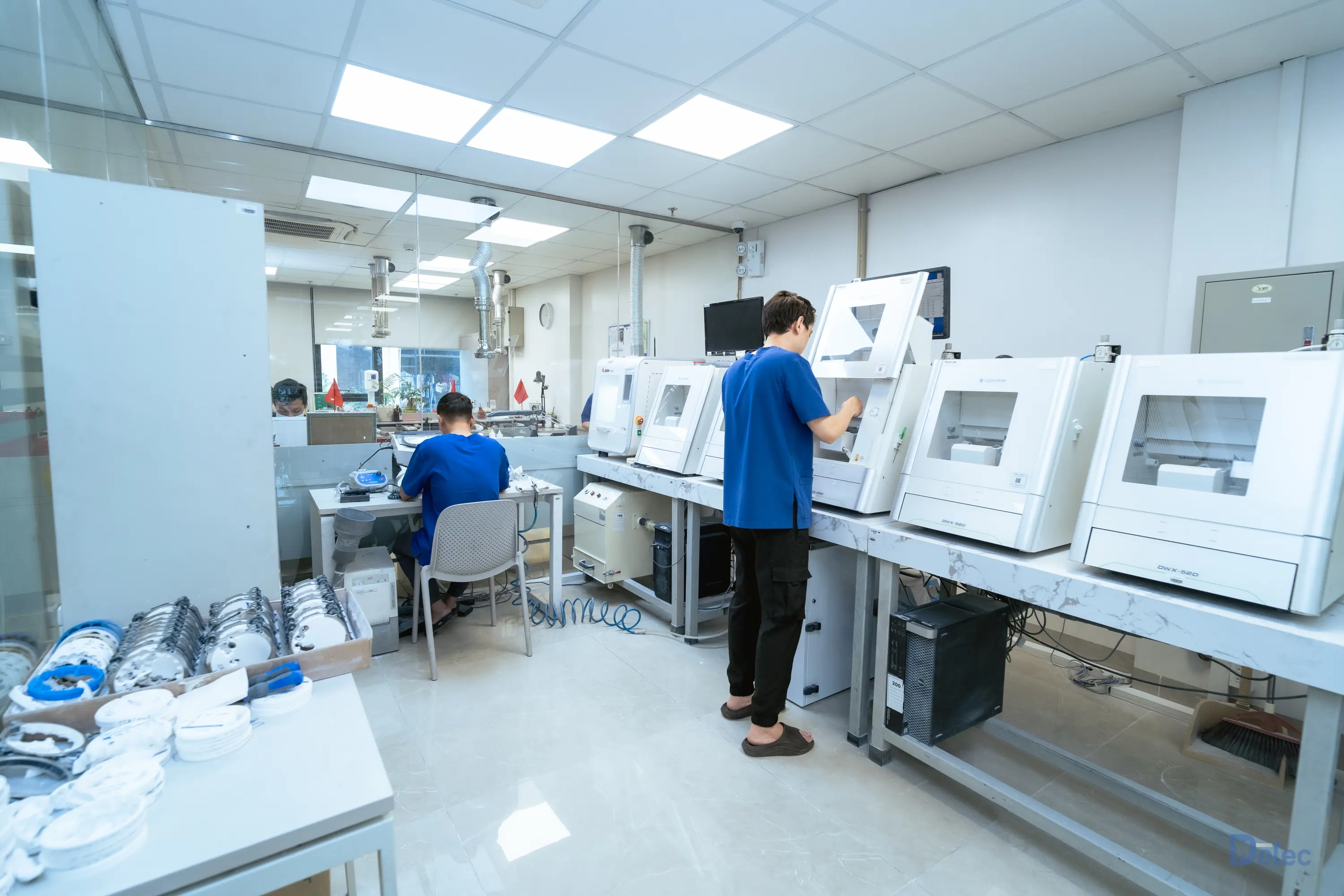
Running a laboratory with tight margins requires constant monitoring of how much capital leaves the business versus what returns to it. Industry standards for dental labs suggest that operational efficiency is the only reliable way to maintain consistent profitability. Understanding the distinction between revenue and profit is the first step for any owner who wants to grow their enterprise rather than just sustain it.
Industry standards for net profit benchmarks
Most established laboratories aim for net profit margins between 15% and 25%, depending on their scale and focus. The financial performance of a full-service lab was recently discussed in a forum analysis of operations, where labs generating significant annual revenue reported varying bottom lines based on their service mix. Owners must verify their personal expenses don’t blur the line between business profit and personal compensation.
Revenue growth projections for high-end boutique labs
High-end boutique labs often focus on lower volume and higher complexity, which can lead to higher profit percentages per case. By focusing on elite artistry—a hallmark of Detec’s 30-year expertise—these labs build reputations that allow for premium pricing. This growth path requires a commitment to excellence that limits the number of cases produced but increases the net return on every individual unit delivered to the clinician.
Managing seasonal fluctuations and peak capacity periods
Laboratories often face periods of intense demand followed by lulls, which can wreak havoc on cash flow. Savvy owners manage these changes by using detailed scheduling tools to stagger work and prevent idle time for high-cost milling equipment. During slower months, investing time into internal training or maintenance ensures that when peak season returns, the lab operates at maximum efficiency without risking quality.
Setting competitive pricing structures for long-term financial health
Pricing should not just be a reaction to what competitors charge in the local market. Owners must calculate all inputs—including the time of expert technicians—to ensure that every job contributes positively to fixed and variable costs. Achieving financial sustainability often means rejecting low-margin work that consumes too much time, effectively freeing up desk space for more lucrative, specialized cases.
Assessing the impact of different business models
The choice of business model defines the daily rhythm of the facility and the long-term potential for profitability. Every owner must decide if they are building a large manufacturing hub or a precision-focused design studio. Each path brings distinct operational demands that fluctuate based on technology adoption and client needs.
Benefits of operating a focused, boutique high-end laboratory
Small-scale labs often provide the highest level of craftsmanship because they prioritize direct oversight of every restoration. This model allows the owner to maintain close relationships with dentists who appreciate attention to detail. These clients often remain loyal even when cheaper options are available elsewhere because they trust the consistency and quality provided by the owner.
Scaling strategies for high-volume manufacturing environments
Scaling requires moving away from labor-intensive traditional workflows and embracing automation. In high-volume settings, the primary goal is maintaining throughput levels that can justify the overhead expenses of large CAD/CAM departments. Profitability here is achieved by shaving pennies off production costs for every unit, making volume the engine of all financial growth.
Advantages of hybrid models and multi-facility ownership
Some owners leverage hybrid models to combine local service with off-site manufacturing efficiency. By partnering with advanced digital dental labs for large-scale milling, a business can maintain a local presence for client consultations while keeping production costs low. This hybrid approach helps business owners stay competitive in price while offering their clients the convenience and trust associated with a domestic partner.
Choosing between local client acquisition and global logistics
Deciding your reach dictates your marketing spend and logistical complexity. Local labs thrive on face-to-face interaction and quick delivery times. Global operations, while more complex to manage due to shipping and customs, can tap into a far wider pool of work. Successful owners choose one, master it, and only expand to another when current systems provide excess margin.
Managing operational expenses and laboratory overhead
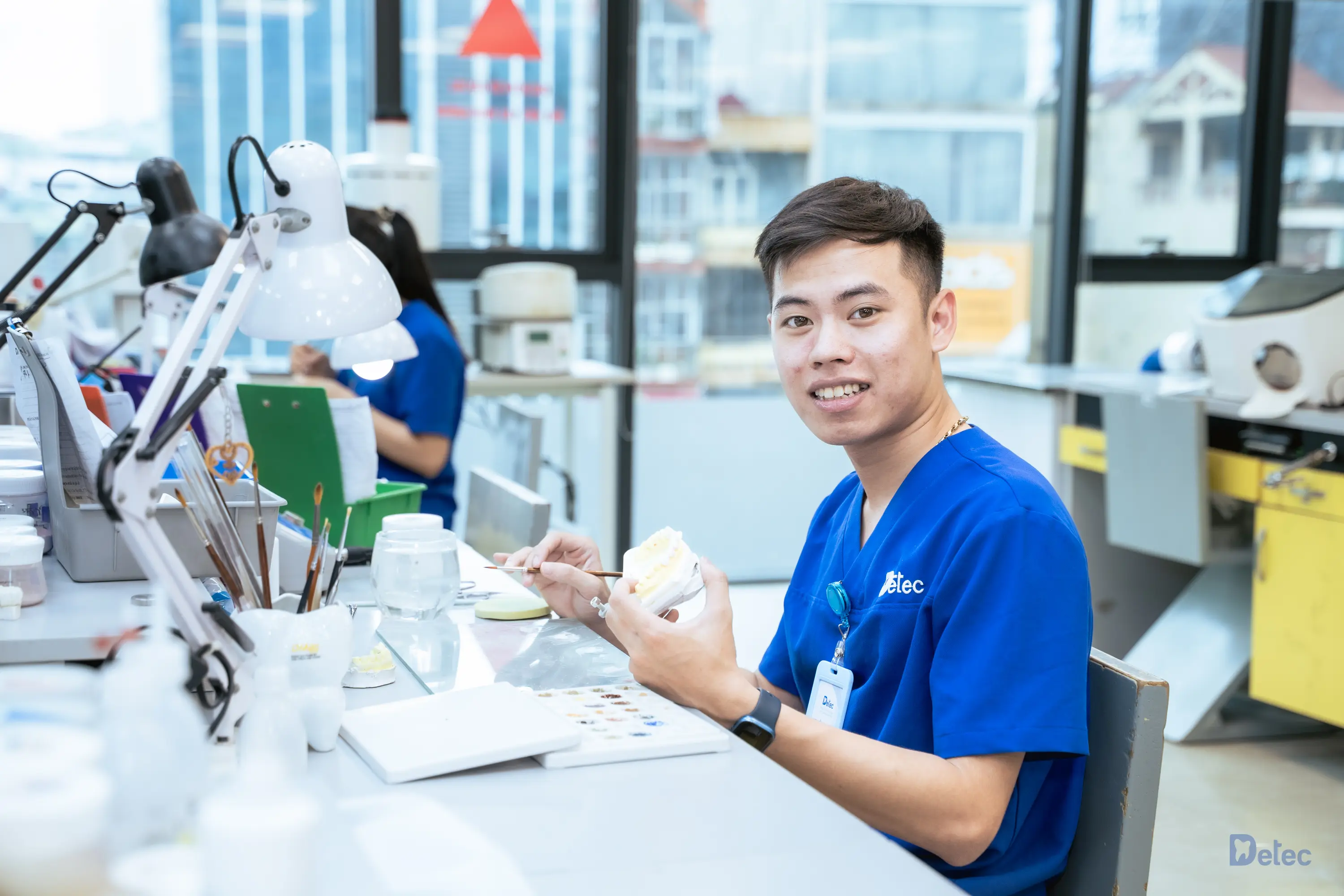
Overhead is the primary antagonist to profitability in the dental lab space. Keeping fixed and variable costs under control requires an eagle eye on consumable spending and a conservative approach to equipment financing. Managing these expenses is a core skill for any owner looking to maximize their personal draw from the business.
Balancing material costs with premium product quality standards
Owners must weigh the cost of high-grade materials against the risk of reduced quality and potential remakes. Using lower-cost materials might look good on a monthly expense report, but the hidden cost of failed restorations often ruins profitability over time. Opting for reliable CAD/CAM dental laboratory technology ensures consistency, which reduces waste and lowers total acquisition costs for production consumables.
Investing in skilled technician labor and internal training programs
Human capital is your most valuable asset, yet it is also the most expensive to acquire and maintain. Providing continuous learning opportunities is the best way to develop and retain talent. By fostering an culture of growth, you reduce turnover—a silent killer of profitability—and ensure that your team can tackle more complex, high-margin projects.
Controlling recurring costs for hardware maintenance and software licenses
Digital tools are essential, but the subscription and maintenance fees accumulate rapidly. Owners must track the usage rates of all software platforms and prioritize only those that contribute directly to increased throughput or higher quality. Regularly reviewing service contracts can reveal significant savings, allowing owners to move funds toward growth-oriented initiatives instead.
Optimizing international shipping and logistics for digital case files
The reliance on secure digital dental lab portals reduces the need for physical shipping, but logistics remain a factor for the final restoration. Modern labs minimize shipping overhead by using express partnerships with reliable tracking. For those handling cross-border orders, streamlined documentation processes prevent customs delays that threaten profitability and clinical satisfaction, keeping the focus entirely on the delivery of the restoration.
The role of digital technology in enhancing laboratory profitability
Digital technology acts as a force multiplier for owners willing to invest in the right systems. The transition toward digital dentistry isn’t just about speed; it’s about predictable precision that minimizes chairside adjustments and remakes. This reliability is exactly what helps a lab secure its place in a competitive market as a premium provider.
Shifting operations from physical impressions to digital workflows
Adopting digital scanning transforms a lab’s ability to interact with dental practices globally. When a team can submit your digital case through a secure portal, the time between the patient chair and the lab bench shrinks dramatically. This speed allows for faster turnover and higher patient satisfaction, which the referring dentist will inevitably reward with more referrals.
Increasing daily throughput with automated CAD/CAM milling processes
Automation shifts hours of manual labor into minutes of machine process time. Once the milling operation is set, technicians can focus on quality control, finishing, and staining, which are high-value additions that clinicians are willing to pay for. Automated milling units serve as the backbone of modern scalability, enabling labs to handle growth without a linear increase in staff size.
Reducing costly remakes through advanced design software and 3D scanning
Remakes are pure loss, both in material costs and the labor required to re-do the work. Advanced design software and precise 3D scanners reduce human error at the start of the process, which is the most effective way to protect your profit margin. By ensuring the digital architecture is perfect before the first ceramic block is milled, owners create a workflow that is resilient and highly profitable.
Partnering with digital manufacturing platforms to streamline production
For smaller labs, outsourcing the heavy milling to a high-tech partner can be the key to staying lean. This allows the shop to maintain a focus on their specific clinical relationships while still having access to industrial-strength production capabilities. It’s a strategic way to manage overhead while growing market share.
Strategic growth paths for future-focused laboratory owners
Growth does not happen in a vacuum; it requires a deliberate roadmap of where the lab will be in three to five years. Owners should diversify their offerings and solidify their standing as authorities in the industry to ensure they remain relevant. The goal is to move from being a simple service provider to a high-value strategic partner.
Developing proprietary products or innovative value-added services
Labs that move beyond standard products to develop proprietary solutions set themselves apart. Creating or partnering on unique restorative workflows forces the market to look at your lab as a unique resource. This leads to higher pricing power and better long-term retention of key clinical accounts.
Leveraging expert training programs to establish industry authority
Knowledge is a commodity that can be traded for prestige and influence. By hosting workshops or facilitating certification programs, lab owners transform their space from a mere workshop into an educational hub. This builds trust with potential clients who want to work with someone who clearly knows the technical edge of the industry.
Seeking professional certifications to justify premium pricing tiers
Certifications provide third-party validation that the laboratory operates at the highest standard. Adherence to ISO 13485 or similar quality standards acts as a proxy for trust in the clinician’s eyes. It justifies higher price points because the dentist knows that the final restoration is built with proven, safe, and reproducible methods.
Diversifying into orthodontic aligners and specialized restorative solutions
| Service Area | Scaling Potential | Profit Complexity |
|---|---|---|
| Standard Crowns | Moderate | Low |
| Implant Surgery | High | Moderate |
| Custom Aligners | Very High | High |
As shown in the table above, the laboratory industry is shifting toward more specialized services to maintain growth. Diversifying your labor force’s skills into clear aligner workflows provides a new revenue stream that often operates on a recurring basis. This is a vital strategy for owners tired of the thin margins associated with traditional fixed restorations alone.
Conclusion
Profitability for a dental lab owner is built upon a foundation of precision, efficiency, and a deep commitment to the professional relationship with dentists. By embracing digital technology and focusing on service segments that offer higher value, lab owners can overcome common financial challenges and build a sustainable, thriving business. success comes not just from the quality of the restoration delivered but from the operational discipline applied at every stage of the manufacturing journey.
Frequently Asked Questions
How does a dental lab owner begin the transition to a fully digital workflow?
Transitioning starts with investing in the essential digital triad: an intraoral scanner in the dental office, design software in the lab, and a CAD/CAM milling unit. Owners often begin by outsourcing the milling to a larger partner while setting up their in-house design capabilities to gain control over the quality of the final outcome without immediate large-scale capital expenditure.
What represents the biggest source of waste in a typical dental laboratory?
Remakes and the labor hours consumed to rectify them constitute the primary source of financial loss. Every minute spent re-doing a crown is a minute lost that could have been used to produce new billable work, plus the added material costs lead to significant erosion of annual profit margins.
How can a new lab owner optimize overhead expenses early on?
New owners should focus on a lean inventory model, ordering consumables on a just-in-time basis to free up cash flow. Additionally, reviewing utility contracts and choosing multi-purpose equipment that handles multiple types of restorations can prevent the need for redundant, expensive hardware that clutters the lab floor.
Is specialization more profitable than offering a full-service catalog?
Specialized labs often achieve higher profit margins per case because they cultivate unique technical skills that are harder for competitors to replicate. While full-service labs have the advantage of being a "one-stop-shop," the price pressure in common categories like simple crowns is intense, often making specialized, high-margin, complex work more lucrative for the owner operator.
What are the key metrics an owner should track to ensure financial health?
Owners should closely watch their cost-of-goods-sold per restoration, the average turnaround time per unit, and their weekly overhead-to-revenue ratio. Keeping a regular pulse on these three figures allows for quick corrections before a dip in efficiency turns into a monthly operational loss.
How often should a dental lab review its pricing strategy?
Pricing should be reviewed at least annually to account for inflation in material costs and shipping. If the workload is consistently high but the take-home profit is low, it is a clear signal that the lab is not charging enough to cover the true cost of the expertise and technology provided, and a price adjustment is likely necessary.
Why is technician certification so important for a laboratory’s growth?
Certification acts as a stamp of professional legitimacy that dentists rely on when vetting their clinical partners. It demonstrates that the lab team understands the science of materials and restorative physics, which provides the trust required to win larger, more profitable contracts and build consistent long-term partnerships.


