



Key Takeaways
Dental lab ownership can be financially rewarding, but income depends on far more than monthly sales. The strongest businesses connect careful pricing, productive teams, reliable quality, and steady clinical relationships.
- Owner income may come from both a salary and the lab’s remaining profit.
- Case mix, pricing, labor, remakes, and overhead shape the final margin.
- Digital workflows can improve consistency, capacity, and production visibility.
- Specialization may support stronger pricing, but it also requires deeper expertise.
- A useful forecast separates conservative assumptions from ambitious growth targets.
Understanding dental lab owner income
The question “how much do dental lab owners make?” has no single answer. A lab owner may earn a regular salary for day-to-day work, receive distributions from the company, or do both. Revenue can look impressive while cash available to the owner remains modest if payroll, equipment, materials, and receivables are absorbing it.
A more useful approach is to study the relationship between revenue, operating profit, and personal compensation. The dental lab profitability guide offers a useful companion perspective on location, lab size, specialized services, and growth planning.
Owner salary versus business profit
An owner who works as a technician or manager should usually budget a market-based salary as an operating expense. That keeps the business results honest and shows whether the lab works without treating unpaid owner labor as free. Profit is what remains after that salary and the other operating costs have been accounted for.
Some owners take less salary while reinvesting in equipment or staff. Others take more cash during mature years. Neither choice, by itself, proves that the underlying business is more profitable.
Typical revenue ranges by lab size
Revenue varies with the number of active accounts, cases completed, average price per case, and the services offered. A small boutique lab may have limited volume but a high average case value, while a larger full-service operation may depend on repeatable production across many accounts. Forum discussions sometimes cite very large revenue figures for 10-to-20-person labs, but those are anecdotal examples rather than industry benchmarks; one such discussion is available in this full-service lab revenue discussion.
For planning, use your own order history wherever possible. Count cases by category, estimate realistic monthly capacity, and avoid assuming that every technician hour will become billable production.
How location and market demand affect earnings
Location influences wages, rent, shipping patterns, taxes, and the density of potential dental customers. A lab in a major metropolitan area may access more restorative demand but face higher payroll and facility costs. A regional or international operation may control expenses differently while needing stronger logistics and communication systems.
Demand also depends on the local mix of general dentists, specialists, multi-location groups, and practices offering higher-value restorative treatment. A clear market position is often more valuable than simply being nearby.
Why income can vary significantly between owners
Two labs with similar sales can produce very different owner incomes. One may have disciplined remake tracking and stable payment terms; the other may carry excessive rework, underpriced accounts, or idle equipment. The owner’s role matters too: a hands-on technician, sales-focused operator, and largely absentee owner have different compensation needs.
That is why salary articles about technicians should not be confused with ownership forecasts. Technician earnings describe a role, while ownership income reflects the risk and return of the whole operation.
The main factors that determine profitability
Profitability is built case by case, not declared at the end of the year. Each restoration carries direct costs, technician time, shipping requirements, and a share of general overhead. A lab that measures those elements can make better pricing and staffing decisions before a problem becomes a cash-flow crisis.
Modern digital dentistry adds another layer of precision. Scanning, design, manufacturing, finishing, and inspection must work together, because a small error early in the chain can create adjustments or remakes later.
Case volume, pricing, and customer mix
Volume creates opportunity only when the lab can complete cases profitably and on time. Pricing should reflect materials, labor, complexity, communication, shipping, and the level of support expected by the clinic. A customer mix weighted toward simple, price-sensitive work may produce less contribution than a smaller group seeking complex restorative planning.
Review each account by revenue, margin, remake rate, turnaround expectations, and payment behavior. The goal is not to reject every low-priced case, but to understand what each relationship contributes.
Labor costs and technician productivity
Technician payroll is often the largest controllable expense. Productivity is not simply the number of units completed; it includes first-pass quality, handoff clarity, setup time, and the time spent correcting avoidable mistakes. A talented technician can still be unproductive inside a poorly organized workflow.
Track capacity by process rather than relying only on total headcount. This reveals whether the constraint is design, milling, ceramic finishing, quality control, or communication with the clinic.
Materials, remakes, shipping, and overhead
Materials should be assigned to the cases that consume them, while rent, software subscriptions, utilities, insurance, maintenance, and administrative payroll should be allocated across production. Remakes deserve special attention because they consume labor and materials while delaying collection. Shipping can be equally revealing when cases travel long distances or require multiple movements.
A simple monthly review can focus on four operational signals:
- Material cost per case category.
- Remake and adjustment rates by technician or workflow.
- Shipping cost per completed case.
- Fixed overhead as a percentage of collected revenue.
These figures turn a vague concern about “margin pressure” into a manageable operating conversation. If one category repeatedly misses its target, the answer may be a price change, process redesign, training investment, or a decision to outsource part of the work.
The impact of specialization and premium services
Specialization can improve pricing power when the lab has genuine skill, dependable quality, and a clear reason for dentists to choose it. Implant work, orthodontic appliances, and aesthetic restorations may require more planning and communication than routine production. They can also expose the lab to more demanding expectations and greater remake costs.
Premium positioning must therefore be supported by evidence: qualified staff, documented processes, reliable turnaround, and a portfolio of work. Selling a complex service without the capacity to deliver it consistently usually harms margins rather than improving them.
Comparing dental lab business models
There is no universally superior lab model. The right structure depends on the owner’s technical strengths, available capital, target customers, and tolerance for operational complexity. Some businesses win through broad in-house capability, while others stay lean by concentrating on design, relationships, and carefully selected production partners.
For dental practices, the business model also affects how easily volume can grow. A direct dental lab partnership can add production capacity without requiring a clinic to build its own infrastructure, but the arrangement still needs clear standards and communication.
Full-service labs with in-house production
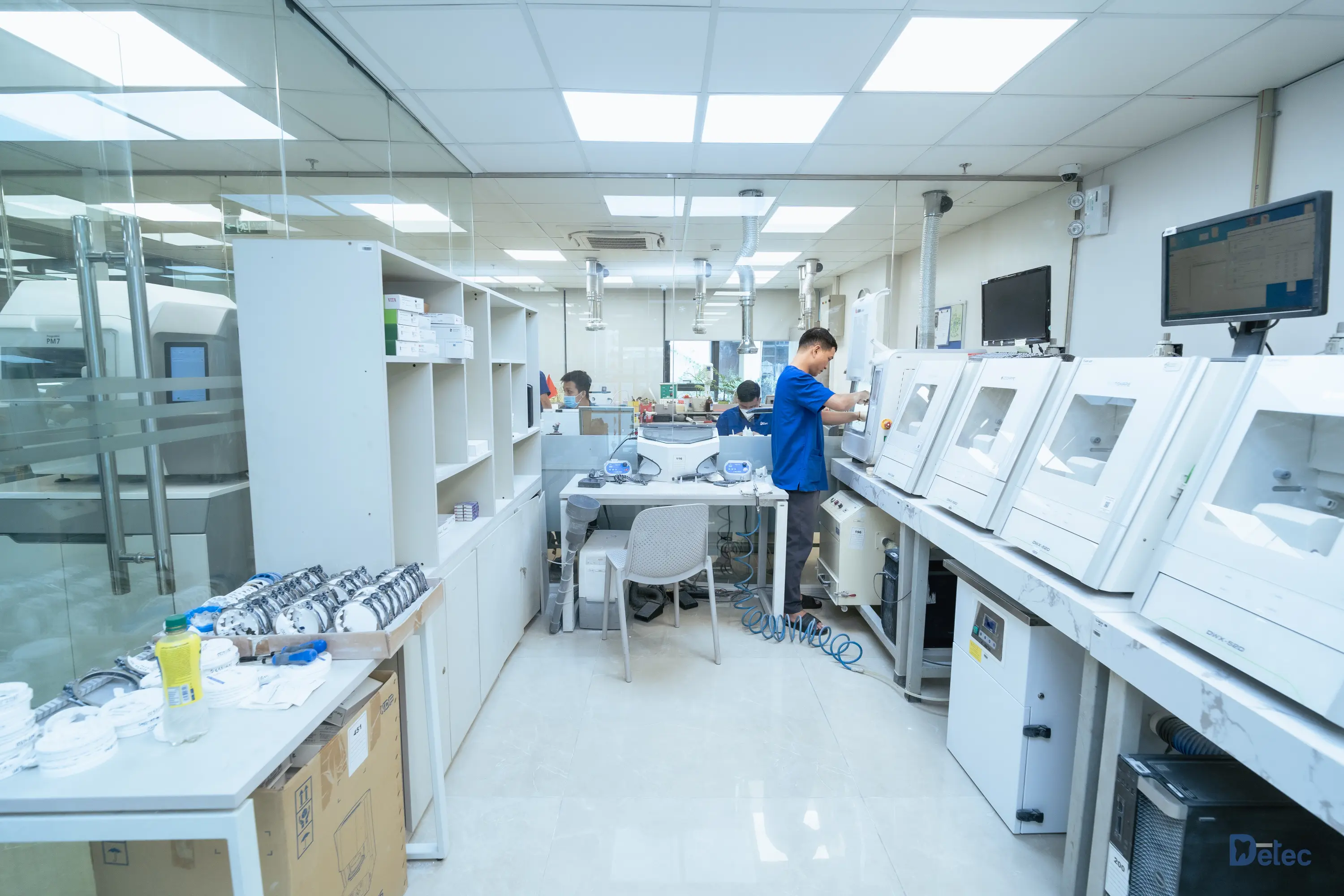
A full-service lab can control more of the process, from intake and design through fabrication, finishing, and quality checks. That control may support consistent communication and scheduling, though it requires substantial investment in equipment, facilities, maintenance, and people. Idle capacity becomes expensive, particularly when demand is seasonal.
Owners should ask whether every in-house capability is economically justified. Some processes are strategic differentiators; others may be better handled by a trusted specialist until volume makes internal production sensible.
Digital-first and CAD/CAM laboratories
Digital-first operations work from electronic case information and use scanning, design software, and CAD/CAM manufacturing to organize production. Digital files can improve repeatability and make cases easier to review, but software alone does not remove the need for trained judgment. Margins improve when digital tools reduce wasted time, not when they simply add another subscription.
A useful digital laboratory scaling guide explains how digital files, STL workflows, scanning, and CAD/CAM can support higher capacity without automatically increasing infrastructure overhead.
Niche labs focused on implants, orthodontics, or aesthetics
A niche lab can build a strong reputation by becoming unusually good at a defined clinical need. Focus may simplify marketing and training, and it can make equipment choices more deliberate. The tradeoff is concentration risk: if a major account leaves or demand shifts, a narrow operation may have fewer ways to replace revenue.
The best niche businesses keep learning. They also explain their clinical and technical boundaries clearly, so the sales promise matches what the team can reliably produce.
Outsourcing, partner labs, and hybrid operations
Outsourcing can convert some fixed costs into variable costs and let an owner accept work beyond current internal capacity. A hybrid operation may retain high-value design, finishing, or quality control while sending selected production steps to a partner. The economics depend on the partner’s price, turnaround, shipping, remake policy, and the owner’s ability to coordinate the handoff.
Quality assurance should never disappear simply because a process is external. The owner remains responsible for the customer experience and needs a repeatable method for reviewing partner performance.
The costs of starting and running a dental lab
Starting a lab requires more than buying a mill and renting a room. The owner must fund a safe, efficient facility, recruit people who can work with precision, establish quality systems, and survive the time between completing a case and collecting payment. A credible business plan should show these commitments month by month.
The dental lab startup roadmap is a helpful reference for thinking through services, space, digital workflows, and the risks of launching a technology-focused operation.
Equipment, software, and facility investments
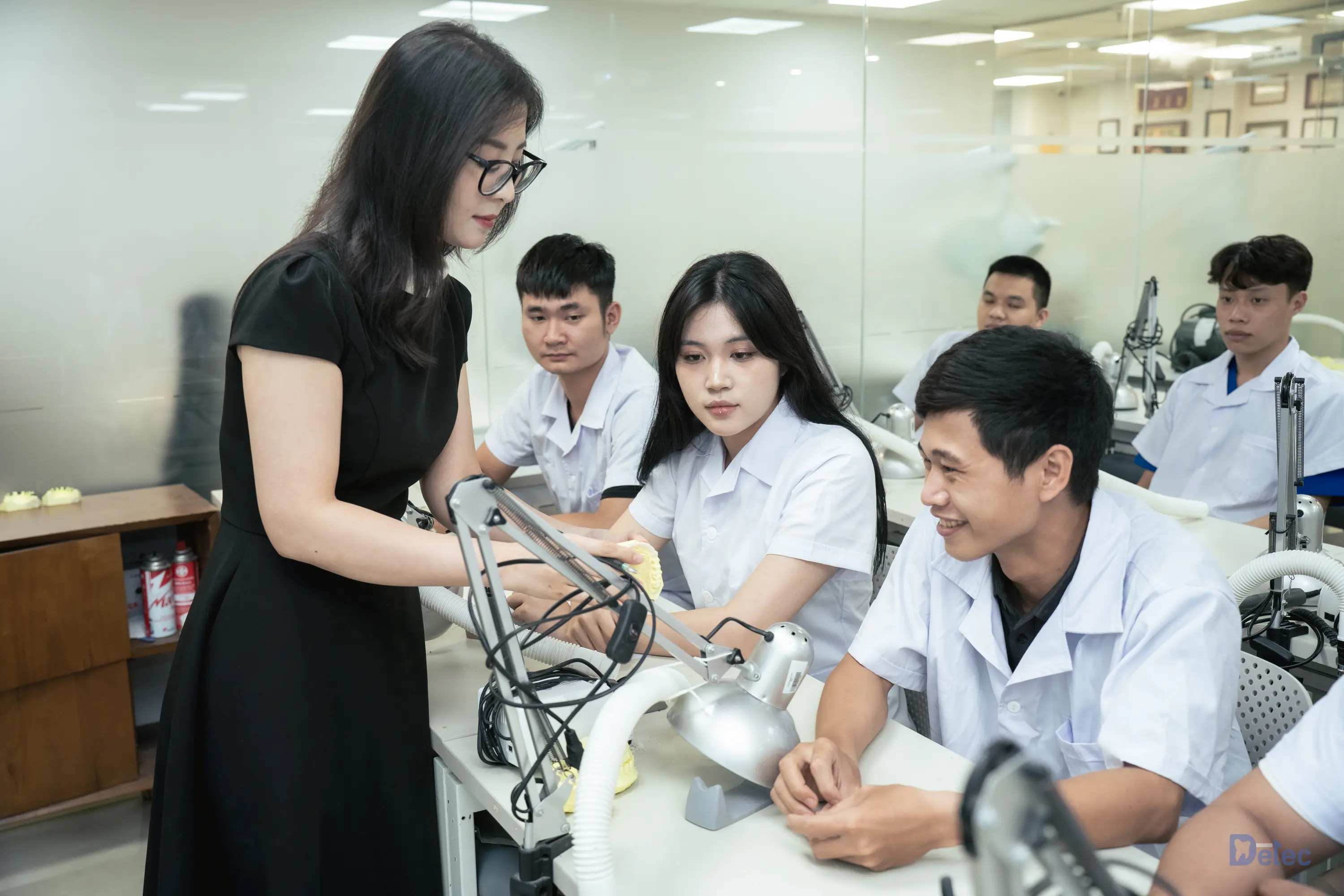
Capital spending may include scanners, milling or manufacturing equipment, furnaces, workstations, compressors, dust control, finishing tools, design software, and backup systems. A smaller initial setup can reduce debt, but limited capacity may restrict the services the lab can accept. A larger setup can shorten production bottlenecks while creating depreciation, maintenance, and utilization pressure.
Model the purchase around expected throughput rather than enthusiasm for a machine. Include installation, training, consumables, service agreements, upgrades, and downtime in the calculation.
Hiring, training, and retaining skilled technicians
Skilled technicians are not interchangeable units of labor. They bring judgment about anatomy, materials, occlusion, fit, aesthetics, and when a case needs clarification. Competitive pay matters, but so do clear progression, manageable workloads, good supervision, and opportunities to learn digital methods.
Detec has nearly 30 years of experience in dental craftsmanship and technology, and its dedicated Dental School reflects the value of developing the next generation of technicians. For an aspiring technician, formal learning and supervised repetition can be as important as access to modern equipment.
Quality control, certifications, and regulatory requirements
Quality systems should define who checks a case, what is recorded, how deviations are handled, and when a case returns for correction. Requirements vary by jurisdiction and product category, so owners should obtain professional regulatory advice rather than relying on informal assumptions. Documentation also helps train new staff and identify recurring defects.
A prospective owner should budget for audits, certifications where applicable, calibration, traceability, workplace safety, and ongoing education. These are operating requirements, not decorative additions to a website.
Cash flow management and payment terms
A profitable lab can still fail if it cannot pay people and suppliers while waiting for customers to settle invoices. Forecast collections separately from billed revenue, set sensible credit limits, and review overdue accounts every week. Deposits or staged billing may be appropriate for certain complex cases, depending on the market and customer relationship.
Keep a reserve for equipment repairs and slower periods. Growth consumes cash before it produces dependable profit, especially when the lab hires ahead of demand or accepts accounts with long payment cycles.
How technology can improve a lab’s margins
Technology improves margins when it reduces avoidable variation and makes work easier to plan. The precision required in modern digital dentistry still depends on accurate clinical data, thoughtful design, skilled finishing, and final inspection. A digital label on an inefficient process will not fix the process.
Owners should evaluate tools by their effect on turnaround, first-pass acceptance, labor hours, material waste, and communication. Those measures matter more than the novelty of the equipment.
Digital impressions, scanning, and workflow efficiency
Digital impressions and scanning can reduce physical handling and make case information easier to transmit, review, and archive. A clear intake protocol is essential: files need complete prescriptions, usable scans, shade information where relevant, and a direct route for questions. Missing information can erase the time saved by a digital submission.
Digital workflows may also support collaboration across locations. The benefit comes from consistent naming, approvals, version control, and handoffs—not from scanning alone.
CAD/CAM manufacturing and production consistency
CAD/CAM can make design and manufacturing more repeatable when the lab controls its libraries, parameters, maintenance, and inspection steps. It can support predictable production planning, but technicians still need to recognize anatomy, margins, contacts, occlusion, and material limitations.
Detec describes its own process as using digital case files, expert digital design for approval, and precision CAD/CAM dental laboratory technology. That example illustrates the broader principle: technology is most useful when it sits inside a defined approval and production workflow.
Reducing remakes through quality assurance
Remake reduction starts with identifying the reason for failure. Separate incomplete clinical information from design issues, manufacturing defects, material problems, shipping damage, and patient or chairside factors. Each category calls for a different response, and combining them produces misleading statistics.
A short pre-shipment checklist can catch obvious issues, while trend reviews reveal deeper training or process problems. The aim is not to assign blame; it is to protect capacity and make the first result more dependable.
Using performance metrics to manage profitability
A dashboard should connect financial outcomes with production behavior. Useful measures include collected revenue per active account, contribution margin by service, labor hours per case, on-time completion, remake rate, average receivable days, and equipment utilization.
Review the numbers at a regular cadence and discuss them with the people who can change the result. A metric becomes useful when it leads to a specific decision, such as revising a price, changing a handoff, or scheduling training.
Strategies for increasing dental lab owner earnings
Higher owner income usually follows better economics rather than simply more work. The lab needs customers who value dependable results, a team that can deliver them, and systems that protect the margin as volume grows. Growth should make the operation calmer and more predictable, not permanently dependent on the owner’s longest days.
The strongest strategy is often a sequence: understand current profitability, improve the weakest process, strengthen customer relationships, then add capacity with evidence.
Building stronger dentist and clinic partnerships
Dentists value clear communication, accurate case interpretation, dependable turnaround, and a partner who helps solve problems without creating extra chairside work. Regular account reviews can reveal which services are growing, where prescriptions are unclear, and what support the clinical team actually needs.
A partnership becomes commercially meaningful when expectations are written down. Agree on submission standards, approval points, remake handling, delivery terms, and who should be contacted when a case needs clarification.
Offering high-value restorations and implant solutions
Higher-value work can raise average revenue per case, but only when the lab has the expertise and controls to support it. Implant solutions, aesthetic restorations, and full-arch work may involve more planning, approvals, and coordination than routine cases. Price those demands rather than treating them as free extras.
A useful restorative service overview shows how a lab may organize offerings across aesthetic and fixed restorations, implant solutions, and orthodontic products. For any lab, the commercial lesson is to describe services precisely and align them with actual production capability.
Developing a reliable training program
Training protects quality while reducing dependence on a few senior technicians. Start with documented fundamentals, then add supervised practice, case reviews, and feedback tied to measurable standards. New technicians should understand not only how to complete a task, but why a particular tolerance or inspection step matters.
Detec’s dedicated Dental School is a reminder that education can be part of a lab’s long-term industry contribution. Inside a smaller business, even a modest structured program can improve retention and make succession less fragile.
Expanding capacity without sacrificing quality
Capacity can grow through better scheduling, cross-training, additional shifts, equipment investment, selective outsourcing, or stronger digital intake. Choose the least risky constraint to address first. Hiring before demand is proven can damage cash flow, while delaying every investment can cause good accounts to leave.
Before expanding, confirm that the existing operation has stable quality and collection patterns. A capacity planning resource can sit alongside your own case-level data as you decide whether growth should come from more customers, more services, or greater output from the current team.
How to estimate your potential owner income
An owner-income forecast should be practical enough to update every month. Begin with cases, prices, capacity, direct costs, payroll, overhead, debt service, taxes, and expected collections. Then separate what the business can afford from what the owner would like to withdraw.
The forecast is not a promise. It is a decision tool that helps an aspiring owner see how many cases, technicians, and customer relationships are required for a sustainable result.
Creating a realistic revenue forecast
Build revenue from the bottom up. Estimate active accounts, cases per account, average price by category, seasonal changes, expected cancellations, and realistic production capacity. Include a ramp-up period for new accounts because clinical relationships rarely reach full volume immediately.
Use collected revenue for cash planning and billed revenue for operating analysis. Comparing the two helps reveal whether growth is being funded by the owner, suppliers, or delayed payments.
Calculating gross margin, operating profit, and owner compensation
Gross margin is revenue less direct case costs such as materials, production labor, and case-specific shipping. Operating profit then accounts for broader expenses such as rent, administration, software, insurance, maintenance, and marketing. Owner compensation should be modeled separately so that personal pay does not hide the cost of running the role.
The structure can be summarized simply:
| Measure | Basic calculation | Why it matters |
|---|---|---|
| Revenue | Cases multiplied by average price | Shows sales capacity |
| Gross margin | Revenue minus direct costs | Tests case economics |
| Operating profit | Gross margin minus overhead | Shows business performance |
| Owner compensation | Salary plus appropriate distributions | Estimates personal income |
After calculating each line, test whether the result still works if prices soften, labor rises, or remakes increase. A forecast that survives reasonable pressure is more useful than one that succeeds only under perfect assumptions.
Modeling conservative, expected, and high-growth scenarios
Create three cases rather than one polished prediction. The conservative case may assume slower account growth, lower utilization, and more working-capital pressure. The expected case should reflect evidence from current sales conversations and production records, while the high-growth case should include the hiring, equipment, and management demands needed to support it.
For each scenario, change a small number of visible assumptions. This makes it easier to see which variable matters most and prevents optimism from hiding inside dozens of minor spreadsheet inputs.
Choosing the right goals for long-term growth
A good goal may be a stable owner salary, a target operating margin, fewer remakes, stronger cash reserves, or the ability to take time away from production. Revenue is useful, but it is not the only measure of a healthy lab. Owners should also consider team development, customer concentration, quality, and personal workload.
Review the plan quarterly and revise it when evidence changes. Sustainable growth is the point at which the lab becomes more valuable without making its people or standards less reliable.
Next Steps for Your Lab
If you are planning a lab or looking for a production partner, start with a conversation about your case mix, quality expectations, and growth goals. Explore lab support to see how a structured partnership may complement your clinical or laboratory operation.
Conclusion
Dental lab owner income is shaped by the interaction of pricing, case mix, skilled labor, quality, technology, and cash management. A focused model with dependable processes can outperform a larger but less disciplined operation, so aspiring owners should forecast conservatively and build expertise deliberately.
Frequently Asked Questions
Is owning a dental lab more profitable than working as a technician?
Ownership offers greater upside because the owner may receive business profit in addition to compensation for their work, but it also carries equipment, staffing, customer, and cash-flow risk. A technician has less business exposure and a more predictable employment arrangement.
What is the biggest expense for most dental labs?
Labor is often a major expense, particularly when the lab performs skilled work in-house. Rent, equipment, materials, software, shipping, administration, and remakes can also materially affect the final margin.
Can a small dental lab be profitable?
Yes, a small lab can be profitable when it controls overhead, prices work accurately, maintains quality, and serves a clear customer segment. Smaller scale does not automatically mean lower margins, though it may limit capacity and make owner dependence more pronounced.
Does digital dentistry always increase profit?
No. Digital tools can improve repeatability and workflow visibility, but they require investment, training, maintenance, and good input data. Profit improves only when the technology reduces waste or enables enough additional productive work to justify its cost.
How should a new lab set its prices?
Prices should cover direct materials, production labor, shipping, remake risk, overhead, and a reasonable profit target. Owners should also consider local demand, service complexity, turnaround expectations, and the support included for the dental practice.
How much cash should a lab keep in reserve?
The right reserve depends on payroll, rent, debt, payment terms, equipment age, and revenue volatility. A forecast should identify the lab’s slowest collection period and include additional room for repairs, remakes, and unexpected interruptions.
What skills are most valuable for a future lab owner?
Technical accuracy, communication, financial literacy, workflow design, quality management, and people leadership all matter. A strong owner does not need to perform every task personally, but must understand how each task affects patient outcomes and business economics.


