

Key Takeaways
Selecting the right production partner is one of the most critical decisions for a dental clinic’s long-term growth. This summary outlines your path to a reliable veneer lab for your practice.
- Prioritize labs utilizing a full digital workflow to ensure maximum design precision.
- Assess the material science capabilities offered by the laboratory, including advanced ceramic options.
- Establish direct communication lines with master technicians to improve case planning.
- Review turnaround reliability and logistical support for consistent practice scheduling.
- Select a partner with international safety certifications to minimize clinical risk.
Evaluating technical precision and workflow integration
The foundation of any successful aesthetic restoration lies in the digital accuracy of the design and fabrication process. By adopting a direct-to-lab digital pathway, clinics can bypass traditional impression limitations in favor of clearer, high-fidelity data that guides the entire production cycle. Modern clinics that transition to this model often see improved results in patient satisfaction and chairside efficiency.
Importance of CAD/CAM and digital compatibility for veneers
Digital compatibility allows for the seamless transmission of 3D scan data, ensuring the lab receives the most accurate representation of the patient’s dentition. Utilizing advanced CAD/CAM software, technicians can design veneer geometry that respects natural tooth contours. This precise approach is a significant upgrade in manufacturing compared to outdated manual modeling techniques.
Quality control standards in 3D scanning and milling processes
Consistency in a laboratory relies on strict standard operating procedures during the scanning phase and the milling of the ceramic blocks. Every restoration undergoes rigorous digital verification against the original STL file to ensure a flawless fit. By maintaining high-precision standards, the lab ensures that each unit aligns perfectly with the gingival margin.
Benefits of a direct-to-lab digital pathway for aesthetic outcomes
Sending files directly to your laboratory partner eliminates the degradation of data that often occurs with physical impressions or stone models. This digital workflow grants technicians more control over the final aesthetic outcome by allowing for detailed, magnified design adjustments. The following list highlights the primary advantages of this modern integration:
- Enhanced detail capture of subgingival margins for improved fit
- Faster relay of case files from the clinic to the laboratory
- Reduced probability of errors associated with physical shipping damage
- Superior visualization for patients during the design review phase
Reducing seating time through high-precision laboratory design
When a veneer is designed and milled with absolute precision, the seating appointment becomes a matter of refinement rather than adjustment. Reducing the need for chairside grinding or re-contouring significantly increases clinical efficiency and improves the patient’s overall experience. By focusing on front-end precision, your practice captures more time for patient engagement.
Assessing material quality and optical properties
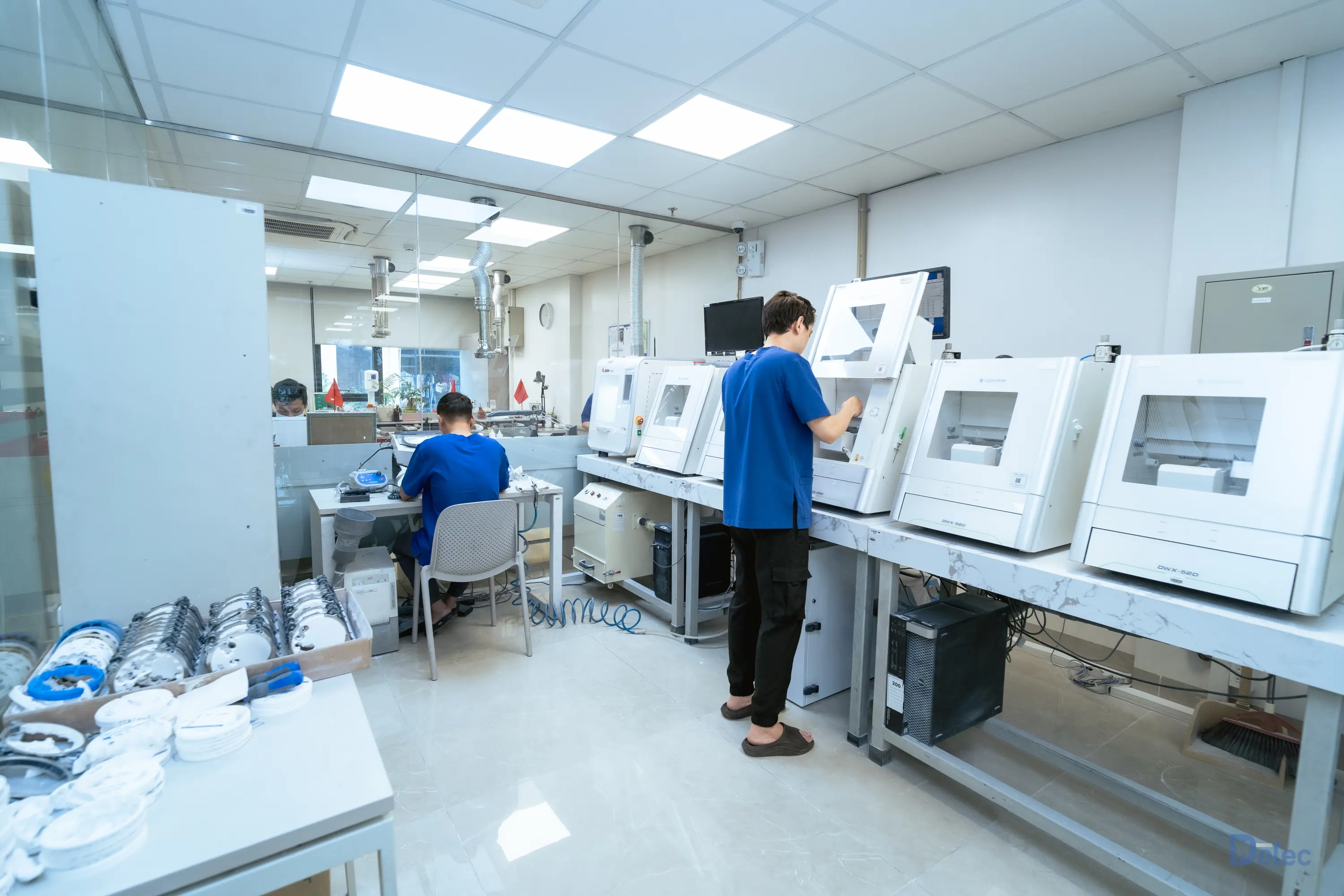
Choosing materials that mimic the light-reflectance and strength of natural enamel is vital for aesthetic dentistry. Understanding the specific benefits of high-performance ceramics allows the clinician to provide long-lasting, natural-looking results that patients expect from modern veneers. A comprehensive material strategy is essential to achieving consistent clinical excellence.
Understanding E.max® and advanced ceramic options for thin veneers
Restorative dentistry frequently relies on E.max® veneers for their impressive balance of translucency and structural integrity. These materials offer the necessary tensile strength for minimal prep work while allowing for natural color depth. Providing the laboratory with clear expectations for the material choice ensures the final outcome meets both aesthetic and functional goals.
How proprietary systems like SmartVeneer® improve patient fit
The SmartVeneer® ecosystem represents a refined approach to minimally invasive aesthetics, focusing on specialized bonding and geometry. By leveraging this proprietary system, technicians can create ultra-thin yet durable restorations that require less tooth reduction. When evaluating potential labs, look for those that have invested in verified restorative protocols.
Achieving consistent, natural shade matching across multiple units
Consistent shade matching across multiple teeth requires more than just a standard shade tab; it demands a deep understanding of ceramic layering and fired aesthetics. The best laboratories utilize standardized lighting and calibrated digital analysis to ensure that every unit in a multi-veneer case appears cohesive under various lighting conditions.
Reliability and strength testing for minimally invasive restorations
When choosing materials, it is helpful to compare the physical properties of modern ceramics, as shown in the table below, which summarizes typical mechanical performance.
| Material Class | Flexural Strength (MPa) | Recommended Use | Aesthetics Grade |
|---|---|---|---|
| E.max® Ceramic | 360-400 | Single Veneers | High |
| Zirconia-based | 600+ | Back-up Bridges | Moderate |
| Custom Infused | 500 | Complex Cases | Very High |
Selecting the right ceramic balance ensures that the restorations provide both long-term durability and the translucent aesthetic quality required for high-end smile makeovers.
Partnering with expert master technicians
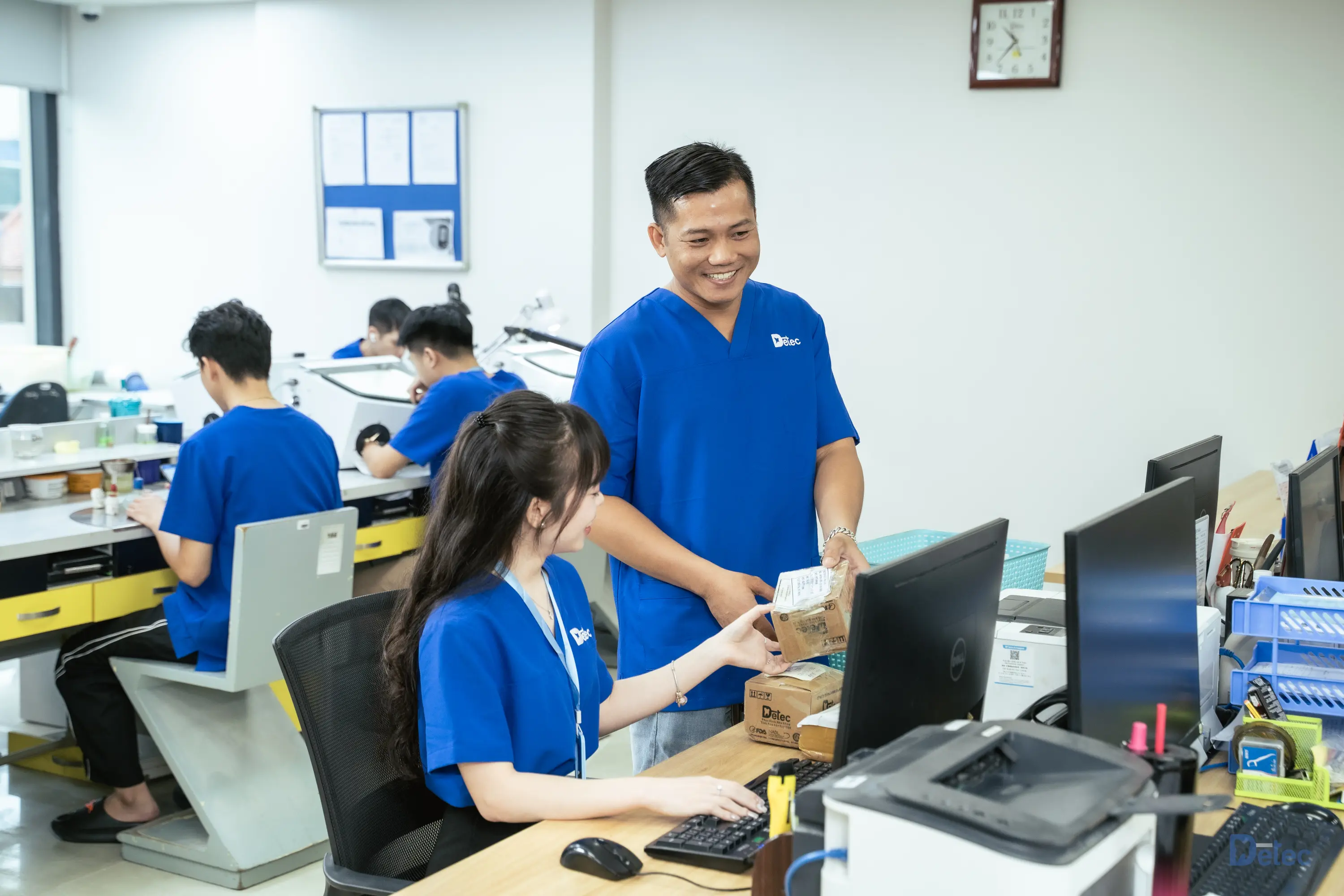
Beyond the technology, the primary success factor in veneer cases is the close collaboration between the dentist and the skilled artisan at the laboratory bench. A high-touch partnership model ensures that the nuanced, artistic vision of the clinician is faithfully executed in every ceramic layer. This human element of expertise often separates a generic restoration from one that truly elevates a patient’s smile.
The advantage of direct access to skilled dental artisans
Direct access to your lead technician allows for rapid problem-solving and nuanced communication that web portals cannot always replicate. When clinicians can discuss the specific nuances of an aesthetic case directly with the artisan, the result is significantly more tailored and precise. This professional rapport fosters better outcomes for complex cosmetic cases.
Why continuous technician training impacts final veneer placement
Continuous education for technicians ensures they are familiar with the latest advancements in ceramic materials and bond science. By training in the latest techniques, artisans can produce more intricate surface characterizations that mirror natural anatomy. If you are interested in seeing how Detec Dental Lab approaches this, their commitment to advanced education is a key differentiator.
Leveraging lab expertise for complex smile analysis and case planning
Master technicians provide valuable perspective during the restorative planning phase, identifying potential functional risks before fabrication begins. Their insight into the geometry of veneers allows for adjustments that improve both the aesthetics and the longevity of the finished case. Engaging with them as partners rather than order-takers changes the entire trajectory of patient care.
Collaborative design processes for custom veneer geometry
Reviewing designs before they are ever milled offers the maximum level of control for the practitioner. Establishing a feedback loop where the design can be tweaked for optimal shape and thickness ensures the clinician stays in control of the final look. This collaborative interaction reduces the risk of dissatisfaction during the seating appointment.
Analyzing scalability and turnaround reliability
Predictable success in a busy practice relies on the ability of the lab to manage patient expectations through reliable delivery schedules. Outsourcing to an experienced, high-volume dental restoration partner allows a practice to scale its cosmetic output without losing the personal touch behind each case. A consistent timeline enables the clinician to manage staff productivity more effectively.
Managing patient expectations through consistent delivery windows
Clear communication regarding lead times prevents unnecessary stress on the clinical team. By choosing a partner who provides realistic and reliable timelines, the lab helps the practice maintain a steady schedule for seating appointments. Reliability creates trust, which is the cornerstone of any patient-facing business.
Navigating global logistics for international dental outsourcing
Modern logistics have made it easier than ever to work with international partners without sacrificing quality or speed. Advanced tracking systems allow clinicians to monitor their case files as they move through the lab, providing transparency and reducing uncertainty. Secure transport through global carriers ensures that your delicate restorations arrive safely every time.
The impact of secure tracking and communication on clinic operations
Reliable communication platforms and digital status updates allow clinical staff to manage their daily workflows with precision. When a practice knows exactly where their work sits in the production pipeline, they can allocate staff time more productively. This efficiency reduces downtime and improves the overall profitability of the practice.
Flexibility to handle high-volume veneer cases without compromising quality
An ideal partner has the infrastructure to manage batch production across hundreds of units while treating every single restoration as a custom individual case. This scalability brings the cost of manufacturing down while maintaining the artisanal focus required for high-end results. You should look for a lab that prioritizes quality even as your own practice volumes grow.
Defining the value of a long-term strategic partnership
Building a lasting bridge between your clinic and your chosen manufacturing partner transforms the transactional nature of business into a genuine strategic alliance. Shared goals, such as elevating patient outcomes and increasing clinical efficiency, ensure that both parties are working toward the same objective. This alignment is what separates top-tier practices from their competitors.
Enhancing clinic profitability through competitive manufacturing costs
Strategic partnerships leverage efficiencies in the digital workflow to reduce overhead costs without compromising the standard of care. By streamlining communication and production, both the practice and the laboratory benefit from shorter, more productive processing cycles. Competitive cost structures allow clinics to invest more heavily in their own internal diagnostic capabilities and patient care services.
The role of ISO 13485 and regulatory standards in risk reduction
Partnering with ISO 13485 certified laboratories ensures that your work is being fabricated in a facility that adheres to the strictest global regulatory standards. This certification is a strong signal of institutional maturity and a commitment to protecting your practice from quality-related risks. Regulatory compliance isn’t just about safety; it is about the reliability of the entire restorative process.
Establishing a feedback loop to improve future clinical results
Long-term partnerships flourish when there is an open, honest culture of continuous feedback. Regularly reviewing how cases were seated and the nature of any required adjustments helps the laboratory refine its design parameters for your specific practice. This iterative process creates a cycle of improvement that yields better results with every subsequent veneer case.
How shared goals lead to better long-term patient satisfaction
When a clinic and a laboratory align their missions, the patient is ultimately the beneficiary. This professional cohesion manifests in superior restorations that look better, last longer, and harmonize with the patient’s natural features. Shared standards lead to institutional excellence and, ultimately, a reputation for quality that grows your own clinical practice.
Conclusion
Selecting the ideal laboratory is not merely about finding a vendor, but about identifying a colleague who can elevate your clinical standard of care through precision, reliability, and technical synergy. By focusing on digital workflows, material excellence, and open communication with master artisans, you ensure that every procedure contributes to a legacy of exceptional patient outcomes. For those ready to implement these standards and seek more details on manufacturing precision, contact Detec Dental Lab for a personalized consultation and quote today.
Frequently Asked Questions
How can a dental lab ensure accurate shade matching for veneers across multiple units?
High-detail shade matching is achieved through a combination of calibrated high-definition lighting, digital analysis tools, and the skill of master ceramists who manually layer porcelain to achieve depth and translucency that mimics natural tooth structure.
What are the main benefits of moving from physical impressions to a digital workflow for veneer work?
A digital workflow eliminates distortions inherent in physical casting materials, ensures faster data transit to the laboratory, and allows for precise design manipulation in CAD software before any material is milled or printed.
Why is ISO certification important when choosing a dental laboratory partner?
ISO certification indicates that the laboratory follows rigorous international standards for quality management and documentation, which reduces the risk of inconsistency in materials, manufacturing safety, and overall final product quality.
What should a clinic look for in a technician during the partnership evaluation?
A high-quality technician should demonstrate both technical proficiency with ceramic materials and an artistic eye for smile design, along with a willingness to engage in collaborative case planning for custom veneer geometry.
How do modern dental labs handle high-volume case spikes without losing quality?
Advanced laboratories utilize automated CAD/CAM systems and state-of-the-art milling machines that handle consistent volume while maintaining precise tolerances, allowing the human artisan to focus their time specifically on individual characterization and final aesthetic finishing.
Can digital scanning technology reliably produce high-end results for complex veneer cases?
Yes, modern 3D intraoral scanners are capable of capturing the minute detail of prepared tooth structure required for custom veneer design, matching or exceeding the accuracy of traditional physical impression methods when used correctly.
What is the most important factor in ensuring the longevity of thin dental veneers?
Longevity is best achieved by combining a robust bonding protocol with high-strength, biocompatible ceramic materials, along with the correct planning of the veneer’s thickness and margins to suit the patient’s individual bite and anatomical structure.


