



Key Takeaways
Dental laboratory technology combines hands-on craftsmanship, material knowledge, and digital precision. Income depends on more than a job title: experience, location, specialization, and the kind of laboratory all matter.
- Entry-level pay is usually lower while a technician builds speed, accuracy, and confidence.
- Ceramic, implant, CAD/CAM, and full-arch skills can create stronger earning potential.
- Education may begin with a high school diploma, but formal training and certification can improve mobility.
- Employee benefits provide value that an hourly wage alone does not show.
- Owning a laboratory can increase income potential, but it also brings equipment, staffing, and business risk.
Dental lab technician salary at a glance
There is no single answer to how much dental lab technicians make. Pay varies across the United States and between laboratory settings, and published figures may measure wages differently. The most useful approach is to treat salary data as a range and then examine the conditions behind it.
Typical hourly, weekly, and annual pay
Recent industry salary references place average U.S. dental laboratory technician pay around the high teens to low twenties per hour, with annual averages often near the low-to-mid $40,000s. A 40-hour week at $20 per hour is about $800 before taxes, or roughly $41,600 annually, although actual schedules and overtime differ. For a broader look at reported hourly and annual figures, see this dental technician salary data, while dental technician career information provides useful context about the work itself.
Those numbers are guideposts, not promises. A technician paid by the hour may have a different income pattern from one paid by salary, production incentives, or a combination of base pay and bonuses.
Entry-level, mid-career, and experienced earnings
New technicians often start at the lower end of the range while learning anatomy, materials, laboratory procedures, and quality expectations. With several years of consistent work, many become more valuable because they can complete cases with less supervision and handle more demanding prescriptions.
Experienced technicians may earn more when they are trusted with difficult aesthetic cases, digital design, implants, or team leadership. The increase is usually tied to demonstrated results—repeatable accuracy, good judgment, and dependable turnaround—not simply to time served.
How salary figures vary by source and location
Salary sources may report a mean, median, advertised wage, or self-reported estimate. They may also group several related occupations together, so comparing two figures without checking their definitions can create a false sense of precision. A practical comparison starts with the same job title, employment type, and geographic area.
Location changes both wages and expenses. A large metropolitan area may offer more specialized roles and higher nominal pay, while rent, transportation, and other costs may absorb much of the difference.
Employee pay versus total compensation
A wage is only one part of an employment offer. Health insurance, paid time off, retirement contributions, predictable hours, training support, and overtime policies can materially affect the value of a position.
When comparing offers, estimate the annual value of benefits and ask how raises are determined. Total compensation matters because a slightly lower hourly rate may still be attractive if the laboratory provides dependable benefits and a clear development path.
What influences how much dental lab technicians make
The answer to how much dental lab technicians make becomes clearer when the job is viewed as a group of specialized skills rather than a single occupation. Technicians work within different production systems and serve different clinical needs. The precision required in modern digital dentistry also means that employers often value judgment and consistency alongside manual ability.
Experience, certifications, and technical specialization
Experience tends to raise earning potential when it brings genuine independence. A technician who understands occlusion, shade, contours, materials, and case documentation can contribute more than someone who performs only one narrowly defined step.
Certification is not the only route to advancement, but it can provide a structured way to demonstrate knowledge. Specialization may also help, particularly when it matches local demand and the laboratory’s case mix.
Geographic demand and local cost of living
A technician’s market is shaped by the number of laboratories, dental practices, group practices, and specialty clinics nearby. Areas with more complex restorative work may support more specialized positions, though competition for those roles can also be stronger.
Compare purchasing power rather than salary alone. A relocation makes financial sense only when the additional pay, career access, and living costs work together.
Laboratory size, production volume, and employer type
A small boutique laboratory may offer broad exposure and close mentoring, while a larger operation may have dedicated departments for design, ceramics, removable work, quality assurance, and finishing. Neither model is automatically better for pay; the learning opportunities and compensation structure are what matter.
Dental offices, commercial laboratories, manufacturers, and independent businesses may also set different expectations. Production volume can create opportunities for incentives, but it may also make speed and consistency central to performance reviews.
Quality standards, case complexity, and turnaround expectations
Complex cases require careful interpretation of prescriptions, digital files, photographs, scans, and design approvals. Errors can mean remakes, delays, and extra communication, so technicians who prevent problems often create value that is not visible in a simple piece-rate calculation.
A professional laboratory may use documented checks, calibrated equipment, and defined approval steps. Those habits support patient safety and clinical reliability while also helping technicians build a reputation for dependable work.
Dental lab technician roles and their earning potential
Dental laboratory technology includes several career tracks. The best-paying direction for one person may not suit another, because some technicians prefer artistic finishing while others enjoy digital planning, production systems, or highly technical implant work. Exploring the full range of dental laboratory services can help aspiring technicians understand how these roles connect.
Removable prosthetics and denture technicians
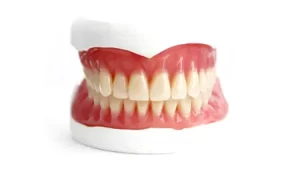
Removable technicians work on complete dentures, partial dentures, repairs, relines, and related appliances. The role demands knowledge of fit, function, tooth arrangement, acrylic processing, and the practical realities of patient use.
Entry-level work may begin with models, finishing, or repairs before expanding into full case responsibility. Technicians who combine efficient production with good esthetic judgment can become valuable in high-volume laboratories.
Fixed restorations and ceramic specialists
Fixed-restoration technicians work with crowns, bridges, veneers, and layered or monolithic ceramic materials. Shade communication, surface texture, emergence profiles, contacts, and occlusion all affect the final result.
Ceramic specialization can raise earning potential when a technician consistently produces natural-looking work and manages challenging prescriptions. It also requires patience: small visual differences can matter greatly to a dentist and patient.
CAD/CAM designers and milling technicians
Digital technicians use scans, design software, and production equipment to create restoration files or manufacture dental components. The work is not simply computer operation; it involves understanding anatomy, margins, occlusion, material behavior, and the limits of each workflow.
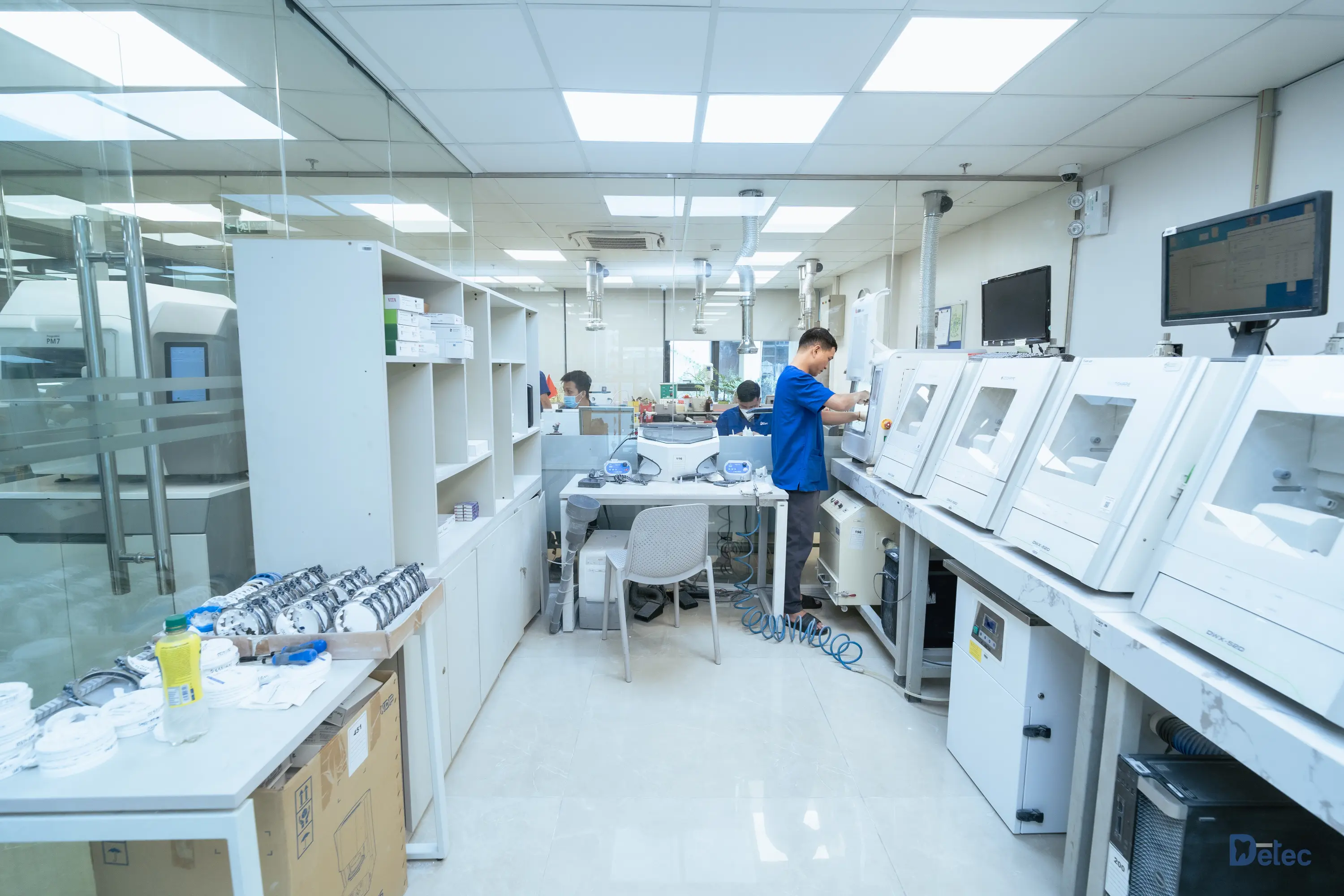
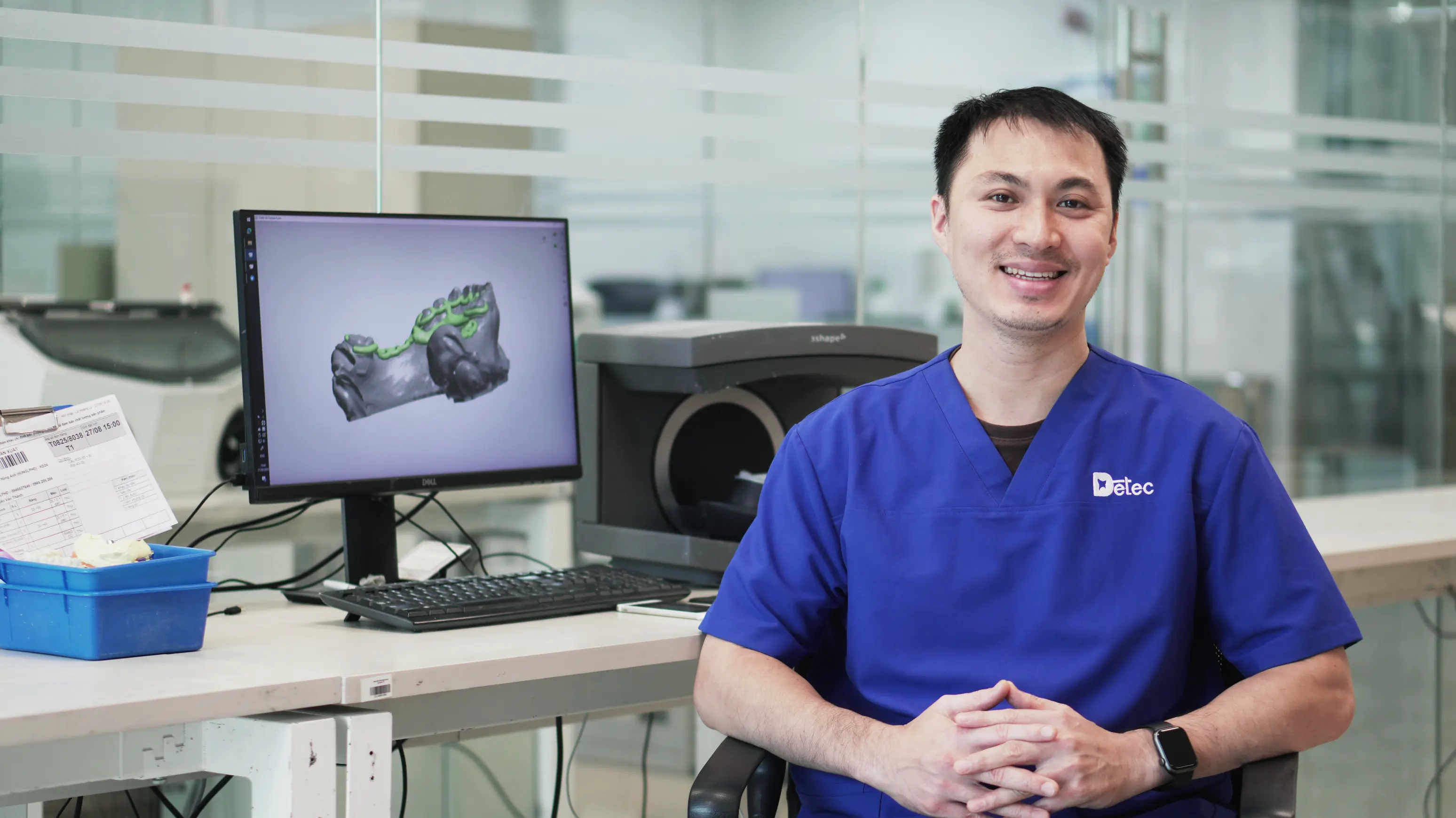
For example, Detec Labs describes a fully digital dental laboratory using CAD/CAM milling machines, 3D scanners, and design software for precision. That documented combination illustrates why digital fluency is becoming part of the technician’s broader professional toolkit.
Implant, orthodontic, and full-arch specialists
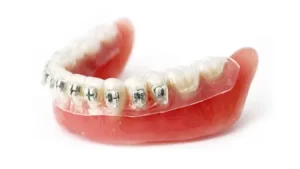
Implant and full-arch work involves careful coordination between the prescription, scan or impression, restorative design, and clinical plan. Orthodontic technicians may focus on aligners, retainers, and custom appliances, where repeatability and close attention to specifications are essential.
These specialties may offer stronger earning potential because they require additional training and coordination. They also carry higher responsibility, so a technician should pursue them through supervised practice rather than treating a short software course as sufficient preparation.
How education and training affect earning potential
A dental laboratory career can begin through several routes, but every route depends on practice. Formal education can shorten the learning curve, while employment provides the repetition needed to turn theory into reliable technique. The strongest development plans combine both.
High school, technical, and associate degree pathways
A high school diploma may be enough for some entry-level positions, particularly in laboratories that train new employees internally. Technical programs and associate degrees can provide a more systematic foundation in dental anatomy, materials, equipment, safety, and laboratory procedures.
Students should compare curriculum, hands-on lab time, placement support, and the equipment available for practice. A program that explains both conventional and digital workflows may leave graduates better prepared for a changing workplace.
Apprenticeships, mentoring, and on-the-job development
Apprenticeships and mentoring allow a beginner to observe how experienced technicians read prescriptions, identify risks, and make adjustments. This type of learning is especially useful for tactile skills that are difficult to master from textbooks alone.
A good mentor gives specific feedback and gradually increases responsibility. Trainees should keep a record of techniques learned, cases completed, remakes, and questions; that record can later support a promotion or job search.
Professional certifications and continuing education
Certification can help employers evaluate a technician’s knowledge beyond a résumé. Continuing education keeps skills current as materials, scanners, design systems, and clinical expectations change.
Useful education is targeted rather than random. A technician might choose courses in ceramics, implant planning, quality systems, or digital design based on the kind of work available in the laboratory.
Digital dentistry training and European-standard workflows
Digital dentistry requires more than learning which buttons to press. Technicians must understand file quality, scan limitations, margin definition, design approval, manufacturing tolerances, and final inspection.
Detec brings nearly 30 years of experience to dental laboratory work and maintains a dedicated Dental School for professional development. Its training emphasis reflects the value of disciplined workflows and the precision expected in modern dentistry, including approaches aligned with European standards.
Skills that can help dental lab technicians earn more
Higher earning potential usually follows a useful combination of technical depth and professional reliability. A technician who can make a restoration but cannot communicate a problem may remain limited, while a strong communicator with weak production skills will face a similar ceiling. Employers tend to notice people who improve both the case and the workflow around it.
CAD/CAM design, 3D scanning, and digital case planning
CAD/CAM design, 3D scanning, and digital case planning are increasingly relevant across restorative and orthodontic work. Technicians should learn how to inspect scan data, identify missing information, design within clinical parameters, and document changes for approval.
Digital skills can also make a technician more flexible. Someone who understands the complete path from file intake to design, milling, finishing, and inspection can support several departments rather than only one task.
Ceramics, zirconia, veneers, and aesthetic restorations
Aesthetic work rewards careful observation and controlled technique. Knowledge of zirconia, glass ceramics, veneers, layering, staining, glazing, and polishing can help a technician take on more demanding cases.
The goal is not to chase every material. It is to understand when a material and technique fit the prescription, the preparation, the occlusion, and the desired appearance.
Quality control, documentation, and infection-control awareness
Quality control skills include checking margins, contacts, occlusion, surface finish, identification, and case instructions before a restoration leaves the laboratory. Documentation makes the process traceable and helps teams learn from recurring problems.
Technicians should also understand the laboratory’s infection-control procedures and the safe handling of incoming items. Attention to these details supports trust with dentists and reduces avoidable interruptions.
Communication with dentists, laboratories, and production teams
Clear communication is a technical skill. Asking a precise question about a margin, shade, implant component, or occlusal relationship can prevent a costly remake and protect the schedule.
Technicians who explain limitations without becoming defensive are often trusted with more responsibility. They can also become a bridge between dentists, designers, milling operators, and finishing teams.
Career advancement beyond an entry-level technician role
Advancement does not always mean leaving the bench. Some technicians become highly respected specialists, while others move toward supervision, quality systems, education, or technical support. A useful next step is one that increases judgment, responsibility, and the ability to help others succeed.
Moving into senior technician and team-lead positions
Senior technicians usually handle more complex cases, review work, solve production problems, and support less experienced colleagues. Team leads may also coordinate priorities when several departments share a deadline.
To prepare, document improvements you have made and learn to give concise, respectful feedback. Reliability under pressure is often as important as exceptional individual craftsmanship.
Transitioning into quality assurance or production management
Quality assurance roles focus on standards, inspection, documentation, corrective action, and process consistency. Production managers add scheduling, staffing, workflow balancing, and performance planning to that mix.
These paths suit technicians who enjoy systems and root-cause analysis. They also reward people who can discuss quality without losing sight of capacity, cost, and team morale.
Building expertise in training and technical support
Experienced technicians can move into training by teaching procedures, reviewing cases, and creating practical learning materials. Technical support roles may involve helping colleagues understand equipment, software, or workflow changes.
Detec’s dedicated Dental School reflects how structured education can support the next generation of laboratory professionals. Teaching also deepens the instructor’s own understanding because explaining a process exposes gaps that routine work can hide.
Using advanced laboratory technology to expand responsibilities
A technician who understands scanners, design software, milling, and inspection can participate in workflow planning rather than only executing assigned files. That broader view can lead to roles in implementation, process improvement, or digital production leadership.
Technology does not remove the need for craftsmanship. It shifts where judgment is applied, making anatomy, design decisions, verification, and communication even more visible.
Employment, contract work, and owning a dental laboratory
Employment is the simplest way to enter the field, but it is not the only model. Contract work can offer flexibility, while ownership creates control over pricing, clients, staffing, and equipment decisions. Each path changes how income is earned and how risk is carried.
Comparing wages, benefits, and business revenue
An employee generally exchanges time and skill for wages and benefits. A contractor may earn more per project but must account for taxes, downtime, insurance, equipment, and administrative work. An owner receives income only after the laboratory covers its operating obligations.
For a deeper discussion of owner salary, profit, and take-home pay, review this guide to dental lab owner income. The central distinction is simple: revenue is money coming into the business, while personal income is what remains after costs and obligations.
Understanding pricing, laboratory fees, and operating costs
Laboratory pricing must cover labor, materials, remakes, shipping, software, equipment maintenance, rent, compliance, administration, and profit. A low fee may attract work but can become unsustainable if it does not support consistent quality.
Owners should understand the difference between direct costs and overhead. Tracking both helps reveal which case types, clients, and workflows are financially healthy.
Investing in milling machines, scanners, and design software
Digital equipment can increase capacity and consistency, but the purchase price is only the beginning. Training, service contracts, calibration, updates, consumables, workflow integration, and staff time all affect the return on investment.
A sensible investment plan starts with case volume and business needs. Detec’s documented digital environment includes CAD/CAM milling machines, 3D scanners, and design software, showing how these tools can sit within an integrated laboratory operation rather than operate as isolated purchases.
Creating a sustainable growth plan for a dental laboratory business
A growth plan should define the laboratory’s ideal clients, restoration mix, quality promise, turnaround model, staffing needs, and financial targets. It should also specify how new work will be reviewed before the business commits to more volume.
The following sequence keeps expansion practical:
- Measure current capacity, remake rates, turnaround, and margins.
- Choose specialties that match team capability and local demand.
- Invest in training before adding complex equipment.
- Build communication and quality checks into every case pathway.
This approach favors durable growth over rapid volume. It also helps an owner decide when to hire, outsource, specialize, or add a new production capability.
Conclusion
Dental laboratory technology can offer a steady, creative, and technically demanding career, but earning potential grows through deliberate skill development rather than a title alone. Aspiring technicians should compare local pay with total compensation, pursue training that matches the work they want to do, and build habits of precision, communication, and quality control. For practices seeking a laboratory partner, start a case conversation with a team that combines long experience, digital laboratory capabilities, and professional training.
Frequently Asked Questions
How much do dental lab technicians make when starting out?
Starting pay is commonly below the field’s average because new technicians are still developing speed, judgment, and independence. Local demand, employer type, education, and the tasks assigned can move the starting rate up or down.
Can a dental lab technician earn more with certification?
Certification can strengthen a technician’s credentials and may improve access to specialized or senior roles. It does not guarantee a raise, since employers also consider practical results, case complexity, communication, and reliability.
Which dental laboratory specialties tend to pay more?
CAD/CAM design, ceramics, implant restorations, orthodontic appliances, and full-arch work may offer stronger earning potential when local demand is present. These specialties also require additional training and a high level of accuracy.
Is a degree required to become a dental lab technician?
Some entry-level positions accept a high school diploma and provide on-the-job training. A technical certificate or associate degree can provide more structured preparation and may help a candidate qualify for a wider range of positions.
Do dental lab technicians work directly with patients?
Most technicians work behind the scenes in laboratories or dental offices rather than providing direct patient care. Their work still affects patient comfort, function, appearance, and clinical outcomes.
Is owning a dental laboratory more profitable than being an employee?
Ownership can create greater income potential, but revenue is not the same as personal profit. Equipment, labor, rent, materials, taxes, remakes, compliance, and client acquisition all affect what an owner ultimately takes home.
What skills should an aspiring dental lab technician learn first?
Start with dental anatomy, hand skills, material fundamentals, quality control, and clear case communication. Add digital scanning and CAD/CAM skills as your foundation develops, ideally with supervised practice and feedback.


