


Key Takeaways
A dental lab owner’s personal income is shaped by much more than annual sales. The useful question is how revenue becomes profit after labor, materials, equipment, remakes, taxes, and reinvestment.
- Owner income may come from salary, profit distributions, or both.
- Lab size, case mix, pricing, and technician productivity strongly affect earnings.
- A new laboratory often produces little personal income while cash goes into setup and growth.
- Digital workflows can improve consistency, capacity, and margin when managed carefully.
- Long-term dentist relationships and disciplined quality control are central to sustainable profit.
What a dental lab owner’s income really includes
When people ask how much does a dental lab owner make, they are often comparing unlike figures. One owner may report a payroll salary, while another talks about distributions from an LLC or the profit left after expenses. A clear answer starts by separating the money paid for the owner’s work from the money generated by the laboratory as a business. Taxes and reinvestment then add another layer.
Owner salary versus business profit
An owner who works as a technician, manager, or salesperson may receive a regular salary for those duties. Business profit is different: it is what remains after the laboratory pays operating expenses, including wages, rent, supplies, shipping, software, repairs, insurance, and professional services. A profitable lab can therefore pay its owner a modest salary while retaining cash for equipment or expansion. Conversely, a high salary does not necessarily mean the underlying business has strong margins.
The distinction matters when comparing laboratories or preparing a business plan. A prospective owner should model compensation as a cost of labor, then calculate profit separately rather than treating every dollar available in the bank account as personal income.
Distributions, retained earnings, and personal compensation
Business owners may take profit distributions when cash flow allows, but a distribution is not the same as revenue. Some profit may stay in the company as retained earnings to fund payroll, materials, a new scanner, or a slower period. The right balance depends on the legal structure, tax advice, debt obligations, and the lab’s need for working capital.
Personal compensation can also include benefits, retirement contributions, vehicle expenses, or other approved business costs. These items should be documented and reviewed with an accountant. Informal withdrawals make a laboratory’s true performance harder to understand and can complicate a future sale or financing request.
Revenue, gross margin, and take-home pay
Revenue is the total amount billed or collected for cases and related services. Gross margin subtracts direct production costs, such as materials and case-specific labor, while operating profit also accounts for overhead. Take-home pay is the amount the owner ultimately keeps after business decisions and personal taxes. These measures answer different questions, so a single “average salary” can be misleading.
For a practical comparison, track revenue per case, direct cost per case, labor utilization, remake expense, and operating profit. Margin is a management result, not a fixed feature of the dental laboratory industry. A lab with lower sales can produce more owner income than a larger competitor if its pricing, workflow, and overhead are better controlled.
Why reported income can vary from year to year
Income may change when a lab adds a technician, buys equipment, loses a major account, or shifts toward more complex restorations. Depreciation and financing payments can also make accounting profit look different from available cash. Seasonal demand, dentist vacations, insurance cycles, and delayed collections create further movement.
Owners should compare several years of normalized results rather than relying on one unusually strong or weak period. The dental lab owner earnings guide offers a useful framework for thinking about location, lab size, specialized services, and seasonal demand without treating one benchmark as a promise.
Typical earnings for dental lab owners in the US
There is no dependable national salary figure that fits every laboratory owner. A solo operator, a small boutique lab, and a full-service facility with several departments carry different workloads and cost structures. Earnings also depend on whether the owner is still producing cases or has moved into leadership. The ranges below are best understood as planning categories, not guarantees.
Income ranges by lab size and production volume
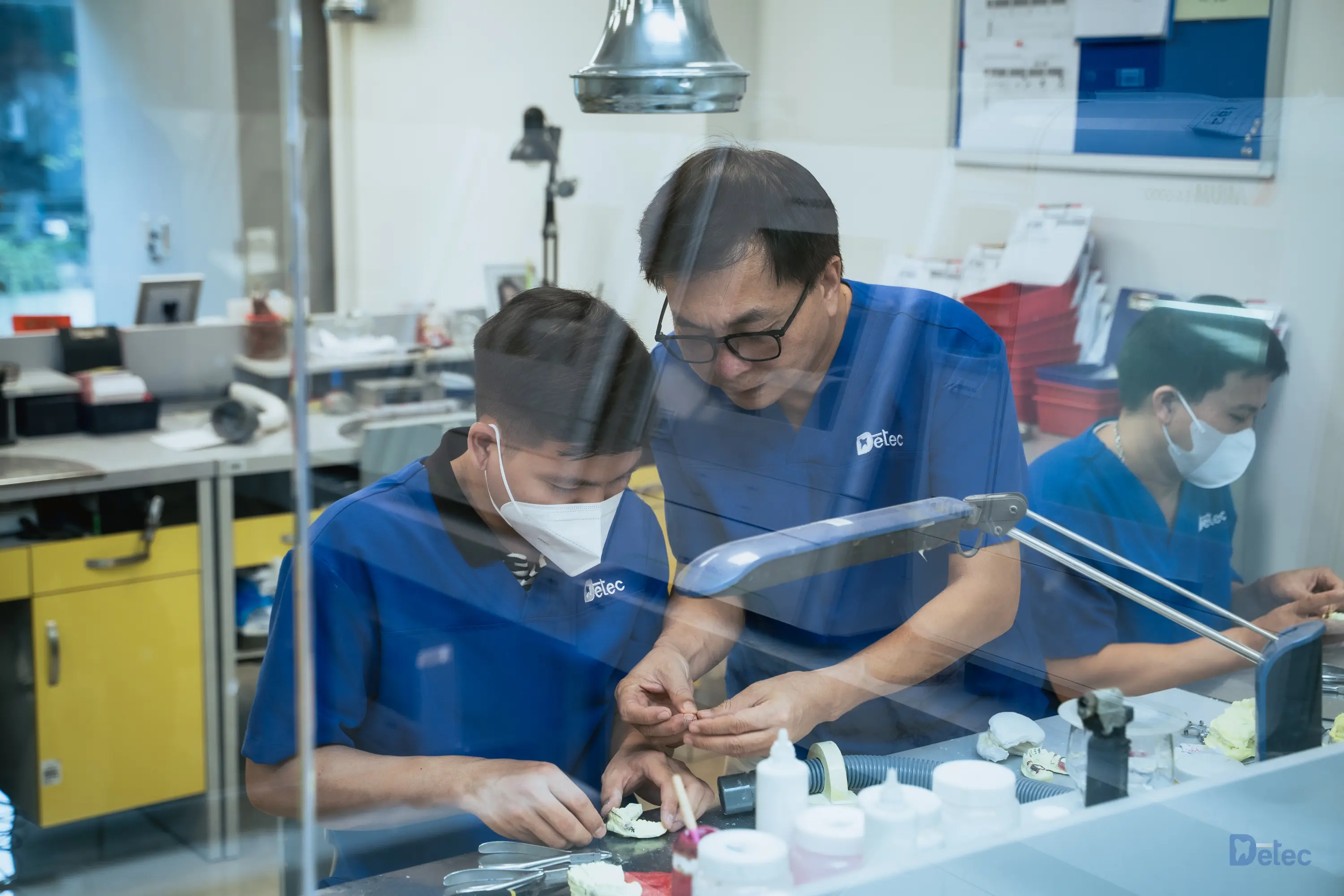
A solo lab may generate owner income primarily through technician labor, with limited overhead but a firm ceiling on production hours. A small team can raise capacity and revenue, though payroll and management costs rise with it. A larger lab may produce substantial sales, yet its owner’s personal income depends on utilization, pricing discipline, departmental performance, and debt.
Some industry discussions cite full-service operations with 10 to 20 employees reaching roughly $7 million in revenue, but that figure comes from an individual forum contribution and should not be treated as an industry average. The full-service lab revenue discussion itself illustrates why service mix and bottom-line performance must be considered alongside sales.
Solo, boutique, and full-service laboratory models
A solo model is relatively simple: the owner may perform design, fabrication, finishing, billing, and customer service. A boutique laboratory often competes through a focused specialty, personal communication, or highly aesthetic work. A full-service laboratory can offer broader restorative and orthodontic capabilities, but it must coordinate more people, equipment, schedules, and quality checks.
Each model can work. The best fit depends on the owner’s technical strengths, access to dentist relationships, available capital, and willingness to manage people. Growth is not automatically improvement if added volume produces rushed work or weak cash flow.
How location and local demand affect earnings
Location influences rent, wages, taxes, shipping times, competition, and the number of practices within a practical service area. A dense market may offer more prospects but also more competitors. A rural laboratory may face a smaller pool of dentists while benefiting from stronger relationships and less direct competition.
Demand should be assessed at the case level. Ask which restorations local practices send out, what turnaround times they expect, and whether they value digital submissions, complex implant work, orthodontic appliances, or close technician communication. Those answers are more useful than population size alone.
The difference between startup income and established-lab income
A startup usually absorbs cash before it produces dependable owner income. Deposits, renovations, equipment, software, initial materials, marketing, and payroll may arrive before collections become predictable. The owner may need outside income or savings during this period, especially while building a recurring client base.
An established lab has historical data, repeat accounts, trained staff, and a clearer production rhythm. It can still experience weak years, but forecasting is easier. Anyone evaluating an acquisition should study normalized owner compensation, customer retention, equipment condition, and the degree to which revenue depends on the seller personally.
The biggest factors that influence profitability
Profitability is built case by case and then reinforced through systems. A laboratory can charge healthy prices and still struggle if remakes, overtime, idle equipment, or slow collections consume the difference. It can also operate in a competitive market and perform well by choosing the right work and controlling waste. The owner’s job is to connect technical decisions with financial results.
Restoration mix, case complexity, and pricing
Crowns, bridges, veneers, implant restorations, and orthodontic appliances require different materials, design time, technician skills, and quality checks. Complex cases may command higher prices, but they also carry more communication and remake risk. Pricing should reflect the full production path rather than only the material used.
A useful case review includes design time, chairside support, finishing, shipping, expected turnaround, and the probability of revisions. Discounting every case to win volume can leave the owner financing work that does not cover its true demands.
Staffing costs and technician productivity
Labor is often the largest controllable expense. Productivity is not simply the number of units completed; it also includes whether cases move smoothly, whether staff spend time correcting avoidable errors, and whether the workload matches each technician’s capabilities. A strong team can improve both quality and throughput.
Owners should monitor production by department and skill level, while protecting time for training and review. The goal is not to push people faster at any cost. Precision in digital dentistry still depends on judgment, fit verification, material knowledge, and careful finishing.
Rent, equipment, materials, and shipping
Fixed costs continue during slow weeks. Rent, utilities, software subscriptions, equipment financing, maintenance contracts, insurance, and administrative wages can make a modest fall in volume feel severe. Materials and shipping are variable, but careless ordering, rush freight, and poor inventory control can quietly erode margin.
A monthly budget should show committed overhead separately from costs that rise with case volume. For shipping assumptions, even a general service pricing guide can remind an owner to distinguish base charges, location, mileage or transfer terms, and additional fees rather than using one broad estimate.
Client concentration and recurring dentist relationships
A laboratory with one dominant account may look stable until that practice changes ownership, brings work in-house, or switches suppliers. Recurring relationships are valuable, but concentration risk should be measured. Track the share of sales from the largest clients and build a deliberate pipeline beyond them.
Trust develops through consistent fit, clear estimates, reliable delivery, and accessible case communication. A direct lab partnership can also help practices access specialized restorative services without building their own infrastructure, as described in this direct dental lab partnership overview.
Rework, remakes, and quality-control expenses
A remake consumes material, technician time, shipping, scheduling capacity, and goodwill. The cost is larger than the line item recorded in the accounting system because the original production slot could have been used for another case. Owners should classify remake causes instead of treating every failure as an isolated event.
Common categories include incomplete prescriptions, impression or scan problems, design errors, material defects, fit issues, and communication gaps. A consistent review process helps distinguish what the lab can fix from what requires better information from the practice.
How dental laboratories generate revenue
Dental laboratories earn revenue by fabricating prescribed dental devices and related services for practices. The mix can range from routine fixed restorations to complex implant and orthodontic work. Digital files have also created opportunities for design services, production partnerships, and more coordinated case approvals. Revenue quality depends on the relationship between price, effort, risk, and capacity.
Crowns, bridges, veneers, and implant restorations
Fixed restorations remain a core business line for many laboratories. Crowns and bridges require accurate records, careful design, material control, and finishing. Veneers and other aesthetic work add communication demands because shade, shape, texture, and patient expectations must align.
Implant restorations can involve custom abutments, screw-retained crowns, or full-arch work. They may produce higher revenue per case, but they also require strong prescription review and coordination with the clinician. A laboratory should price the complete workflow, including planning and approval time.
Orthodontic appliances and clear aligner services
Orthodontic revenue may include clear aligners, retainers, and custom appliances. These services can diversify a lab, but they require different scheduling, design, materials, and clinical communication than fixed restorations. The owner should confirm demand before adding a new line and calculate the training and software costs involved.
The orthodontic laboratory guide describes how digital submissions, clear aligners, and custom appliances can fit into a collaborative practice-lab workflow. The commercial question is whether the work can be delivered consistently at a price that supports the required capacity.
Digital design, CAD/CAM, and outsourced production
A lab may charge for digital design, accept files for in-house fabrication, or outsource selected production stages. Outsourcing can expand capacity without immediately purchasing every machine, though it introduces vendor coordination, freight, quality review, and turnaround considerations. The owner remains responsible for making sure the final workflow is commercially sound.
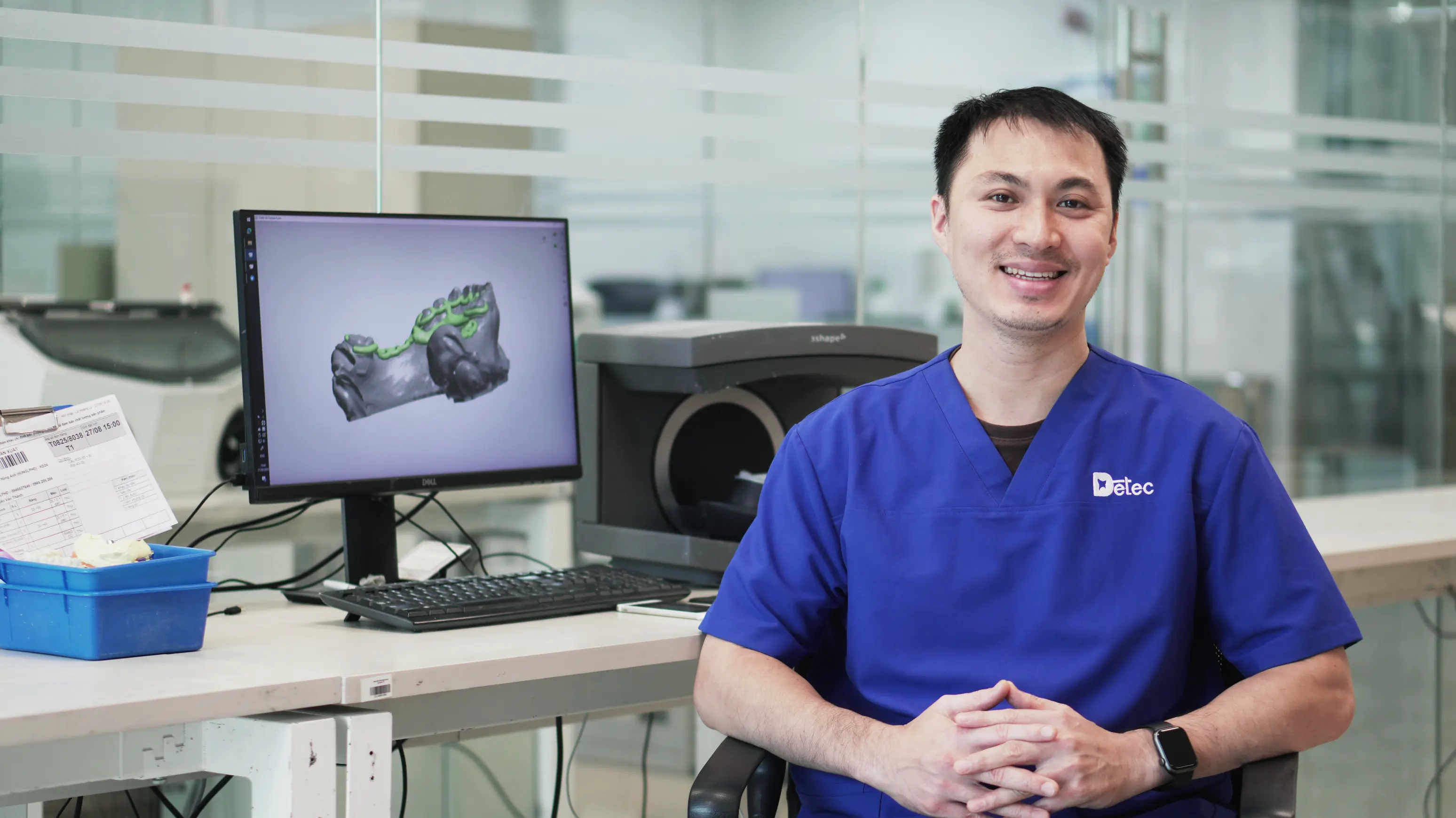
Detec operates fully digital dental labs and describes a workflow in which experts create a digital design for approval before fabrication with CAD/CAM technology. Its documented capabilities include CAD/CAM milling machines, 3D scanners, and design software used for precision. For an owner, the broader lesson is to map each handoff and assign a cost and quality check to it.
Premium services, turnaround times, and value-based pricing
Faster turnaround can be valuable when it solves a real scheduling problem for a practice, but speed should not be promised without capacity and quality safeguards. Premium pricing may reflect difficult cases, senior technician involvement, consultation, materials, or dependable coordination rather than simply a shorter clock.
A good price communicates what the practice receives and what information the lab needs in return. The digital dental technology laboratory guide is relevant here because it emphasizes balancing precision, cost-effectiveness, certifications, technician expertise, and production capacity.
The costs of opening and operating a dental lab
Opening a laboratory is a manufacturing investment as well as a professional one. The owner needs a facility, equipment, materials, people, systems, insurance, and enough cash to survive the gap between production and collection. The business plan should model conservative volume and realistic hiring, not just the desired sales target. A staged launch can reduce risk, but it may also limit the range of cases offered at first.
Initial investment in facilities and equipment
Startup costs may include a lease deposit, renovations, ventilation, electrical work, workstations, hand tools, computers, software, scanners, furnaces, milling equipment, and inventory. The exact mix depends on whether the laboratory focuses on analog work, digital design, in-house production, or a hybrid model.
A practical dental lab startup roadmap can help organize decisions around services, space, business planning, and technology. Before signing a lease, the owner should price installation, maintenance, training, and the working capital needed after opening.
Milling machines, scanners, software, and maintenance
Technology purchases involve more than the equipment’s advertised price. Consider software subscriptions, licenses, calibration, service response, consumables, connectivity, upgrades, and the cost of downtime. A scanner or mill only creates value when trained staff can use it productively and the lab has enough suitable work to keep it occupied.
Compare ownership with outsourcing by case type and monthly volume. Buying too early can burden cash flow; waiting too long can constrain capacity or make the lab less competitive. The decision should be based on utilization and total cost, not enthusiasm for new hardware.
Hiring, training, and retaining skilled technicians
Skilled technicians are central to a laboratory’s output and reputation. Payroll planning should include recruitment, onboarding, continuing education, benefits, supervision, and time spent reviewing work. Retention may require a clean workplace, a credible growth path, fair scheduling, and opportunities to develop advanced skills.
Detec says its Dental Training Center offers advanced courses and the SmartVeneer Certified Partner Program. For aspiring technicians and owners alike, the point is practical: formal education and ongoing coaching help preserve precision as production becomes more digital.
Regulatory, insurance, certification, and compliance costs
Requirements vary by jurisdiction and by the services offered. Owners may need business registrations, permits, liability coverage, property insurance, documented procedures, material records, and relevant quality systems. These costs protect the business as well as the patient and should be included from the beginning.
A laboratory’s compliance plan should be specific to its operations. For example, a DBS checks guide for dentists concerns dental-practice background checks rather than laboratory ownership, but it illustrates why regulated teams need to identify the applicable people, records, and verification steps. The same careful mindset applies when establishing lab procedures.
Working capital and cash-flow planning
Profit on paper cannot pay payroll if customer collections arrive late. Build a cash forecast that includes deposits, equipment payments, payroll dates, materials, taxes, shipping, and expected collection timing. Keep a reserve for repairs and a temporary drop in case volume.
Owners should review accounts receivable weekly and set clear payment terms. A laboratory that grows faster than its cash can support may need financing precisely when its numbers look strongest, so growth and liquidity should be planned together.
How technology can improve a lab owner’s margins
Technology can lower repetitive effort and improve repeatability, but it does not remove the need for skilled judgment. A digital workflow changes how information moves from practice to design, approval, fabrication, and delivery. Its financial value appears when it reduces avoidable labor, rework, delay, or capacity constraints. The owner should measure those outcomes rather than treating technology as an end in itself.
Reducing manual steps with digital workflows
Digital case files can reduce physical handling, simplify communication, and make approvals easier to track. Standardized intake fields also help identify missing information before production begins. Fewer handoffs can mean fewer transcription errors and less time spent searching for records.
The benefits depend on adoption. If staff still duplicate information across disconnected systems or wait days for approvals, the lab may own digital tools without achieving a digital workflow. Map the actual process and remove the bottlenecks that consume the most time.
Using 3D scanning and CAD/CAM for consistency
Three-dimensional scanning and CAD/CAM can support repeatable design and manufacturing when files, materials, machines, and finishing protocols are controlled. Detec describes using 3D scanners, design software, and CAD/CAM milling machines to ensure precision in its digital laboratory environment. That documented capability is relevant to owners assessing how digital production may fit their own operation.
Consistency still requires verification. Scan quality, margin definition, design approval, machine calibration, material selection, and final inspection all influence the result. Technology makes a good process more repeatable; it does not rescue an unclear prescription or weak quality control.
Measuring turnaround time, remake rates, and capacity
Owners need a small set of reliable operating measures. Useful indicators include average turnaround by case type, on-time delivery, remake rate and cause, labor hours per case, machine utilization, and revenue per production hour. Reviewing them together reveals whether a faster workflow is actually profitable.
The digital lab scaling guide connects digital files, STL workflows, CAD/CAM milling, quality assurance, and production capacity. Its practical implication is to scale measured processes, not just purchase more equipment. A growing queue may indicate demand, but it may also indicate a workflow that needs redesign.
Balancing automation with master technician expertise
Automation is most useful for predictable, repeatable steps. Experienced technicians remain essential for shade, morphology, fit, material behavior, unusual anatomy, and cases that do not follow a standard pattern. Removing expert review can create expensive defects that appear only after delivery.
Set clear decision points for human inspection and escalation. This protects quality while allowing machines and software to handle work they perform consistently. The strongest model is usually collaboration between structured technology and people who understand the clinical purpose of the restoration.
Evaluating equipment purchases by return on investment
A purchase should have a written business case. Estimate additional usable capacity, labor savings, maintenance, financing, training, consumables, expected utilization, and the revenue that can realistically be won. Then test the result against slower growth and equipment downtime.
The payback period is only one measure. Reliability, service support, compatibility, and the effect on remake rates may matter just as much. If outsourcing a production stage is cheaper and more flexible at current volume, postponing ownership may be the financially disciplined choice.
How to increase a dental lab owner’s income over time
Sustainable income usually comes from improving the business underneath the owner, not simply taking more cases personally. That means choosing profitable work, developing people, protecting quality, and making relationships durable. It also means knowing when growth is worth the added complexity. A laboratory should become more valuable and less dependent on one individual as it matures.
Building long-term partnerships with dental practices
Dentists want reliable results, clear communication, predictable delivery, and help with difficult cases. Regular case reviews, defined submission requirements, transparent pricing, and responsive technician access can strengthen those relationships. A laboratory that understands a practice’s preferences can reduce friction without sacrificing professional boundaries.
Diversify carefully rather than chasing every account. The best partners fit the lab’s capabilities, pay on time, provide complete information, and value quality. That kind of recurring work makes staffing and equipment decisions easier to forecast.
Specializing in high-value restorative and implant cases
Specialization can improve pricing power when the laboratory develops genuine expertise and a credible process. Implant and complex restorative cases may require advanced planning, consultation, and review, so the owner should price the full service rather than competing only on unit cost.
A specialty also narrows the addressable market and can increase concentration risk. Test demand, train the team, document outcomes internally, and expand only when the lab can deliver the promised level of precision consistently.
Improving case communication and approval workflows
Many delays begin before production: incomplete prescriptions, unclear photos, missing scans, or unapproved designs. A structured intake and approval process reduces back-and-forth and protects production capacity. It also gives the practice a clearer experience.
The case communication guide is useful for understanding why digital files, technician expertise, direct communication, and precision matter in the relationship between a practice and a professional dental laboratory. Owners can turn those principles into checklists, response standards, and escalation rules.
Investing in technician education and certification
Education supports both technical quality and business resilience. A technician who understands materials, design principles, scanning limitations, and finishing can solve problems earlier and communicate more effectively with clinicians. Training should combine structured instruction with supervised case review.
Detec’s nearly 30-year history reflects the value of combining master artistry with technology, while its dedicated Dental Training Center speaks directly to the need for developing the next generation of technicians. Aspiring owners should treat education as an operating investment, not an optional extra.
Creating a scalable quality-assurance system
Quality assurance becomes more important as the owner stops personally reviewing every case. Write procedures for intake, design approval, production, inspection, packaging, remake analysis, and corrective action. Assign responsibility and audit whether the process is actually followed.
A well-structured SOP quality system shows how version control, clear responsibilities, operator training, and change control can support consistent operations. Although that source concerns gummy manufacturing, the management principle transfers: documented procedures only help when staff understand them and leaders maintain them.
Conclusion
A dental lab owner can earn a strong income, but the result depends on the laboratory’s model, case mix, pricing, people, technology, and cash discipline rather than a single national salary number. Owners who build recurring dentist relationships, measure production honestly, and protect precision are better positioned to turn technical skill into durable profit. For practices and professionals seeking a digitally equipped laboratory partner, Explore Detec Labs and consider how its documented services, technology, and technician access fit your needs.
Frequently Asked Questions
How much does a dental lab owner make?
Income varies widely by lab size, location, service mix, owner involvement, pricing, staffing, and operating expenses. A salary figure alone does not show distributions, retained earnings, taxes, or reinvestment.
Are dental laboratories profitable?
They can be profitable when pricing covers direct production and overhead, cases are completed efficiently, and remakes and collection delays are controlled. Profitability is not automatic and differs substantially between businesses.
What is the largest expense for many dental labs?
Labor is often a major expense, followed by facilities, equipment, materials, software, shipping, insurance, and administration. The largest category depends on the laboratory’s model and technology choices.
How much money is needed to start a dental lab?
The amount depends on the facility, services, equipment, staffing plan, regulatory requirements, and whether production is kept in-house or outsourced. Working capital after opening is just as important as the initial purchase budget.
Does digital technology increase lab profit?
It can improve consistency, reduce manual steps, increase capacity, and lower avoidable rework when implemented well. Equipment does not guarantee higher profit; utilization, training, maintenance, and workflow design determine its financial effect.
Is a solo dental lab a good business model?
A solo model can limit overhead and provide direct control, but production is constrained by the owner’s time and skills. It may suit a focused specialty, while broader services usually require additional technicians or production partners.
What should an aspiring dental lab owner track?
Track revenue by case type, direct costs, labor productivity, turnaround time, remake causes, client concentration, accounts receivable, equipment utilization, and operating profit. Reviewing these measures regularly helps connect technical decisions with business performance.


