

Key Takeaways
A modern dental lab is more than a production vendor. It is a clinical and operational partner that connects digital design, skilled technicians, quality controls, and dependable delivery.
- Digital case submission can simplify collaboration across borders.
- CAD/CAM and 3D printing support repeatable production.
- Material selection should follow the clinical indication.
- Clear approvals and communication help prevent remakes.
- The right outsourcing model can expand capacity responsibly.
Understand what an innovate dental lab delivers
An innovate dental lab combines technical craftsmanship with a digital production system. For clinic owners and lab directors, the practical question is not whether technology is present, but whether it improves case communication, consistency, and delivery. A useful partner should fit into the clinical workflow rather than create another layer of administration.
From traditional craftsmanship to digital production
Traditional artistry still matters in contour, anatomy, shade, and finishing. Digital tools add a structured way to capture information, plan restorations, and reproduce approved designs. The strongest model keeps technicians involved at the points where judgment and visual understanding affect the final result.
That combination is especially useful when a practice is moving from physical impressions to intraoral scans. Digital records can be reviewed, shared, and archived more easily, while experienced technicians remain responsible for interpreting the case rather than simply operating equipment.
Support for clinics, dental groups, and laboratories
Outsourcing can serve a single clinic, a multi-location group, or another laboratory that needs additional production capacity. The needs differ: a small practice may value responsive case support, while a dental group may need repeatable standards across locations. A laboratory may instead require a dependable manufacturing extension for selected restoration types.
A good starting point is to document case mix, expected volume, preferred materials, approval habits, and shipping destinations. This makes it easier to compare partners using a practical crown outsourcing guide, rather than judging a laboratory on price alone.
Balancing precision, scalability, and cost
Price is only one part of outsourcing value. A lower invoice can lose its appeal when unclear instructions, inconsistent design, or repeated remakes consume chair time. The better comparison considers production capacity, communication, quality systems, shipping reliability, and the level of technician access included in the relationship.
For a growing practice, scalability should also mean controlled growth. Begin with a defined group of cases, review the results, and expand the relationship as the workflow proves dependable.
Evaluate the technology behind modern dental lab services
Technology should be evaluated as a connected process, not as a list of impressive machines. A lab may have scanners and milling equipment, but the clinical benefit depends on how data moves from submission to design, approval, fabrication, inspection, and delivery. Ask how each step is documented and who is accountable when clarification is needed.
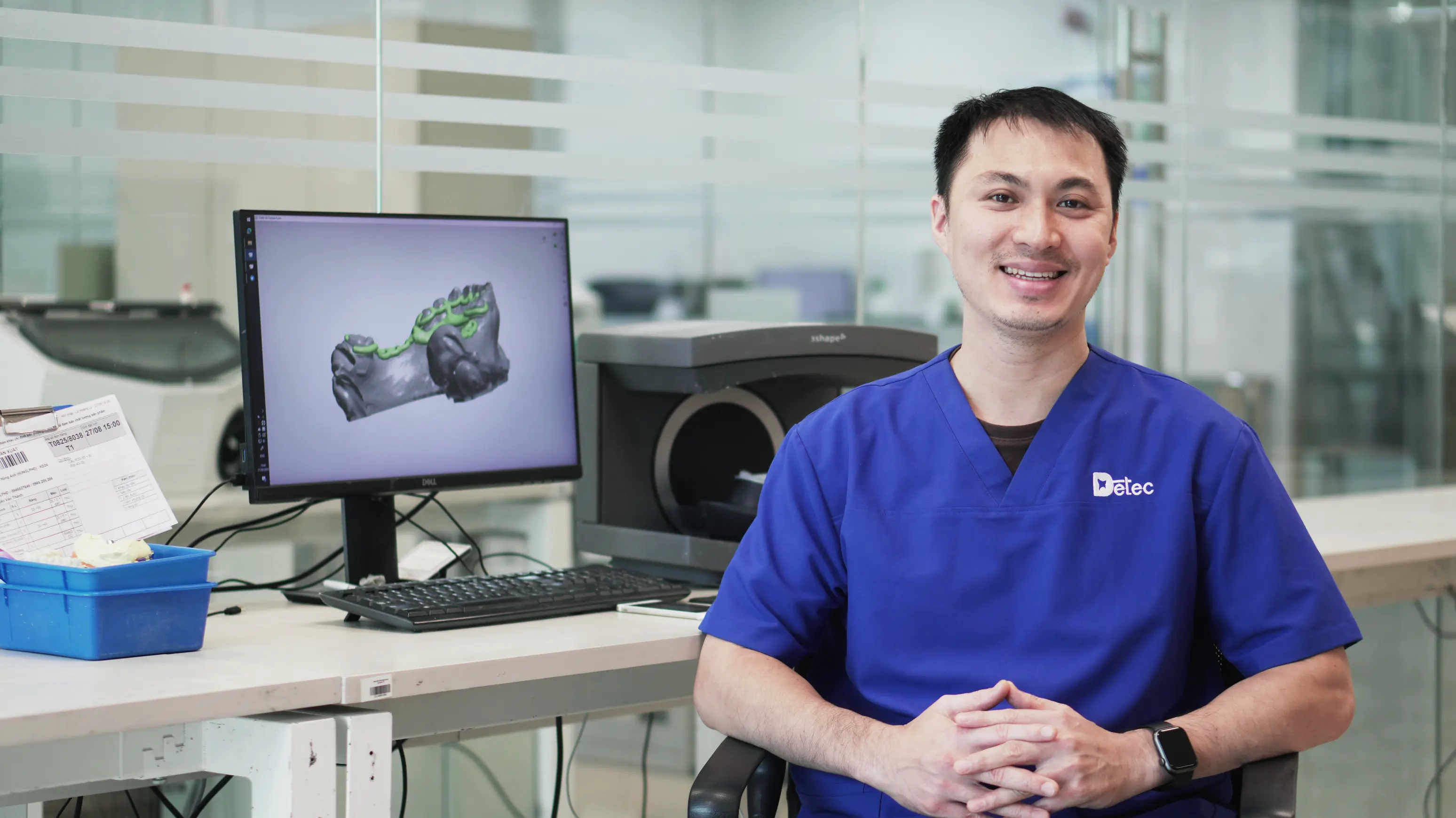
CAD/CAM workflows and global STL file submission
A digital workflow begins with an accurate scan and a complete prescription. STL files can be submitted internationally through a secure portal, allowing the laboratory team to review the information before design begins. This reduces avoidable delays caused by incomplete files or missing clinical instructions.
The workflow should make approval visible. When the proposed design is shared before fabrication, the clinician has an opportunity to confirm margins, contacts, occlusion, and aesthetic direction while changes are still manageable.
3D scanning, digital design, and advanced 3D printing
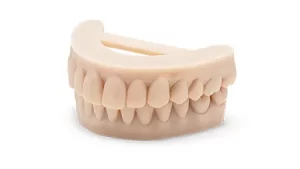
Modern laboratories may combine 3D scanners, design software, CAD/CAM milling, and advanced 3D printing. Each technology has a distinct role: scanning captures the case, software translates clinical requirements into a design, milling produces restorations from blocks or discs, and printing supports selected prosthetic or appliance workflows.
The key measure is not novelty. It is whether the complete chain produces a design that can be checked, manufactured consistently, and communicated clearly to the clinical team.
Material selection for strength, fit, and aesthetics
Material decisions should follow the indication, available space, functional demands, preparation design, and aesthetic expectation. Zirconia, glass-ceramic, PFM, and printed materials each have different handling and performance considerations, so a laboratory should explain the rationale rather than offer a one-size-fits-all menu.
| Clinical consideration | What to clarify with the lab | Why it matters |
|---|---|---|
| Functional load | Recommended material and thickness | Supports durability and fit |
| Aesthetic demand | Translucency, shade, and characterization process | Helps align expectations |
| Preparation and space | Minimum requirements and design limitations | Reduces late adjustments |
| Implant case | Connection, component, and emergence details | Protects restorative accuracy |
A material conversation is most useful when it happens before design approval. That gives the clinician and technician a shared basis for balancing strength, fit, and appearance.
Match dental lab capabilities to clinical needs
A capable partner should map its menu to the cases a practice actually treats. Broad service claims are less useful than clear explanations of indications, design inputs, materials, and approval requirements. Reviewing capabilities this way helps dental teams avoid sending unsuitable cases into an unfamiliar workflow.
Zirconia crowns, bridges, and implant restorations
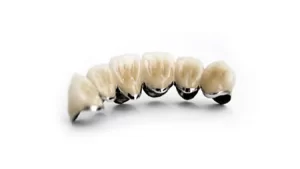
Zirconia crowns and bridges can support a range of fixed restorative indications, while implant cases require careful attention to components, emergence profile, occlusion, and the restorative plan. Custom abutments, screw-retained crowns, and full-arch cases also demand close coordination between the clinician and technician.
Detec Zirconia is documented as part of the laboratory’s aesthetic and fixed restoration offering. When evaluating any zirconia workflow, ask how the lab handles digital design review, shade communication, occlusal information, and final inspection.
Veneers, full-arch solutions, and minimally invasive aesthetics
Aesthetic cases benefit from planning that respects both the desired result and the amount of natural tooth structure preserved. Veneers and full-arch restorations require communication about facial references, tooth proportions, phonetics, incisal display, and the provisional or try-in stage.
The SmartVeneer ecosystem is described as supporting minimally invasive aesthetics and the philosophy of preserving natural tooth structure. Regardless of the system used, the clinical team should agree on the diagnostic information and approval points before fabrication.
Clear aligners, retainers, and custom orthodontic appliances
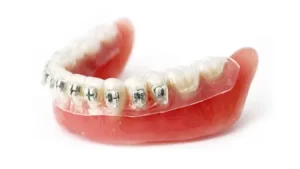
Orthodontic outsourcing has its own workflow, beginning with a complete digital record and a defined treatment plan. Clear aligners, retainers, and custom appliances must be designed around the prescribed movements, wear instructions, and follow-up process.
Smartalign is identified in the source material as a partnership associated with advanced clear aligners. A clinic should still confirm how revisions, staging questions, retainer orders, and patient-specific instructions are managed from case to case.
Build a collaborative outsourcing partnership
Outsourcing works best when both sides treat the case as a shared clinical project. The clinic brings patient information, treatment intent, and approval authority; the laboratory contributes design expertise, manufacturing capability, and production coordination. This division becomes much easier when responsibilities are agreed at the start.
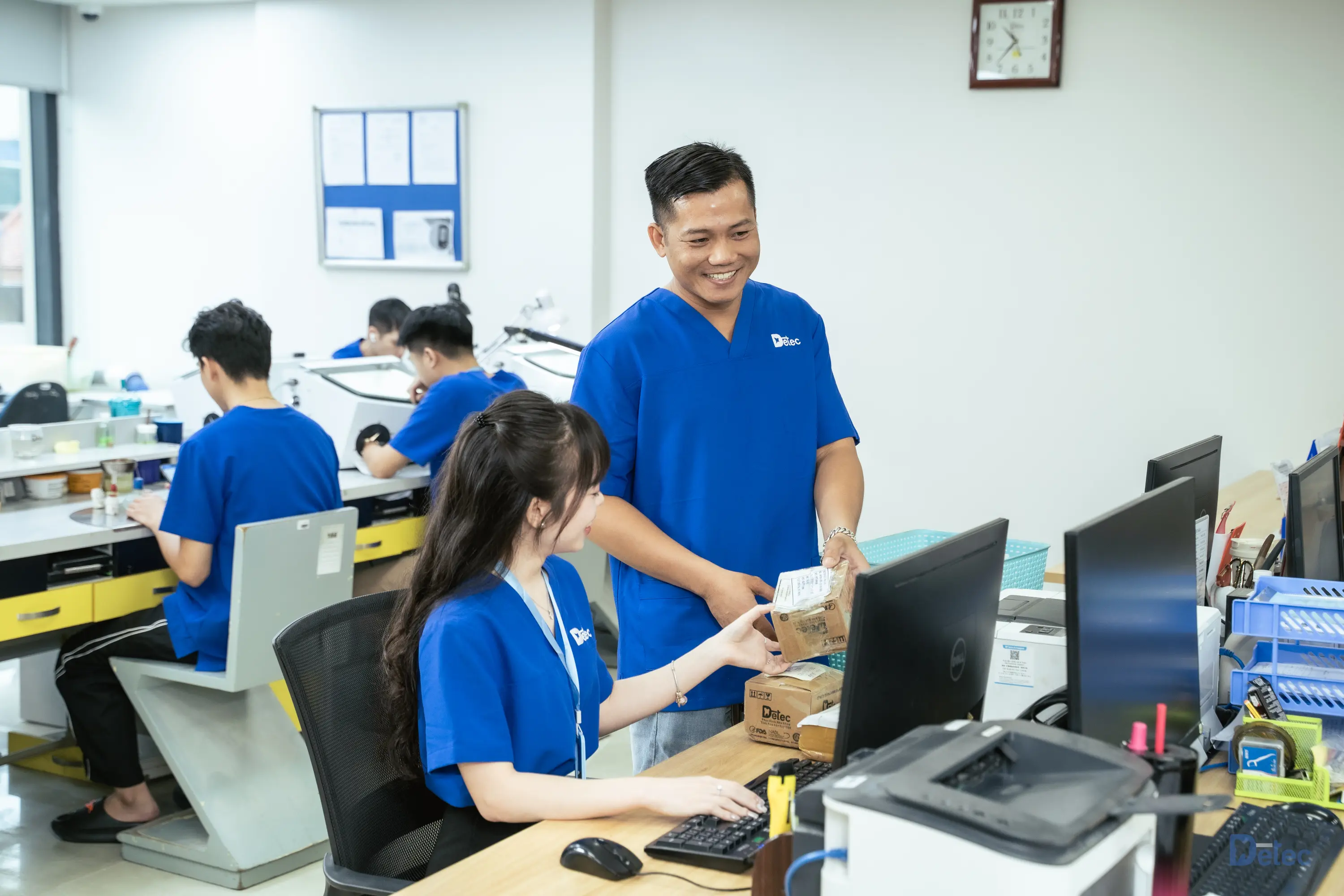
Establishing clear case communication and approvals
A prescription should state the restoration type, material preference, shade information, implant details where relevant, photographs, and any functional or aesthetic priorities. A short, consistent submission routine is often more valuable than long messages that vary by operator.
Approval rules should be equally clear. Decide who can approve a design, how revisions are requested, and when a case is paused for clarification. These simple agreements prevent assumptions from becoming production errors.
Connecting clinics with experienced dental technicians
Direct access to experienced technicians can make complex cases easier to plan. The conversation does not need to replace the prescription; it should clarify areas where clinical intent may not be obvious from a scan or written note. Over time, those conversations also help both teams develop a shared vocabulary.
Training is part of that relationship. A laboratory that invests in technician development can support more consistent interpretation across cases, especially as a clinic expands its restorative or orthodontic offering.
Creating a dependable workflow across time zones
International outsourcing adds a time-zone dimension, but it does not have to make communication slow. Set expected response windows, define escalation contacts, and use a shared case status system. The goal is to know whether a case is awaiting information, design approval, production, inspection, or shipment.
Reliable outsourcing is built through visible handoffs, not assumptions.
That principle applies to both small and high-volume accounts. A transparent status process gives the clinic confidence without requiring constant follow-up.
Verify quality assurance and clinical consistency
Quality assurance should be visible in the workflow, not treated as a final marketing phrase. Dental teams should ask how incoming data is checked, how designs are reviewed, how production parameters are controlled, and how finished work is inspected. They should also understand how issues are recorded and corrected.
ISO 13485 and professional quality standards
ISO 13485 is a useful quality-system reference because it focuses on controlled processes for medical devices. A laboratory should be able to explain how its quality system applies to documentation, production, inspection, training, and corrective action. Professional memberships and certifications can add context, but they should be considered alongside actual process evidence.
The source material identifies ISO 13485 and US NADL member standards as quality references for the service. Clinics should verify the current scope and documentation during partner evaluation.
Design reviews, manufacturing checks, and final inspections
A dependable quality process has several checkpoints. The design review confirms that the digital proposal reflects the prescription; manufacturing checks confirm that the approved design is being produced correctly; final inspection examines fit-related details, surfaces, contacts, shade, and packaging before dispatch.
Records matter here. When a question arises, the team should be able to trace the approved design, the relevant instructions, and the inspection outcome without reconstructing the case from scattered messages.
Reducing remakes while supporting predictable outcomes
Remakes can result from incomplete information, poor fit, a changed clinical plan, shipping damage, or a mismatch between expectations and the approved design. Tracking the reason for each remake is more useful than treating every remake as the same problem.
Use a small review cycle: identify the pattern, agree on a corrective action, and check whether the rate improves. Predictability comes from learning across cases, not from promising that every case will be problem-free.
Create an efficient end-to-end case workflow
An efficient workflow makes each handoff easy to understand. It should begin with secure submission and continue through design approval, fabrication, inspection, shipping, and receipt. When the steps are standardized, clinics spend less time searching for updates and more time managing patient care.
Submitting digital case files through a secure portal
The submission stage should collect the STL files, prescription, photographs, shade details, and clinical notes in one organized case record. A secure portal also provides a clearer audit trail than informal file sharing. Before sending, confirm that the scan is complete and that the requested restoration matches the treatment plan.
A short internal checklist can help teams avoid common omissions:
- Confirm the patient and case identifiers.
- Attach the complete digital scan and prescription.
- Add photographs, shade information, and implant details when relevant.
- State the approval contact and requested delivery date.
After submission, the case should have a visible status and a clear next action. That small amount of structure can prevent delays from being mistaken for production problems.
Reviewing designs before fabrication begins
Design approval is the clinical control point in a digital workflow. Review the margins, proximal contacts, occlusion, emergence profile, anatomy, and aesthetic direction according to the case. For larger rehabilitations, review the overall plan as well as individual units.
Changes should be recorded in the case file, with the revised design clearly identified. This avoids confusion when several versions circulate between the clinic and laboratory.
Coordinating international shipping, tracking, and delivery
Global shipping needs its own procedure. Confirm the carrier, tracking method, packaging expectations, delivery address, and process for reporting damage or delay. Trusted partners such as DHL or FedEx may be used with tracking, but the clinic should still know who owns each communication step.
International reliability is not only about transit time. It also depends on accurate documentation, predictable handoffs, and a response plan when a shipment does not arrive as expected.
Measure the business value of an innovative dental lab
A laboratory partnership should be reviewed through clinical, operational, and financial measures. Turnaround time matters, but so do remake frequency, staff workload, case acceptance, communication quality, and the ability to accommodate growth. A simple scorecard gives owners and lab directors a more balanced view.
Improving turnaround times and production capacity
Outsourcing can add capacity without requiring a practice or laboratory to purchase every machine or recruit for every specialized role. The benefit is strongest when incoming cases are complete and the partner has a defined production schedule. Track the time from submission to approval, approval to dispatch, and dispatch to receipt.
Capacity is not just a higher case count. It is the ability to accept more appropriate work while maintaining review quality and patient communication.
Managing costs without compromising quality
Compare total case cost rather than the laboratory fee alone. Include chair time, internal labor, shipping, remake exposure, inventory, equipment investment, and the administrative effort required to coordinate cases. This makes the financial discussion more realistic.
A useful global lab partner checklist can help teams compare cost alongside materials, digital workflow, certification, communication, and delivery reliability. The goal is not the cheapest case; it is a sustainable cost for a clinically acceptable result.
Using training, certifications, and service support to scale-growth
Growth places pressure on people as much as on equipment. Training helps clinical teams submit better cases, while technician development supports consistency on the production side. Certifications and documented procedures can make that growth easier to govern.
Service support also matters when a new location, restoration type, or digital protocol is introduced. Review whether the partner can explain its workflow, answer technical questions, and help the team correct recurring submission issues.
For teams building a broader operating model, related resources on AI implementation, healthcare AI research, and international payroll may appear in the wider business knowledge base, but dental outsourcing decisions should remain grounded in clinical workflow and production evidence. The same discipline applies when reviewing unrelated reference material such as tattoo cartridges or turnkey living: relevance and source quality should be checked before conclusions are carried into a dental operation.
Contact a dental lab partner
If your clinic or laboratory is ready to assess digital outsourcing, contact Detec through request a quote at detecdental.com. Share your case types, expected volume, and workflow requirements so the team can discuss a practical path to precision production and international delivery.
Conclusion
An innovate dental lab brings together digital case handling, skilled technical judgment, controlled quality processes, and dependable logistics. By evaluating those elements as one workflow—and measuring the results over time—dental clinics and laboratories can expand capacity without losing sight of fit, aesthetics, communication, or patient care.
Frequently Asked Questions
What does an innovative dental lab do?
It combines digital design and manufacturing with technician expertise, quality controls, case communication, and delivery coordination to support clinical teams.
Why outsource dental laboratory work?
Outsourcing can provide additional production capacity, access to specialized skills, and a more flexible cost structure without requiring every capability to be maintained in-house.
What files are commonly used for digital dental cases?
STL files are commonly used for digital scan and design workflows, usually accompanied by a prescription, photographs, shade information, and relevant clinical notes.
How should a clinic evaluate a dental lab?
Review the lab’s materials, technology, quality system, technician access, communication process, shipping method, turnaround expectations, and remake-review procedure.
Why is ISO 13485 relevant to dental laboratories?
ISO 13485 provides a framework for controlled processes related to medical devices, including documentation, production, inspection, training, and corrective action.
What helps reduce dental laboratory remakes?
Complete scans, precise prescriptions, clear design approvals, consistent clinical information, and a structured review of remake causes can all reduce avoidable repetition.
How can international dental lab shipping remain reliable?
Use tracked carriers, confirm packaging and delivery details, assign communication responsibilities, and establish a clear escalation process for delays or damaged shipments.


