

Key Takeaways
Transitioning to a digital-first approach elevates production accuracy while helping clinics scale efficiently by leveraging modern technology.
- Digital workflows replace manual impression taking with high-precision scanning and CAD/CAM software.
- Global labs offer specialized expertise and cost benefits without sacrificing material quality or compliance.
- Strategic partnerships with labs like Detec streamline case submissions through secure digital portals for faster clinical results.
- Modern dentistry relies on rigorous quality assurance standards like ISO 13485 to ensure consistency in every restoration.
- Long-term collaboration with a dedicated laboratory supports practice growth through consistent technical communication and innovation.
Understanding the digital dental laboratory workflow
The evolution from physical impressions to digital files
Moving away from traditional, bulky impression trays represents the most significant shift for modern practices. By utilizing digital dental laboratories that accept intraoral scans, your clinic can instantly transmit patient data for immediate review. This eliminates shipping delays and reduces the risk of errors associated with physical materials, ensuring a cleaner start to the design process.
Benefits of faster turnaround times with STL integrations
Standardizing your practice on STL file integration accelerates the entire restorative cycle. When you send digital files directly to a high-capacity lab, the design sequence begins within hours rather than days. This efficiency, which is a hallmark of the Detec Dental Lab professional ecosystem, allows clinics to provide patients with consistent, faster treatment plans while maintaining absolute precision.
Reducing chairside adjustments through digital design and prototyping
Virtual design software allows technicians to visualize restoration margins in high resolution before a single grain of material is cut. By reviewing these CAD models, teams can address potential fit issues early in the design cycle. This proactive approach significantly decreases the need for time-consuming chairside adjustments during the final seating, saving valuable professional hours and enhancing patient comfort.
Strategic advantages of global lab outsourcing
Achieving premium quality standards with competitive cost structures
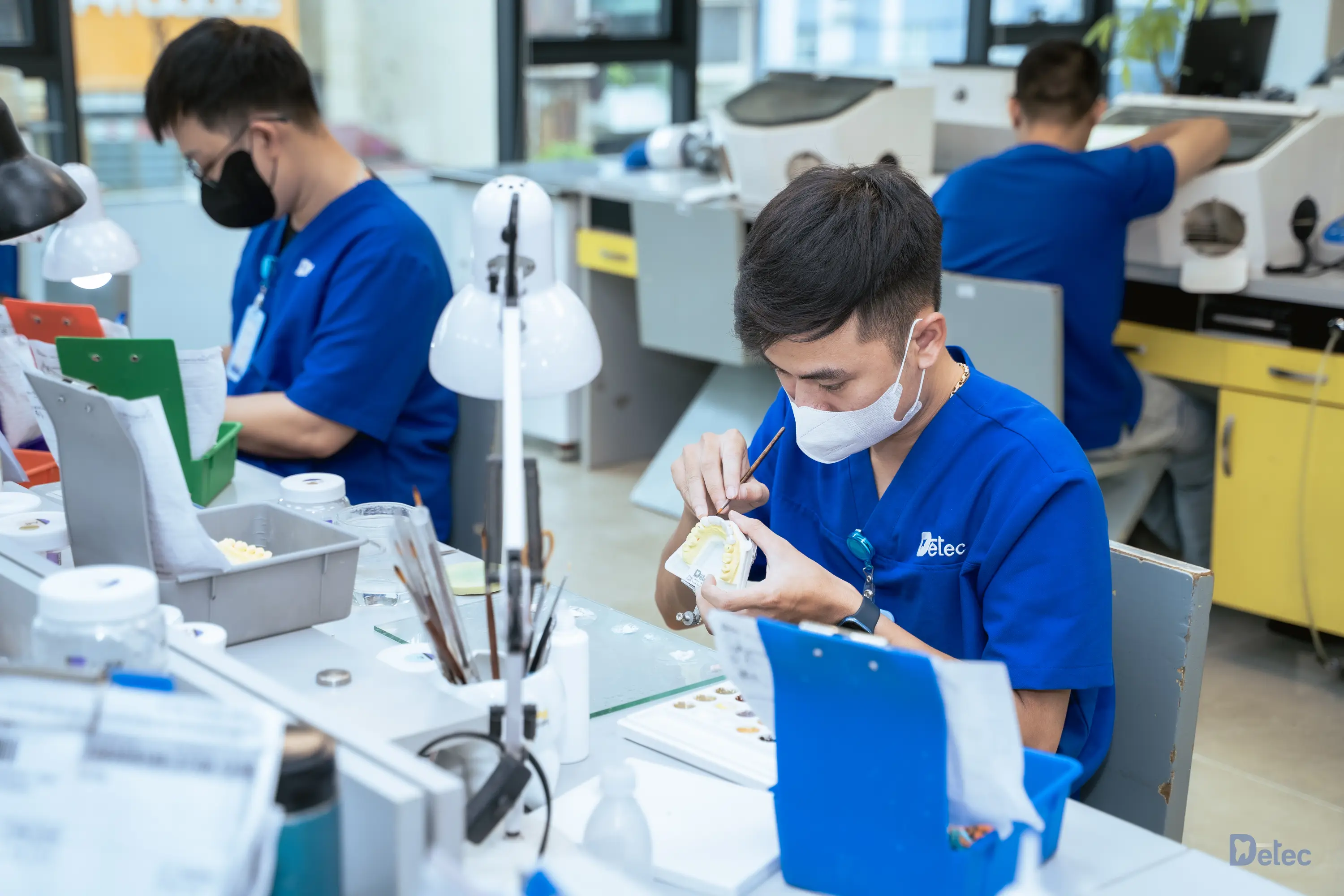
Outsourcing to specialized global manufacturers allows practices to tap into sophisticated machinery that might be cost-prohibitive to house internally. For instance, partner laboratories often utilize industrial-grade equipment that ensures uniform quality that meets or exceeds regional bench requirements.
Scaling production capacity without increasing internal overhead
Maintaining the agility to grow your caseload requires a flexible partner that handles the technical heavy lifting. By shifting production to an expert manufacturing team, clinics remove the burden of equipment maintenance and material stock management. The following table illustrates common capacity expansion benefits observed when practices integrate a professional advanced dental lab partner:
| Operational Factor | Without Professional Partner | With Integrated Partner |
|---|---|---|
| Fixed Asset Costs | High | Low |
| Equipment Maintenance | Internal Responsibility | Included in Service |
| Scaling Speed | Slow/Incremental | Immediate/Flexible |
Accessing specialized master technician expertise remotely
Collaborating with global experts provides your practice with a level of technical depth that is difficult to sustain solo. Partnering with a team like Detec offers direct access to master technicians and visionary professionals who are trained to handle complex restorative cases with high accuracy.
Core technologies driving modern dental precision
Advanced 3D scanning and high-definition CAD design software
Modern interfaces have turned complex tooth anatomy into navigable, high-definition digital maps. These tools are the cornerstone of a functional digital design workflow, ensuring that every restoration is modeled for perfect functional occlusion before fabrication even begins.
The role of precision CAD/CAM milling in restoration durability
Computer-aided manufacturing provides a level of structural consistency that hand-layered methods often struggle to replicate. Machines now operate with sub-micron tolerances, ensuring that every crown or bridge maintains structural integrity throughout its lifespan. This technology is foundational for consistent outcomes in prosthetic dental laboratories worldwide.
Integrating 3D-printed prosthetics for efficient custom manufacturing
Additive manufacturing brings unmatched flexibility to the fabrication floor, allowing for rapid modeling and custom components. This technology supports:
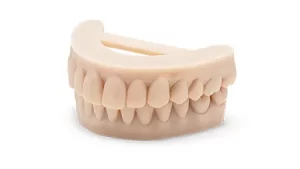
- High-resolution printing of accurate diagnostic models.
- Rapid output of clear aligner templates and surgical guides.
- Precision nesting to reduce material waste during production.
- Scalable workflows across multiple patient cases simultaneously.
These capabilities foster a more adaptive clinical service model.
Evaluating expertise and quality assurance protocols
The necessity of ISO 13485 and international certification standards
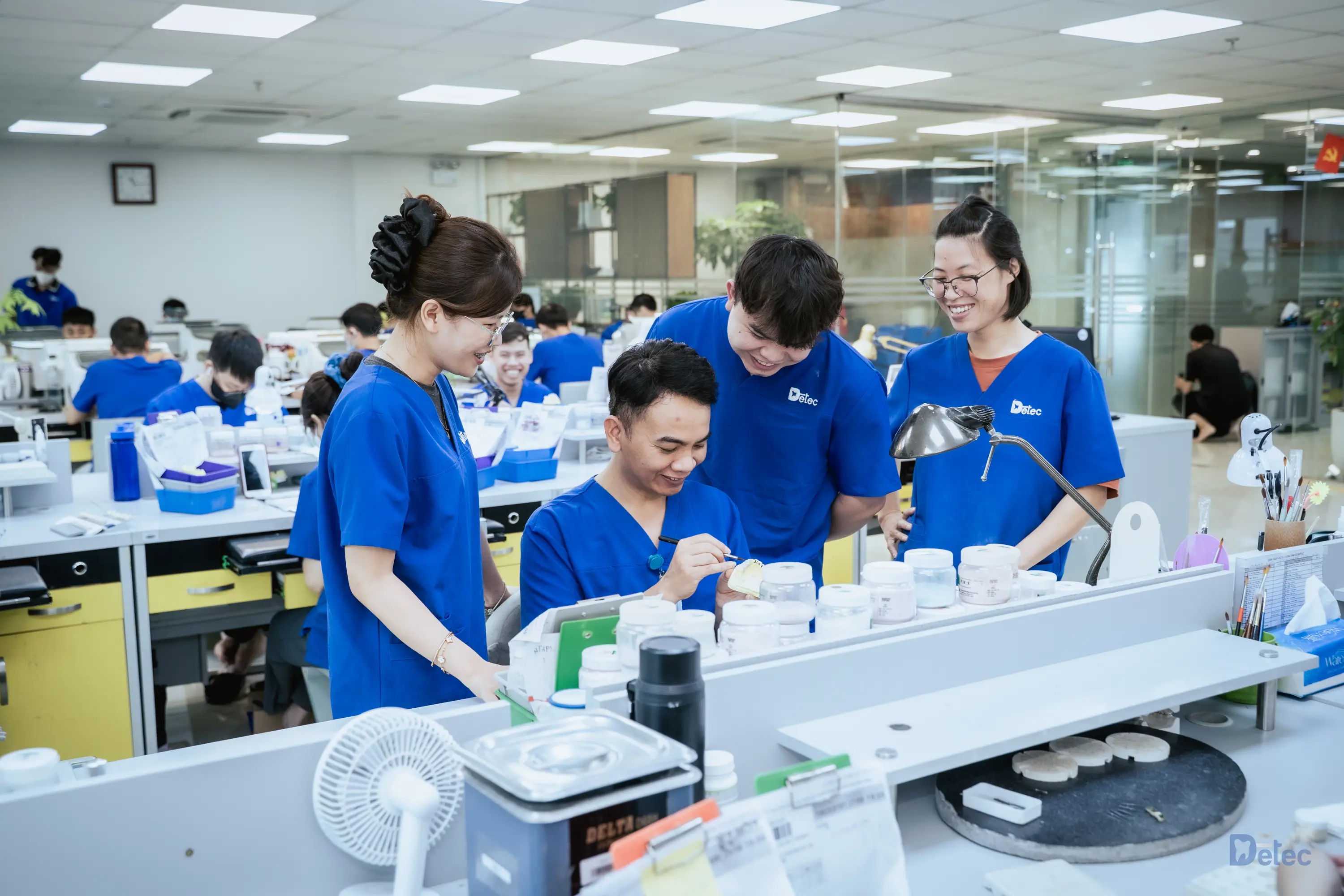
Quality is not accidental; it is built into the framework of certified manufacturing facilities. Adhering to standards like ISO 13485 proves that a laboratory has robust protocols in place for materials management and outcome verification across every single device produced.
Assessing the impact of ongoing technician training and education programs
Continuous learning is required to stay ahead of rapid industry changes in materials and technology. A laboratory that invests in recurring clinical education and internal training for its technicians ultimately delivers more refined skill sets back to its partners at the chairside.
Verifying institutional experience to ensure consistent material quality
Years of operational history serve as a reliable indicator of a laboratory’s commitment to longevity. Experienced teams understand which materials perform best under specific bite pressures and physiological conditions, ensuring that your long-term clinical-laboratory partnership remains built on a foundation of reliability.
Optimizing your clinical-laboratory partnership
Best practices for submitting secure and accurate digital case files
Digital safety and fidelity are non-negotiable when sending sensitive patient data. Using secure portals for case submission prevents file corruption and ensures that metadata—such as bite registration and shade selection—arrive exactly as intended, reducing the need for repeat scans.
Establishing direct lines of communication with lead technicians
Success in restorative dentistry thrives when the line between the clinic and the lab is transparent. Establishing a direct relationship with a lead technician allows for real-time adjustments and faster problem-solving, which ultimately speeds up the delivery of high-quality restorations.
Utilizing collaborative design approval loops for patient satisfaction
YouTube video
Interactive design loops transform the lab from a vendor into an active member of your clinical team. By reviewing digital mockups together, providers can confirm the aesthetics and anatomy, creating a shared vision that ensures the final fit leaves the patient satisfied.
Future-proofing your practice with innovative solutions
Adopting minimally invasive aesthetics such as SmartVeneer®
Modern patients gravitate toward treatments that prioritize natural beauty without sacrificing healthy structure. Utilizing advanced, minimally invasive systems like SmartVeneer® allows practitioners to provide high-aesthetic outcomes that align with contemporary clinical preferences.
Expanding your service catalog into orthodontics and clear aligners
Modern infrastructure enables clinics to easily diversify their treatment offerings. By partnering with experts in custom appliance sets or aligners, you can capture a larger share of your local aesthetic market without requiring advanced orthodontic certification in-house.
Sustaining growth through long-term collaborative laboratory partnerships
Partnering with Detec represents a calculated investment in the long-term scalability of your health practice. By delegating the complexities of fabrication to a trusted team of master artisans and CAD/CAM specialists, you retain the freedom to focus entirely on patient engagement and clinical excellence.
Conclusion
Scaling a practice today relies on the seamless convergence of clinical skill and the structural support of a high-tech laboratory. By embracing digital workflows, prioritizing rigorous quality assurance, and fostering deep collaboration with your dental laboratory partner, you create a sustainable model for predictable, high-value outcomes that grow alongside your patients’ needs.
Frequently Asked Questions
How does moving to a digital workflow impact patient comfort?
Patients typically enjoy the digital impression process because it removes the use of messy, unpleasant tray materials and is significantly faster, resulting in a more professional and comfortable visit.
Can digital files be used for all types of dental restorations?
Yes, modern digital systems are compatible with virtually all major restoration types, including crowns, bridges, implants, veneers, and complex full-arch solutions.
Why is ISO certification important for a dental lab partner?
ISO certification indicates that the laboratory follows strict, internationally recognized management systems to ensure that manufacturing processes are stable, reproducible, and verifiable, leading to higher quality restorations.
What should a clinic look for in a lab’s communication protocol?
Seek out a partner that offers accessible contacts, such as a dedicated account manager or lead technician, and utilizes secure digital platforms for real-time case status updates and direct collaboration.
How can a digital lab help a new clinic scale its services?
By handling the manufacturing and technical design components, laboratories allow new clinics to minimize investment in hardware and labor overhead, providing immediate access to premium manufacturing capabilities.
Is physical impression material still necessary in a digital office?
Most modern practices find they can move to a nearly 100% digital model, though keeping basic tray setups on hand for highly complex or rare edge cases is still a common safety practice.
What is the advantage of reviewing digital designs before final fabrication?
This review step allows your clinical team to verify anatomy, margins, and occlusal clearance on a virtual model, which helps eliminate errors and prevents the need for major adjustments once the restoration arrives.


