

Key Takeaways
A dependable dental lab crown service brings together material knowledge, digital communication, careful inspection, and reliable logistics.
- Choose zirconia, E.max, or PFM according to the clinical demands of each case.
- Use a digital workflow to simplify file transfer, design review, production, and tracking.
- Expect documented quality controls for fit, occlusion, contacts, margins, and materials.
- Outsourcing can expand production capacity without requiring every capability in-house.
- Evaluate global partners through certifications, communication, shipping policies, and pilot cases.
What a dental lab crown service includes
A dental lab crown service is more than fabrication at the end of a restorative appointment. It may include material guidance, digital design, shade communication, technician review, finishing, inspection, and delivery coordination. For clinic owners and lab directors, the real value is a workflow that remains predictable from prescription to placement.
The best arrangement also leaves room for clinical judgment. A laboratory should make case information easy to share, clarify questions before production, and provide enough documentation for the receiving team to understand what was made and how it was checked.
Crown materials for different clinical needs
Crowns are commonly produced in zirconia, glass-ceramic such as E.max, or porcelain-fused-to-metal. Each material brings a different balance of strength, translucency, preparation requirements, and technician technique. Material selection should begin with the location of the restoration, functional load, available clearance, and the patient’s aesthetic expectations.
A laboratory can help translate those factors into a practical prescription rather than treating every crown as the same product. For example, Detec Zirconia is listed among the restorative options available through the documented service range, while E.max is positioned for crowns and veneers where appearance is central.
Single crowns, bridges, and implant restorations
A full-service crown workflow may support single-unit restorations, bridges, and implant-related work. Implant cases require especially clear communication about the implant system, emergence profile, abutment design, screw or cement retention, and the restorative space available. The laboratory’s role is to work from the prescription and digital records supplied by the clinical team.
The same principle applies to bridges: connectors, path of insertion, pontic design, and occlusion need to be considered together. When the lab receives complete information early, technicians can identify uncertainties before manufacturing rather than waiting for an adjustment appointment.
Digital design and custom shade matching
Digital design gives the clinical team an opportunity to review contours, contacts, and occlusal relationships before the restoration is made. Shade communication still benefits from good photography, a clear prescription, and an agreed reference, particularly for anterior cases. Digital records do not replace clinical judgment; they make the information easier to preserve and share.
A useful service should also make room for technician questions. Small details, such as the intended surface texture or the relationship to neighboring teeth, can influence the final result more than a generic shade label alone.
Support for clinics, dental groups, and partner laboratories
Clinics may need a straightforward case-submission process, while multi-location groups often need repeatable forms, consistent communication, and production visibility. Partner laboratories may value additional manufacturing capacity without giving up control of the doctor relationship. The right service model should be flexible enough to support each arrangement without making the workflow harder to manage.
For an overview of outsourcing decisions, this crown lab outsourcing guide offers a useful companion resource. It can help teams compare quality, technology, cost, and partnership considerations before changing suppliers.
How to choose the right crown material
Material selection should follow the case, not a blanket preference. The anterior and posterior regions place different demands on translucency, strength, and visual integration, while occlusion and available space can narrow the choices further. A good prescription records the clinical reason for the selection so the technician can design and finish the restoration accordingly.
The following section compares common options in practical terms. No material is ideal for every patient, and the final decision belongs to the treating clinician in consultation with the laboratory.
Zirconia for strength and everyday durability
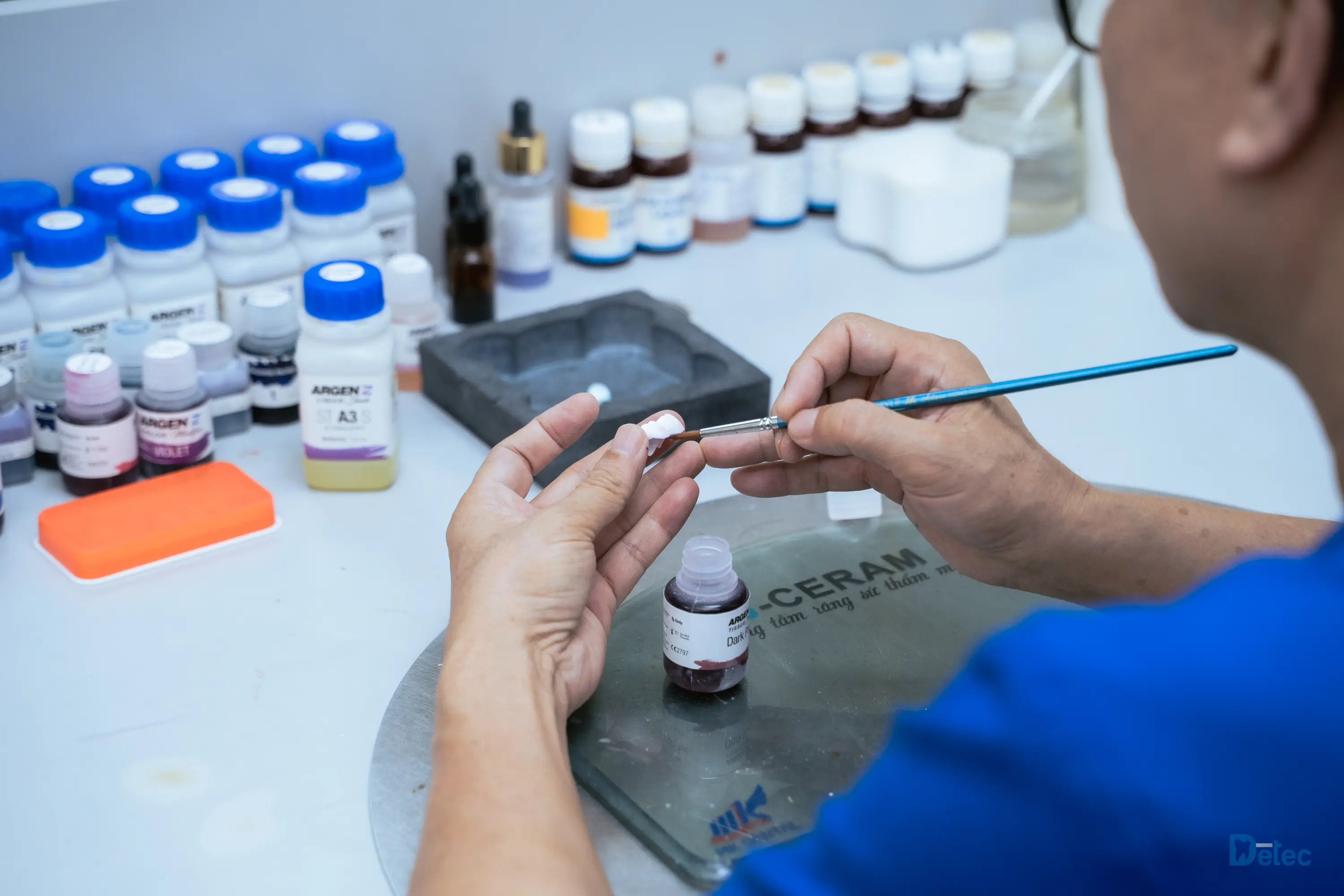
Zirconia is often considered when functional durability and resistance to heavy loading are priorities. It can be used for crowns and bridges, with the final design and finish shaped by the case prescription. Detec Zirconia is one documented option within the laboratory’s aesthetic and fixed restoration range.
The phrase “strong material” should not end the discussion. Reduction, occlusal design, opposing dentition, translucency requirements, and finishing all affect whether a zirconia restoration is appropriate for a particular patient.
E.max for lifelike anterior aesthetics
E.max is a glass-ceramic option commonly selected when lifelike appearance and light transmission are important, especially in visible areas. It requires careful attention to preparation, thickness, bonding protocol, and occlusion. The documented service range includes E.max veneers and crowns, making it a relevant option for aesthetic restorative planning.
Shade matching works best when the laboratory receives useful clinical information rather than a shade tab alone. Photographs, stump shade, neighboring tooth references, and notes about translucency can give the technician a more complete visual brief.
PFM for proven clinical versatility
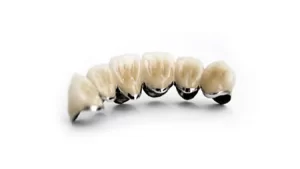
Porcelain-fused-to-metal remains a familiar choice for clinicians who value a metal substructure combined with an aesthetic veneering layer. It can be useful when a case calls for established restorative behavior and broad clinical versatility. Detec PFM Restorations are listed among the documented fixed restoration offerings.
PFM planning still deserves attention to margin design, metal visibility, occlusion, and the desired emergence profile. A clear prescription helps the laboratory decide how to balance strength and appearance within the case parameters.
Matching material selection to case requirements
A short material checklist can make communication more consistent across a clinic or group. It should prompt the prescriber to consider the clinical site, functional demand, aesthetic goal, and available restorative space before selecting a material.
- Identify whether the restoration is anterior, posterior, or part of a bridge.
- Record occlusal risk, parafunctional concerns, and available clearance.
- Define the required shade, translucency, surface texture, and neighboring references.
- Confirm preparation design, margin visibility, and the intended cementation approach.
Once these details are captured, the laboratory can respond to the actual case rather than a material request separated from its clinical context. That small improvement often makes material conversations more efficient.
How the digital crown workflow improves results
A digital workflow connects the clinic, technician, designer, production team, and shipping process through a shared case record. It can reduce manual handling and make design information easier to review before manufacturing. The benefit is not simply speed; it is the ability to identify missing information while changes are still manageable.
For international cases, the workflow also needs secure file transfer and clear status updates. Clinics should know what has been received, what requires approval, and when the finished restoration has entered delivery.
Sending STL files through a secure portal
The process begins when the clinic submits the digital case file through a secure portal. STL files can carry the scanned geometry needed for design, while the prescription and supporting images provide the clinical context. File naming, patient identifiers, restoration number, and written instructions should be consistent so the case can be matched correctly.
A secure submission route is especially useful for clinics working with a laboratory across borders. It gives both teams a defined starting point and reduces reliance on scattered email attachments.
Reviewing and approving the digital design
After submission, the laboratory team creates a digital design for clinical approval. The review should focus on the features that matter chairside: margin placement, proximal contacts, occlusion, contours, emergence, and the relationship with adjacent teeth. If changes are needed, they should be recorded clearly so the technician is working from one agreed version.
This stage is where early design review can prevent avoidable production work. It is easier to discuss a contour on screen than to correct a finished restoration after delivery.
Using CAD/CAM manufacturing and 3D printing
Once the design is approved, the restoration can move into CAD/CAM manufacturing. The documented digital laboratory process includes precision CAD/CAM technology, milling machines, 3D scanners, design software, and 3D printing capabilities. Manufacturing is then followed by finishing and inspection appropriate to the restoration.
The technology supports repeatability, but technician oversight remains essential. Digital production is most effective when software, machinery, materials, and experienced human review work as one connected process.
Tracking production, shipping, and delivery
The final workflow should continue after fabrication. A useful service provides production visibility and ships through trusted partners with tracking, allowing the clinic to plan the patient appointment with better information. International shipping also calls for clear handoffs, realistic delivery expectations, and a process for reporting transit issues.
For groups managing several locations, consistent status language matters. “Received,” “design approval,” “in production,” and “shipped” should mean the same thing to everyone using the account.
What quality assurance should look like
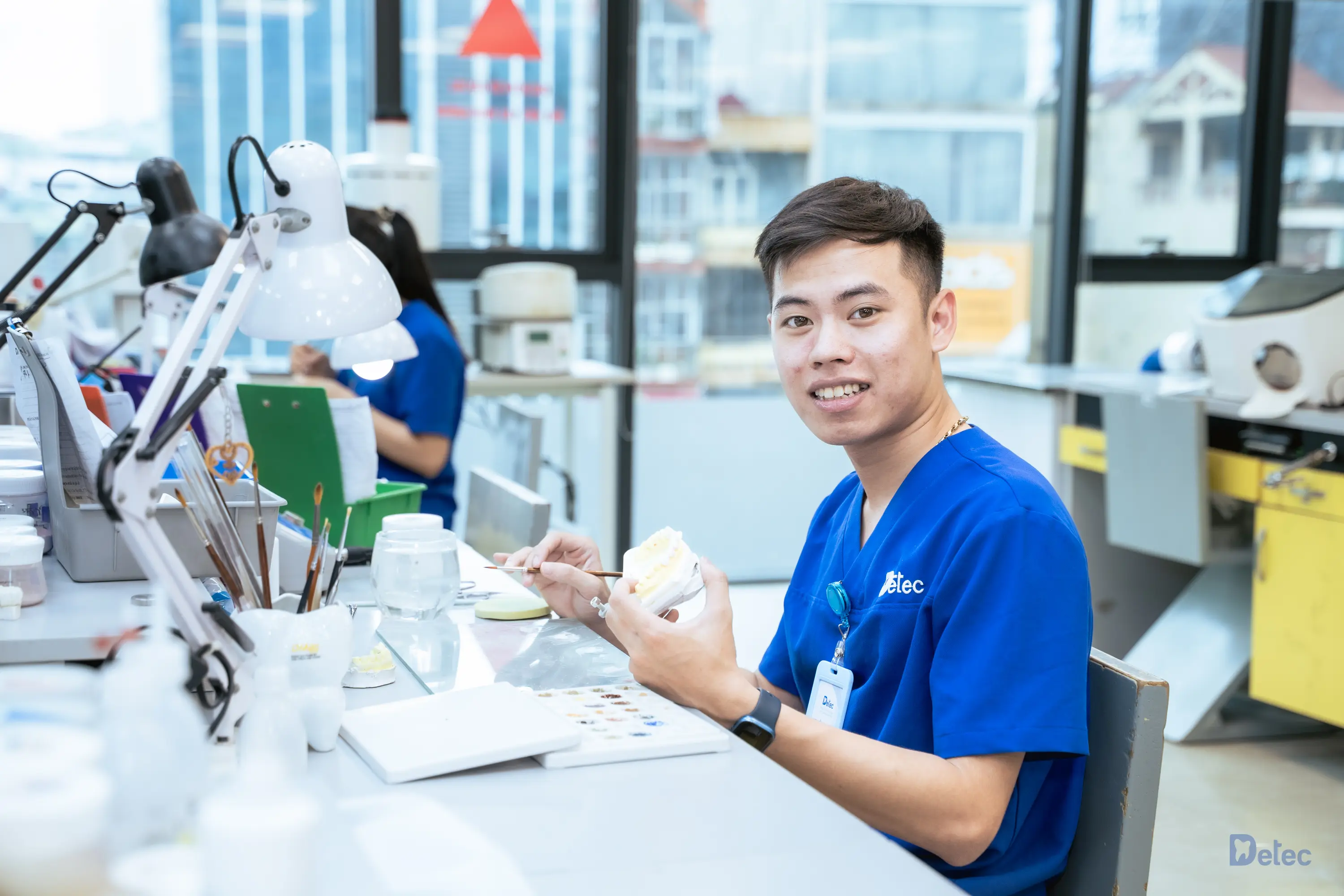
Quality assurance should be visible in the process, not treated as a vague promise. It includes the materials selected, the way the restoration is designed and manufactured, the inspections performed before dispatch, and the records retained for the case. A laboratory partner should be willing to explain these checkpoints in practical terms.
Clinic owners and lab directors should ask how quality is maintained when volume increases. A process that works for occasional cases must also remain documented and repeatable when multiple clinicians or locations are submitting work.
Material traceability and manufacturing standards
Material traceability connects the restoration to the material and manufacturing records used to produce it. Standards such as ISO 13485 provide a framework for a quality management system, while membership or external recognition may offer additional context when evaluating a supplier. Documentation should be available in a form that makes sense for the receiving practice or laboratory.
The documented quality positioning for Detec includes ISO 13485 and US NADL member standards. Those references should be considered alongside the lab’s actual case controls, communication practices, and ability to provide relevant records.
Fit, occlusion, contacts, and margin inspection
Before dispatch, the restoration should be checked against the approved design and the prescription. Inspection commonly considers internal fit, marginal adaptation, proximal contacts, occlusion, contours, shade, and surface finish. The exact checks may vary by restoration type, but the laboratory should be able to describe what technicians look for.
A written inspection process is more useful than a general claim of precision. It gives the clinical team a basis for discussing an adjustment, remake, or design change when the result does not match the intended case.
The following checkpoints are useful to clarify with any prospective partner:
| Quality area | What to ask about | Why it matters |
|---|---|---|
| Materials | Are material records retained? | Supports traceability and documentation |
| Design | Is the approved version recorded? | Prevents production from outdated instructions |
| Fit and function | Are contacts and occlusion inspected? | Reduces avoidable chairside corrections |
| Final finish | Are shade and surface details reviewed? | Supports clinical and aesthetic consistency |
These questions do not replace the clinician’s final evaluation, but they make the laboratory’s quality system easier to understand. They also create a more useful basis for comparing suppliers.
Technician review and case communication
Technician review is especially valuable when the scan, preparation, or prescription contains an ambiguity. A direct communication channel allows the lab to ask about margin visibility, occlusal clearance, implant information, or aesthetic references before proceeding. That conversation is part of quality assurance, not an inconvenience added to it.
For a broader evaluation framework, this digital laboratory selection guide discusses materials, case communication, CAD/CAM design, approvals, compliance, and technician training. Its criteria can help a team turn general expectations into questions for supplier interviews.
Certifications, documentation, and consistency at scale
Certifications and standards matter most when they are supported by consistent operating practices. Ask how records are maintained, how technicians are trained, how nonconforming work is handled, and how feedback is used to improve future cases. Multi-location practices should also check whether the same documentation and inspection approach applies across their account.
Consistency is not sameness in every clinical case. It means the laboratory applies a dependable process while still adapting design and material decisions to each prescription.
How outsourcing crowns can support practice growth
Outsourcing can give a clinic or laboratory access to additional production capacity without requiring every milling, scanning, finishing, or training resource in-house. The decision should be based on the complete operating picture rather than the quoted unit price alone. Quality, communication, shipping, remakes, and internal coordination all affect the real cost of a case.
For dental groups, outsourcing may also help standardize restorative workflows across locations. The arrangement works best when the partner is treated as part of the operating system, with shared expectations and regular performance review.
Comparing production costs without compromising quality
A lower laboratory fee is not automatically a lower total cost. Teams should consider chairside adjustment time, remake frequency, shipping, staff administration, and the effect of delayed appointments. A fair comparison uses similar case types and includes the service elements that influence the final outcome.
Practice owners may also benefit from reviewing dental practice accounting resources when assessing laboratory spend, cash flow, and profitability. Financial visibility makes it easier to separate a genuinely efficient partnership from one that only appears inexpensive at first glance.
Managing higher case volumes and turnaround expectations
When volume grows, the laboratory must have a clear intake process and enough production capacity to keep cases moving. The clinic should understand ordinary turnaround expectations, approval windows, shipping schedules, and escalation routes. These details become more important when several providers submit cases at once.
A practical service-level discussion should cover forecasted volume rather than a single average month. It should also account for seasonal demand, complex restorations, and the time required for clinical approvals.
Accessing specialized technicians and advanced technology
Outsourcing can provide access to technicians with experience in particular restorative categories and to equipment that would be costly to maintain internally. A digital lab may combine 3D scanning, design software, CAD/CAM milling, and 3D printing within one production system. The clinic still needs to confirm which capabilities are actually available for its case mix.
Technology should serve the prescription, not dictate it. The strongest partnerships combine experienced technician judgment with a digital process that makes the work easier to review and reproduce.
Building a dependable long-term lab partnership
A long-term relationship develops through clear expectations, responsive case communication, and regular review of performance. Useful measures may include remake reasons, approval cycle time, delivery reliability, unresolved cases, and feedback from clinicians. These measures are more informative when discussed openly rather than used only as a scorecard.
A partner should also understand the practice’s growth plans. A group expanding into new locations may need standardized onboarding, while a smaller clinic may value direct technician access and straightforward support.
How to evaluate a global dental lab crown partner
International outsourcing adds opportunities as well as operational questions. A partner may offer competitive manufacturing costs and broad digital capability, but the clinic still needs confidence in quality systems, communication, export logistics, and accountability. Geography should be evaluated as part of the workflow, not as a substitute for it.
A structured review helps prevent a supplier decision from resting on attractive samples alone. The goal is to understand how the laboratory performs repeatedly, under the conditions your team will actually create.
Reviewing experience, capabilities, and certifications
Begin with the laboratory’s history, service range, equipment, technician training, and quality documentation. Ask whether it handles the restoration types your team sends most often and whether its digital workflow accepts the files you use. A documented global dental lab service can provide a useful reference point for comparing restorative scope, digital operations, and quality positioning.
Do not assume that a long product list equals competence in every case. Request examples of the relevant workflow, clarify prescription requirements, and confirm who reviews complex cases.
Assessing communication across international time zones
Time-zone differences are manageable when communication has a defined structure. Determine when support is available, how urgent questions are escalated, and whether technicians can participate in case discussions. Shared terminology and written design approvals can reduce misunderstandings when teams are not online simultaneously.
This is also a good place to consider the practice’s broader patient-acquisition plans. For example, local dental SEO may help a growing clinic fill appointments, but production planning must grow alongside demand so new cases do not overwhelm the restorative workflow.
Confirming shipping, remakes, and case-support policies
Before sending production work, ask for written policies covering shipping partners, tracking, customs documentation, damaged packages, remakes, adjustments, and case disputes. The policy should explain what information is needed, who reviews the issue, and how the next step is communicated. A simple process protects both sides when a case does not arrive as expected.
It can also be useful to compare how different international workflows describe delivery and case support, using an external lab workflow example only as a point of reference. The final decision should rest on the partner’s own documented terms and demonstrated performance.
Starting with a pilot case and measuring performance
A pilot case gives the team a controlled way to test file submission, design approval, communication, manufacturing, packaging, and delivery. Choose a representative case rather than the easiest possible restoration. Record what worked, what required clarification, and whether the finished work matched the approved design.
After the pilot, agree on a review period and a small set of measures. This three-mile dental SEO guide is not a laboratory standard, but it illustrates a broader operational lesson: defined scope and measurable performance are more useful than vague expectations.
For teams exploring related operational questions, resources on professional cartridge quality, lien-based medical care, and practice accounting may appear in wider business research. They are separate topics, so they should not distract from the clinical, logistical, and quality criteria used to select a crown partner.
Conclusion
A reliable dental lab crown partnership connects appropriate materials, careful digital design, documented quality checks, and dependable global delivery. Clinics and laboratories can protect clinical consistency while expanding capacity by testing a partner through a representative pilot case and clear performance measures. To discuss your requirements and request a quote, contact the dental lab team through detecdental.com.
Frequently Asked Questions
What does a dental lab crown service usually include?
It may include material selection support, digital design, shade communication, manufacturing, finishing, inspection, packaging, shipping, and case support. The exact scope varies by laboratory and restoration type.
Which crown material is strongest?
Zirconia is commonly selected when strength and durability are priorities, but suitability depends on preparation, occlusion, clearance, design, and the patient’s clinical needs. Material choice should be made case by case.
When is E.max a suitable crown material?
E.max is often considered for cases where natural appearance and light transmission are important, particularly in visible areas. Preparation design, thickness, bonding, and occlusion must still be evaluated.
Is PFM still used for dental crowns?
Yes. PFM remains a familiar restorative option because it combines a metal substructure with an aesthetic veneering layer. Its suitability depends on the case design, margin requirements, occlusion, and aesthetic expectations.
What is an STL file in digital dentistry?
An STL file is a digital representation of scanned three-dimensional geometry. It can be sent to a laboratory for design and manufacturing, usually together with the prescription and supporting clinical information.
How can a clinic evaluate a global dental laboratory?
Review the lab’s relevant experience, materials, technology, quality documentation, communication process, shipping arrangements, remake policy, and case-support terms. A representative pilot case is a practical final test.
What should a laboratory inspect before shipping a crown?
Inspection may include fit, margins, contacts, occlusion, contours, shade, surface finish, and correspondence with the approved design. The specific checks should be appropriate to the restoration and documented by the laboratory.


