

Key Takeaways
A legitimate dental laboratory should be transparent about its business, manufacturing process, materials, and quality controls.
- A real laboratory is different from a reseller, even when both sell custom dental products online.
- A night guard can be well made and still be inappropriate without a proper clinical evaluation.
- Reviews are useful for spotting patterns, but they do not replace credential checks or professional advice.
- Digital scanning, CAD/CAM design, and documented quality systems can improve consistency when used correctly.
- The right choice depends on your clinical needs, the level of supervision required, and the laboratory’s communication process.
What “legit” means for a dental lab
When people ask, “is JS Dental Lab legit,” they may be asking several different questions at once. They may want to know whether the company is real, whether its products are made by qualified technicians, or whether an online ordering process is safe for their particular dental condition. Those questions deserve separate answers. A business can be genuine while a particular product is still unsuitable for a particular patient.
For aspiring technicians and dental professionals, legitimacy also has a technical meaning. It involves traceability, material handling, accurate records, communication with clinicians, and repeatable manufacturing steps. A polished website is only one small part of that picture.
The difference between a real lab and a reseller
A dental laboratory receives or creates information used to manufacture an appliance or restoration. That may include a physical impression, a digital scan, a prescription, photographs, or design instructions from a dental professional. Technicians then work within the limits of that information, selecting materials and following a defined production process.
A reseller, by contrast, may simply market a product made elsewhere. That is not automatically unlawful or unsafe, but it makes it harder to determine who designed the product, where it was made, and who handles remakes or technical questions. A credible laboratory should be willing to identify its business entity, explain its workflow in plain language, and state whether production is performed in-house or through another facility.
This is why a lab evaluation should begin with evidence rather than branding. Review the company’s address, customer-service channels, terms, and professional information. For dental practices, a structured quality lab selection guide can also help organize questions about capabilities, digital workflows, turnaround, and quality assurance.
Why dental products require professional oversight
A night guard is not merely a piece of plastic. Its thickness, extension, occlusion, retention, and surface finish can affect comfort and function. A person with active decay, periodontal disease, loose teeth, jaw symptoms, orthodontic appliances, or a complicated bite may need an examination before selecting an appliance.
Direct ordering can be convenient for someone replacing a known appliance or seeking a straightforward product for a stable situation. It is less suitable when the underlying cause of pain or tooth wear has not been assessed. A laboratory technician can fabricate to a prescription or impression, but does not replace the dentist’s role in diagnosis.
That division of responsibility is useful for technicians to understand. The laboratory contributes precision, materials knowledge, and craftsmanship; the clinician evaluates the patient, establishes the treatment plan, and decides whether the appliance is appropriate.
How manufacturing standards affect patient safety
Modern dental manufacturing depends on small details. An impression must capture the relevant anatomy. A scan must be complete and properly aligned. A digital design must be reviewed against the prescription, and the finished appliance must be checked for defects, fit, and intended use. Each handoff creates an opportunity for an error, so documented checkpoints matter.
A useful quality system does not guarantee that every case will be perfect. It does, however, make mistakes easier to identify, correct, and learn from. For a broader view of how digital workflows and design approval support clinical work, see this overview of digital dental laboratory processes.
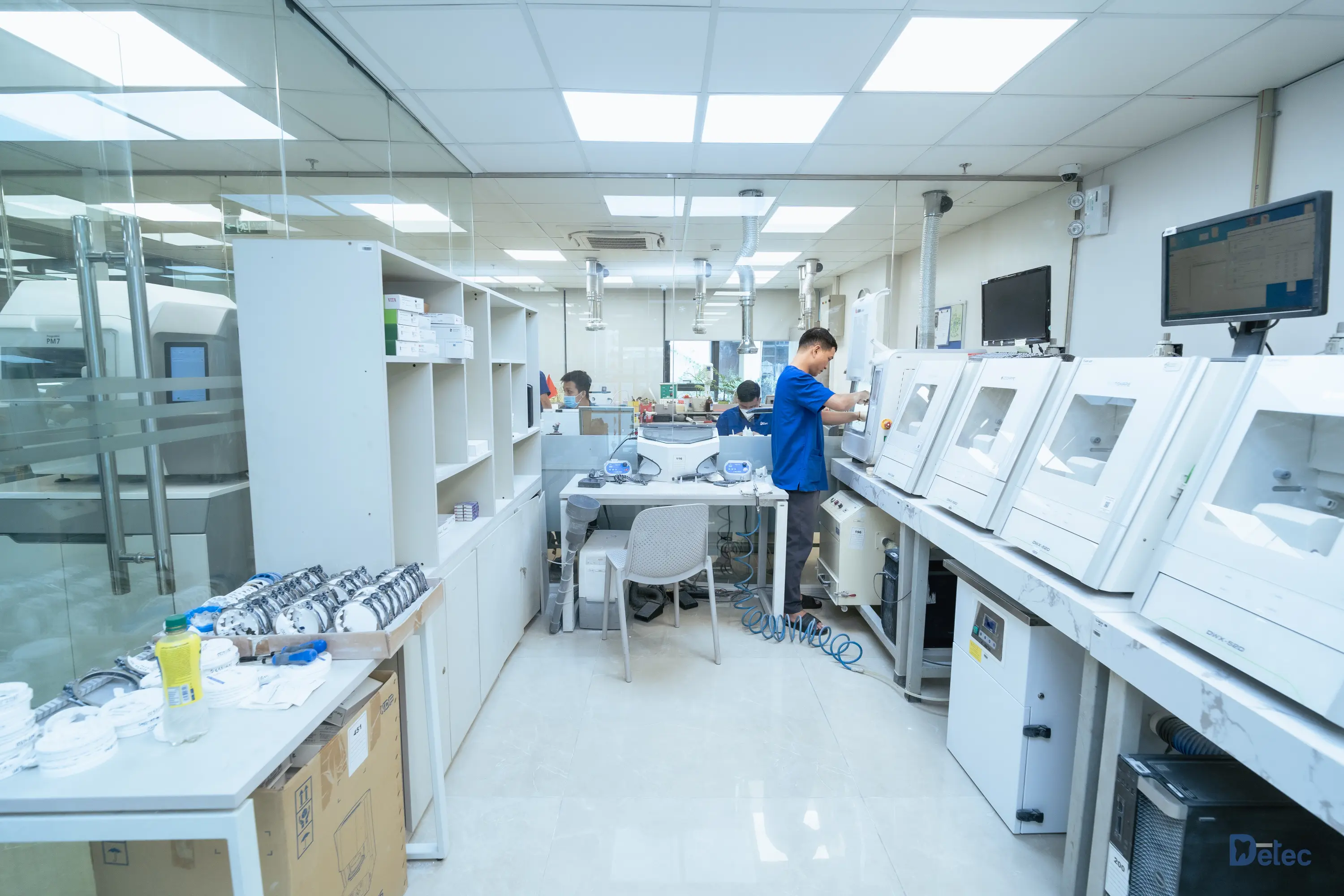
The same principle applies to education. Detec describes nearly 30 years of dental-laboratory experience and operates a dedicated Dental Training School, while its knowledge base emphasizes CAD/CAM milling machines, 3D scanners, and design software. That combination illustrates the level of technical precision modern dental professionals should expect from a serious laboratory environment.
How to verify JS Dental Lab’s business credentials
Business verification is a practical first step because it separates an identifiable company from an anonymous online storefront. It does not prove that every appliance will fit every customer, but it gives you a foundation for evaluating accountability. Look for consistent information across the company website, payment records, shipping documents, and independent business listings.
The goal is not to collect impressive-sounding badges. It is to confirm who is responsible for the transaction, where questions are directed, and what happens if an impression fails or an appliance needs correction.
Checking company details and professional affiliations
Public business records can provide useful context. One available BBB profile identifies JS Dental Lab as a dental laboratory located in Hayward, California, while also cautioning that BBB profiles rely on information from third parties and do not endorse a business or verify every claim. That makes the profile a starting point, not a final judgment.
Check whether the company gives a physical mailing address, working telephone or email support, clear ordering terms, and a process for handling complaints. Professional affiliations may add context, but they should be viewed alongside operational evidence. A laboratory that answers detailed questions consistently is generally easier to work with than one that offers only vague assurances.
Reviewing laboratory certifications and quality systems
Certification claims should be specific. Ask which organization issued the certification, what facility or process it covers, whether it is current, and whether the scope applies to the product being considered. “Dental grade” or “professional quality” are not substitutes for a named material, documented process, or clear quality-control explanation.
For a dental practice, the review should extend beyond a single certificate. Ask how cases are identified, how designs are approved, how remakes are documented, and how materials are traced. The laboratory partnership checklist offers a useful framework for discussing these operational details before sending recurring case volume.
Assessing transparency about technicians and manufacturing locations
Transparency does not mean every customer needs a technician’s personal biography. It means the laboratory can explain who performs the work, whether production is in-house, and where manufacturing takes place. It should also clarify how technical questions are escalated when a customer or clinician needs help.
This matters particularly in digital dentistry, where design, milling, finishing, and inspection may happen in different departments or facilities. A clear workflow gives the buyer a better sense of accountability. It also helps dental professionals decide whether the laboratory can support the level of collaboration their cases require.
Evaluating JS Dental Lab’s night guards and other products
Product evaluation should begin with intended use, not price alone. A night guard designed for a particular grinding pattern may not be the right choice for someone with jaw pain, a changing bite, or a complex restorative history. Material, thickness, retention, comfort, and the ability to obtain a usable impression all influence the result.
Public product information describes JS Dental Lab as offering direct-to-consumer night guards and dental appliances, including a home-impression process. Those details explain the convenience of the model, but they do not by themselves establish that a guard is clinically appropriate for every buyer.
Materials, fit, durability, and intended use
A meaningful product description should identify the appliance’s intended use and provide enough information to compare construction and fit. For example, a dual-layer guard may combine a firmer outer layer with a softer inner layer, but the practical question is whether that design matches the user’s needs and can be fabricated from an accurate impression.
The following questions are more useful than a general promise of quality:
- What type of grinding or wear is the appliance intended to address?
- What material and thickness options are available?
- How is the impression or scan checked before fabrication?
- What adjustment, remake, or refund process applies if the fit is wrong?
These points should be answered before purchase, not discovered after the appliance arrives. A comfortable first impression is encouraging, but durability also depends on use, cleaning, storage, bite forces, and the accuracy of the original record.
Custom impressions versus dentist-supervised scans
A home impression can be convenient, especially for a replacement appliance when the wearer already understands the product and has a stable oral condition. It also places more responsibility on the customer. Gagging, tray movement, inadequate material, or an impression that does not capture the teeth fully can affect the final result.
A dentist-supervised scan adds clinical context. The dentist can inspect the mouth, identify changes, evaluate occlusion, and confirm that the digital record is suitable for the planned appliance. The scan itself is not magic; it still needs correct capture and review. Its advantage is that it can be collected within a broader diagnostic and treatment process.
For laboratories and technicians, the key lesson is that digital convenience does not remove the need for disciplined intake. A secure file transfer, design review, approval step, and traceable manufacturing record are valuable precisely because they reduce ambiguity before fabrication.
The dental lab technology guide explains why CAD/CAM, STL files, scanning, and design communication matter when laboratories collaborate with clinics. Those principles apply whether a case begins with a physical impression or a digital scan.
When a night guard may require clinical evaluation
A clinical evaluation is especially sensible when symptoms suggest more than routine grinding. Persistent jaw pain, morning headaches, tooth fractures, unexplained sensitivity, bleeding gums, mobility, or a bite that feels different can point to issues that a guard alone will not solve.
Patients should also seek professional input after major restorative work, during orthodontic treatment, or when an existing guard no longer fits. A poor fit can be uncomfortable, but it may also reflect a change in the mouth rather than a simple manufacturing defect.
The safest approach is proportionate. A stable patient replacing a familiar appliance may need less assessment than someone with new pain or rapid tooth wear. Either way, the laboratory should not be treated as the diagnostic provider.
What customer reviews can and cannot tell you
Reviews are useful evidence, but they are narrow evidence. They usually describe one customer’s ordering experience, fit, delivery, communication, or refund request. They rarely reveal the person’s dental history, the quality of the impression, or whether a clinician evaluated the appliance.
A thoughtful reader uses reviews to generate questions rather than to outsource judgment. Look for detail, dates, recurring themes, and responses to problems. Be cautious when a testimonial makes a broad clinical promise from one individual’s experience.
Separating product feedback from service complaints
A review saying that an appliance arrived late is mainly a fulfillment complaint. A review describing a comfortable fit is product feedback, but it still reflects one mouth and one impression. A complaint about poor communication may reveal a service weakness without proving that the material or fabrication was defective.
Separate these categories when reading. Product comments can help you understand comfort and usability; service comments can show how the company handles delays, remakes, and questions. Neither category is a substitute for clinical evaluation or direct confirmation of the product specifications.
Looking for consistent patterns across review platforms
One platform may overrepresent especially happy or unhappy customers. Compare several independent sources and note whether the same themes appear repeatedly. Pay attention to the company’s responses, especially whether they explain the next step without exposing private customer information.
A simple review audit can focus on four signals:
- Repeated comments about impression instructions or impression quality.
- Consistent reports about fit, comfort, thickness, or durability.
- Similar descriptions of shipping times and customer support.
- Evidence that remakes or complaints are handled through a defined process.
Patterns are more informative than star averages. Even then, they describe reported experiences, not a controlled test of clinical performance. A practical review of custom night guard ordering can help readers understand which parts of an online process are worth examining, while still keeping individual testimonials in perspective.
Recognizing misleading testimonials and unsupported claims
Be wary of claims that a product will cure jaw pain, prevent every dental problem, or work identically for all forms of bruxism. A testimonial that compares a guard with an expensive dental appliance may be sincere, but it does not establish equivalent diagnosis, adjustment, follow-up, or suitability.
Also check whether a review is clearly identified, whether the date and product are known, and whether the language sounds unusually absolute. A credible company can have mixed feedback. What matters is whether the overall record is understandable and whether the business responds responsibly when something goes wrong.
Comparing JS Dental Lab with a dentist-connected laboratory
The most useful comparison is not simply online versus local. It is the level of clinical information, technician access, design review, and follow-up available for the case. A direct-to-consumer model can be efficient for selected situations, while a dentist-connected laboratory is usually better integrated into diagnosis and treatment planning.
Dental professionals should compare the complete workflow: records, prescription, communication, manufacturing, delivery, adjustment, and remake handling. A lower purchase price may not be lower overall if repeated impressions or clinical corrections are needed.
Differences in diagnosis, fitting, and follow-up care
A dentist-connected laboratory usually works from a clinician’s prescription and records collected during an examination. The dentist can evaluate the patient before ordering, review the proposed appliance, and make or request adjustments after delivery. That relationship is particularly valuable when the bite is changing or symptoms are present.
A direct-to-consumer order generally moves the impression and product decision closer to the customer. It may reduce visits and simplify logistics, but it also reduces the amount of clinical context available to the technician. Neither workflow is automatically right for every person; the appropriate choice depends on the case.
When direct-to-consumer ordering may be appropriate
Direct ordering may be reasonable for a customer who understands the product, has no concerning symptoms, can make an accurate impression, and knows how to obtain help if the appliance does not fit. It may also suit someone replacing an appliance whose design and function are already familiar.
The decision becomes less comfortable when the buyer is unsure why teeth are wearing, has new pain, or expects the appliance to diagnose or treat a broader condition. Convenience should simplify a suitable case, not encourage a person to bypass needed care.
Advantages of digital workflows and CAD/CAM manufacturing
Digital workflows can improve repeatability by linking scanning, design, approval, and manufacturing records. CAD/CAM milling and related technologies can support precise production, while 3D scanning and design software help technicians work from detailed digital information. These tools still depend on sound records and experienced review.
For context, Detec describes its own fully digital dental laboratories, CAD/CAM milling machines, 3D scanners, and design software, alongside nearly 30 years of experience. Its dedicated Dental School and Training Center also reflect an industry truth: software and machines are most valuable when technicians understand anatomy, materials, occlusion, and quality control.
Digital precision is only as reliable as the records, decisions, and inspections surrounding it.
That principle is useful for both laboratory managers and developing technicians. A modern facility should pair equipment with training, documented checkpoints, and communication that allows a clinician to approve or question a design before production.
How to decide whether JS Dental Lab is right for you
A sensible decision combines business verification, product suitability, and personal clinical context. Do not rely on one review, one price comparison, or one technical phrase. Instead, ask whether the company can answer practical questions before payment and whether its process matches the level of support your situation needs.
For dental practices, the same assessment should be applied to any prospective laboratory partner. Review case types, communication expectations, design approval, materials, turnaround, and quality assurance before committing regular work. A global dental laboratory partner can be evaluated using those same criteria, regardless of where the facility is located.
Questions to ask before placing an order
Before ordering, ask who manufactures the appliance, how the impression is reviewed, which materials and thicknesses are available, and what the product is intended to address. Also ask how the company handles an impression that cannot be used. Clear answers are a better sign than excessive marketing language.
It is useful to keep a written record of the answers. Confirm the shipping timeline, support channel, return conditions, and whether a dentist’s prescription or evaluation is recommended for your situation. If the company cannot explain its process, pause before sending payment or personal dental information.
Red flags involving refunds, remakes, and communication
Refund and remake terms deserve as much attention as the product page. Look for the time limit, exclusions, customer responsibilities, shipping costs, and the conditions under which an appliance is remade. A long guarantee can be helpful, but only if its terms are clear and practical to use.
Common warning signs include:
- No identifiable business address or responsive support channel.
- Vague answers about manufacturing location or who handles technical work.
- Promises that imply diagnosis, guaranteed results, or universal fit.
- Refund terms that are difficult to find or materially different from the sales copy.
These concerns do not automatically prove that a company is illegitimate. They do indicate that the buyer should seek clarification or choose a workflow with stronger professional supervision. Good communication is part of quality, not an optional extra.
When to choose a fully supervised dental laboratory instead
Choose a fully supervised route when the patient has active symptoms, complex restorations, significant tooth wear, orthodontic treatment, implant work, or an uncertain diagnosis. A dentist-connected laboratory can work within a prescription, communicate about design limitations, and participate in adjustments or remakes through the clinical team.
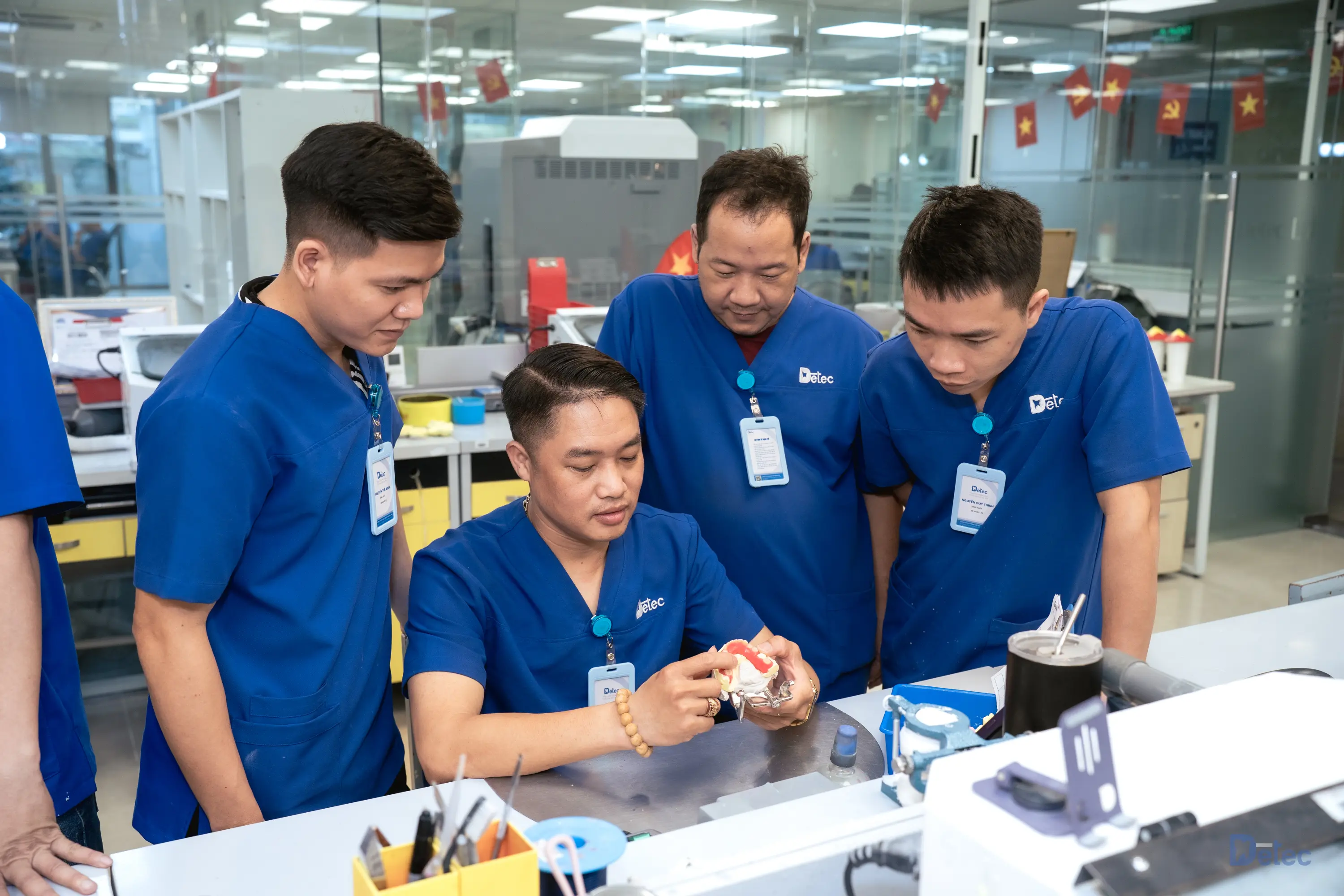
For aspiring technicians, this is also where the profession’s value becomes clear. The technician is not simply producing an object; they are translating clinical information into a precise appliance or restoration. Detec’s stated investment in digital manufacturing and technician education offers one example of why modern laboratories need both advanced equipment and a strong learning culture.
Conclusion
The answer to “is JS Dental Lab legit” should come from several kinds of evidence: an identifiable business, transparent manufacturing information, understandable product terms, consistent customer-service patterns, and a realistic assessment of whether an online appliance suits the patient. A legitimate laboratory is not automatically the right laboratory for every case. The safest decision is the one that matches the product and workflow to the patient’s clinical needs, with professional oversight whenever diagnosis, fit, or symptoms are uncertain.
Frequently Asked Questions
What makes a dental laboratory legitimate?
A legitimate laboratory should have an identifiable business presence, explain its manufacturing and support processes, use appropriate materials, and provide clear terms for orders, remakes, and refunds. Professional oversight and traceable quality procedures add further confidence.
Can a dental laboratory diagnose dental problems?
Generally, diagnosis belongs to a licensed dental professional who examines the patient and interprets clinical findings. A laboratory technician manufactures an appliance or restoration from the records and prescription provided, but should not be treated as a substitute for an examination.
Are online custom night guards safe for everyone?
No single appliance is suitable for everyone. Online ordering may be reasonable for selected, stable situations, but people with pain, tooth mobility, active disease, complex dental work, or changing bites should seek professional evaluation first.
What should a buyer check before ordering a night guard?
Check the intended use, materials, thickness options, impression instructions, manufacturing location, support process, delivery expectations, and refund or remake terms. Also consider whether your dental condition has been evaluated recently.
Are customer reviews reliable evidence of quality?
Reviews can reveal recurring comments about fit, comfort, delivery, and communication, but they describe individual experiences. They do not establish clinical suitability or prove that every customer will receive the same outcome.
Why do digital scans matter in dental manufacturing?
A digital scan can provide detailed records for design and manufacturing, but its value depends on accurate capture, complete data, appropriate design review, and quality checks. Digital tools improve a workflow; they do not replace clinical judgment.
When should someone choose a dentist-connected laboratory?
A dentist-connected laboratory is usually preferable when the case involves symptoms, complex restorations, implants, orthodontics, major bite changes, or a need for continuing adjustments. The clinical team can coordinate diagnosis, prescription, fitting, and follow-up more closely.
Explore Professional Lab Services
Dental practices and laboratories seeking a more collaborative production workflow can explore services built around trained technicians, digital manufacturing, and quality-focused case support.


