

Key Takeaways
Innovative dental laboratories connect clinical judgment, skilled technicians, and dependable digital production. For clinics and lab directors, the right partner can improve consistency while making growth easier to manage.
- Digital workflows make case submission and design approval more efficient.
- Material selection should reflect the clinical objective, not just laboratory preference.
- Documented quality systems support fit, function, aesthetics, and traceability.
- Outsourcing can add capacity without requiring every clinic to build its own facility.
- A strong laboratory partnership depends on clear communication and measurable standards.
What defines innovative dental laboratories today
Innovative dental laboratories are not defined by machinery alone. They combine technical skill with repeatable processes, thoughtful material selection, and communication that keeps the clinical team involved. The best workflows make complex cases easier to review, produce, and deliver across borders.
A useful overview of innovative dental lab services also shows why modern laboratories increasingly support clinics, dental groups, and other laboratories rather than serving only one local practice.
Combining skilled craftsmanship with digital precision
Digital design can improve consistency, but it does not replace a technician’s eye. Shade, contour, emergence profile, occlusion, and surface texture still require experience and judgment. Craftsmanship gives the restoration its human finish, while digital tools help carry the approved design through production with greater repeatability.
That balance matters particularly when a case includes aesthetic demands that cannot be reduced to a simple measurement. A good laboratory treats the digital file as a starting point for informed technical work, not as a substitute for clinical conversation.
Using CAD/CAM and 3D printing across the workflow
CAD/CAM workflows can connect scanning, design, milling, and inspection in a traceable sequence. Three-dimensional scanning and design software help technicians work from detailed digital information, while milling and 3D printing offer practical routes for producing different types of restorations and appliances.
The value comes from linking the stages together. When a design is revised, the team should be able to understand what changed, approve the next version, and manufacture from the correct file rather than relying on disconnected handoffs.
Supporting clinics and laboratories with scalable production
Scalability is about more than accepting a larger number of cases. It means having systems, trained people, equipment, and communication practices that can handle variation without allowing quality to drift. This is especially relevant to multi-location clinics and laboratories that need dependable production support during periods of higher demand.
An external partner can also provide access to specialized production capacity while the clinical team remains focused on diagnosis, treatment planning, and patient care. The arrangement works best when responsibilities and escalation paths are agreed in advance.
Balancing aesthetics, durability, and minimally invasive care
A restoration should be selected around the patient’s anatomy, function, aesthetic goals, and available tooth structure. Material conversations are therefore clinical conversations, not simply purchasing decisions. In minimally invasive aesthetic cases, preserving natural tooth structure may be central to the treatment philosophy.
For example, SmartVeneer® is described as a complete ecosystem for minimally invasive aesthetics, built around the philosophy of “Beauty Without Compromise.” Any such approach still requires careful case selection and close coordination between clinician and technician.
How digital workflows improve case collaboration
Digital collaboration reduces the distance between the clinic and the laboratory. A scan, prescription, photographs, and treatment notes can move through a shared process in which the team reviews the case before manufacturing begins. That visibility can reduce avoidable misunderstandings and make international work feel more connected.
The workflow is most useful when each step has a clear owner. Secure submission, design approval, fabrication, and tracked delivery should form one continuous chain rather than a series of isolated transactions.
Submitting STL files through secure digital channels
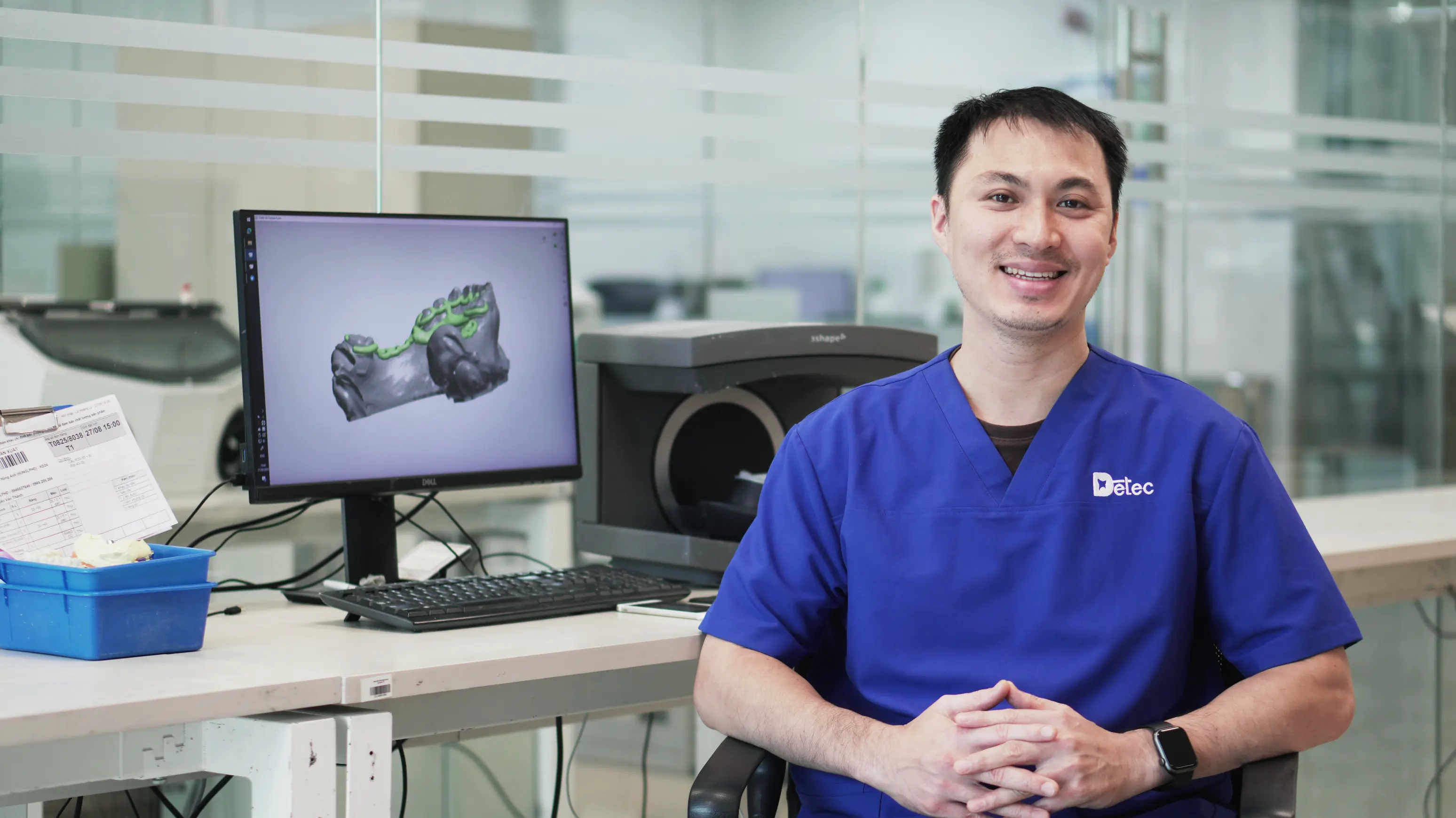
A clinic can submit its digital case file through a secure portal, allowing the laboratory to receive the STL data and supporting information in an organized way. This is more efficient than sending fragmented files through informal channels, particularly when several people are involved in a case.
The prescription should still explain the clinical intent. Digital information is precise, but it cannot independently communicate every preference about contacts, occlusion, shade, or patient expectations.
Reviewing designs before manufacturing begins
Design approval gives clinicians an opportunity to review the proposed restoration before fabrication starts. It creates a practical pause for questions about contours, space, implant emergence, or the relationship between the restoration and the treatment plan.
The review stage is also where communication earns its value. A concise comment, marked screenshot, or revised instruction can prevent a much more expensive correction later in the process.
Connecting clinicians with experienced dental technicians
A digital workflow should not make the technician invisible. Clinicians benefit when they can discuss the case with people who understand both the software and the practical demands of fabrication. That exchange is particularly helpful when the scan, photographs, and written prescription point in slightly different directions.
Experienced technicians can ask focused questions before production, helping the team resolve uncertainty while the case is still easy to change. The result is a more collaborative workflow rather than a simple file-transfer service.
Managing international communication, tracking, and delivery
International laboratory work requires dependable logistics as well as technical capability. A documented process can include secure file receipt, design approval, fabrication, shipment through trusted carriers, and tracking through delivery.
For clinics working across time zones, clear status updates matter. They make it easier to plan appointments, communicate realistic expectations to patients, and identify a delay before it affects the schedule.
Choosing materials and restorations for each clinical need
Material selection should follow the indication, preparation design, functional load, aesthetic requirements, and maintenance plan. No single restoration type is ideal for every patient or every position in the mouth. Laboratory expertise is most useful when it helps the clinician compare options without turning the decision into a one-size-fits-all recommendation.
A practical crown services guide can help teams consider material traceability, fit inspection, technician review, and the wider workflow alongside the restoration itself.
Comparing zirconia crowns and bridges
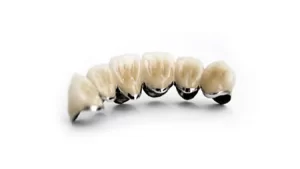
Zirconia crowns and bridges are often considered when strength, stability, and a natural appearance must be balanced. The specific design, shade strategy, preparation, occlusion, and finishing process all influence the final result, so the material name alone does not determine clinical performance.
Detec Zirconia is listed among the laboratory’s aesthetic and fixed restoration offerings. When comparing zirconia options, clinicians should ask how the laboratory manages design approval, milling, sintering, characterization, and final inspection.
Planning veneers, implant restorations, and full-arch solutions
Veneers require close attention to facial design, tooth preparation, translucency, and the patient’s expectations. Implant restorations add another layer of planning around implant position, soft-tissue contours, emergence, and the selected connection. Full-arch cases demand a coordinated view of function, phonetics, occlusion, hygiene access, and delivery planning.
Documented offerings may include E.max® veneers and crowns, custom abutments, screw-retained crowns, and All-on-X full-arch restorations. The clinical team should match the laboratory’s stated scope to the actual case rather than assuming that every laboratory handles every implant system or indication.
Integrating clear aligners and custom appliances
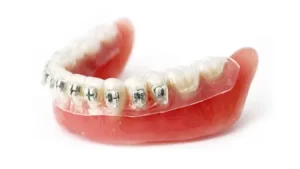
Orthodontic workflows benefit from organized digital records and a clear sequence of approvals. Clear aligners, retainers, and appliances each require accurate records, appropriate treatment instructions, and a process for reviewing the proposed movement or design before production.
Clear aligners should be discussed as part of the overall treatment plan, not as a detached manufacturing item. The laboratory and clinic need to agree on records, revisions, delivery stages, and the information patients will receive.
Evaluating 3D-printed prosthetics for speed and flexibility
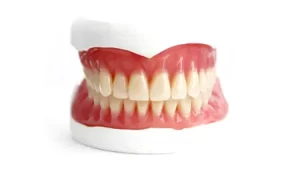
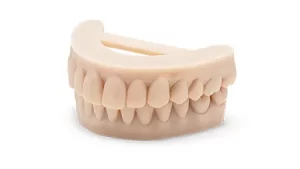
Three-dimensional printing can offer flexibility when a case involves a digital design and a production need that suits printed materials. It may support efficient prototyping or selected prosthetic workflows, but suitability depends on the material, indication, post-processing, fit requirements, and applicable quality controls.
The right question is not simply whether a laboratory owns a printer. It is whether the laboratory can explain where 3D printing belongs in its workflow and how printed work is inspected before it reaches the clinic.
How quality assurance protects clinical outcomes
Quality assurance turns good intentions into repeatable practice. It includes documented standards, trained technicians, equipment maintenance, material controls, and inspection points that are applied consistently from case receipt to dispatch. These controls protect the patient, the clinician, and the laboratory relationship.
A quality system should also make it possible to investigate an issue. When a case needs adjustment, the team should be able to review the design, instructions, production stages, and inspection findings rather than relying on memory.
Applying documented standards throughout production
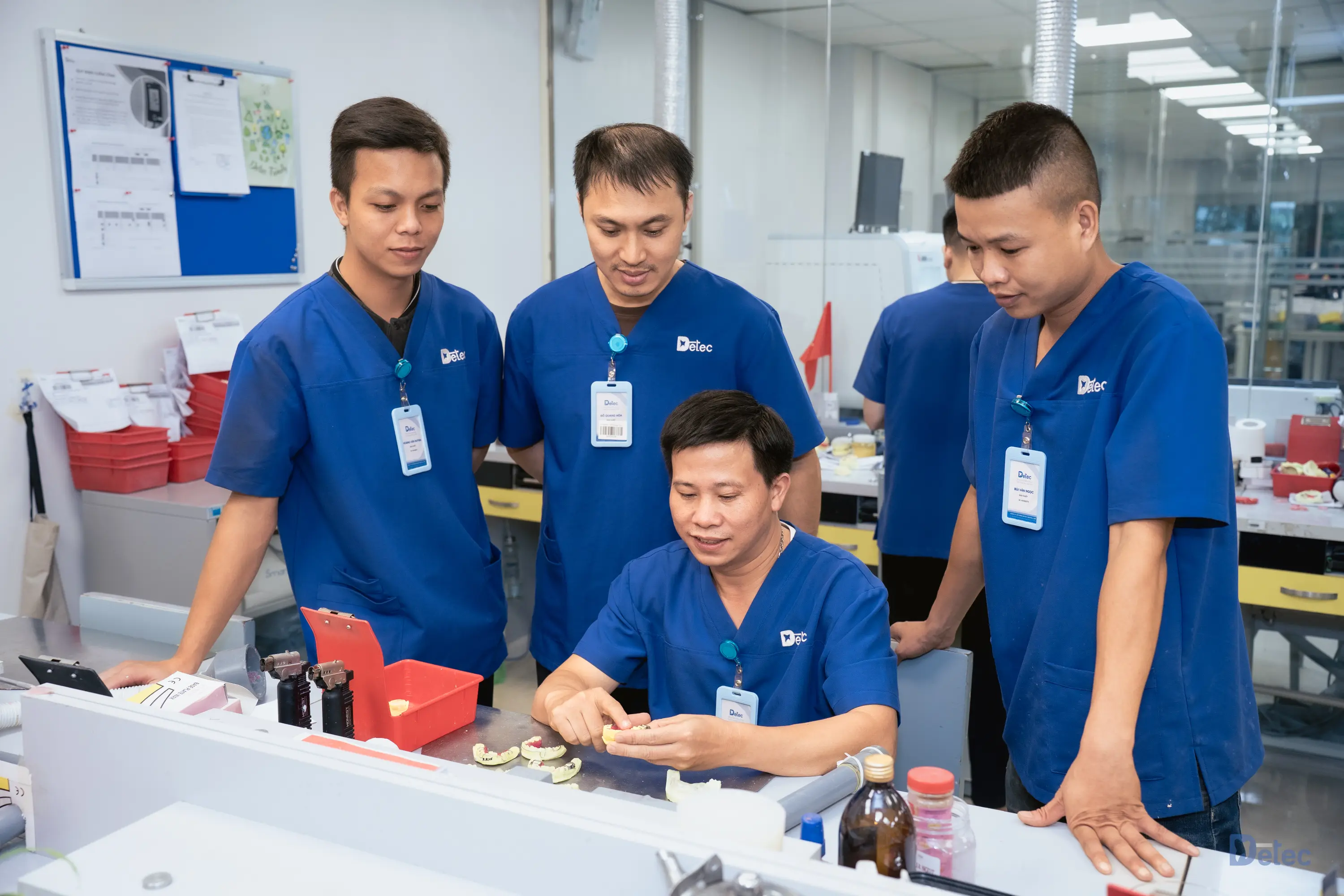
Documented standards give each stage a shared reference point. ISO 13485 and US NADL member standards are identified as quality-related partnership considerations in the source material, while digital equipment and production processes support precision when used within a controlled system.
The practical benefit is consistency. Records, checklists, and defined inspection steps help different technicians and teams work toward the same expectations, even when cases are produced for clinics in different countries.
Verifying fit, function, shade, and surface finish
Final inspection should consider the characteristics that matter in the mouth: fit, contacts, occlusion, contour, shade, anatomy, and surface finish. The exact checks vary by restoration, but each case should be reviewed against the prescription and approved design.
The following compact framework helps a clinic and laboratory discuss quality in concrete terms:
| Quality area | Review focus | Useful case evidence |
|---|---|---|
| Fit | Margins, contacts, and seating | Inspection notes and approved design |
| Function | Occlusion, anatomy, and movement | Prescription and clinical feedback |
| Aesthetics | Shade, contour, texture, and symmetry | Photographs and shade information |
| Traceability | Materials, files, and production stages | Case records and delivery documentation |
This approach keeps quality from becoming a vague promise. It gives both sides a shared language for acceptance, adjustment, and continuous improvement.
Using technician training to maintain consistent results
Technology performs best when technicians know how to interpret and check its output. Ongoing education helps teams refine digital design, material handling, finishing, and case communication. It also creates a stronger internal culture around asking questions and documenting decisions.
A dedicated training center can support that development through advanced courses and certification programs. For a laboratory director, technician development is not separate from quality assurance; it is one of its practical foundations.
Reviewing cases collaboratively when adjustments are needed
Adjustments are part of clinical work, and a productive laboratory relationship handles them without defensiveness. The team can compare the original prescription, approved design, delivered restoration, and clinical findings to determine what needs to change.
Clear feedback shortens correction cycles. Photos, measurements, occlusal observations, and a specific description of the concern are more useful than a general request to “make it better.” The learning from one case can then improve future prescriptions and approvals.
Why dental laboratory outsourcing can support business growth
Outsourcing can give a clinic or laboratory access to additional production capacity without requiring an immediate investment in every machine, software platform, and specialist role. It can be especially useful when case volume is uneven or when a team wants to expand its restorative offering gradually.
The business case should still be evaluated carefully. Price matters, but so do remakes, communication time, delivery reliability, quality systems, and the effect of restoration consistency on the patient experience.
Expanding production capacity without major capital investment
A dependable external laboratory can absorb selected workflows while the practice maintains control of diagnosis, preparation, treatment planning, and patient communication. This can free internal staff from production bottlenecks and make capacity planning less dependent on a single technician or machine.
The arrangement is strongest when the scope is explicit. Teams should define which case types will be outsourced, how digital files will be submitted, who approves designs, and what happens when a case requires clarification.
Managing costs while maintaining European-standard quality
Vietnamese manufacturing can offer cost advantages, but savings only matter when they coexist with predictable quality and service. Clinics should compare the complete cost of a restoration, including remakes, shipping, chair time, delays, and administrative effort.
European-standard expectations should be discussed in measurable terms: material documentation, inspection procedures, turnaround targets, communication response times, and delivery tracking. That makes a cost conversation more useful than a simple comparison of price lists.
Supporting multi-location clinics and dental groups
Groups with several locations need standardization without losing clinical flexibility. A shared digital submission process, common prescription templates, consistent approval steps, and centralized reporting can help each office work with the same laboratory expectations.
This is also where scalable production becomes a strategic asset. The laboratory must be able to manage varying volumes and case mixes while keeping communication understandable for each location.
Building a dependable long-term manufacturing partnership
A partnership develops through repeated cases, honest feedback, and mutual clarity. Before committing to a broad relationship, directors should assess the laboratory’s stated capabilities, quality documentation, technical communication, shipping process, and approach to corrective work.
A few resources outside dentistry even illustrate the same principle of structured vendor review, from practice growth planning to professional equipment guidance. Other industries also emphasize coordinated records through specialist referral networks, medical testimony services, and positive discipline research; these links are not dental recommendations, but they underline the value of clear scope and documented communication.
What makes Detec a strategic global laboratory partner
Detec is presented as a Vietnam-based, full-service dental laboratory built around a combination of master artistry and pioneering technology. Its source materials describe nearly 30 years of experience, fully digital laboratories, CAD/CAM milling machines, 3D scanners, and design software. For international clinics and laboratories, that combination is relevant because technical capability must be matched by service and delivery discipline.
The global dental laboratory service overview provides a broader look at the stated restoration portfolio, digital workflow, quality positioning, and technician access.
Drawing on nearly 30 years of dental manufacturing experience
The laboratory’s history begins in 1998 in Hanoi, and its materials describe nearly 30 years of work combining craftsmanship with technology. Experience is valuable when it has been converted into documented processes, trained teams, and the ability to learn from complex cases.
For a prospective partner, the useful question is how that history appears in daily work: case review, production planning, inspection, communication, and support when a clinician needs an explanation.
Combining Vietnamese manufacturing value with international service
Vietnamese heritage is described as central to the laboratory’s identity and manufacturing proposition. The business positioning pairs that heritage with competitive pricing, digital case submission, and shipment through trusted partners with tracking.
That model can suit clinics and laboratories seeking international production support, provided the service agreement clearly defines turnaround expectations, shipping responsibility, documentation, and escalation procedures.
Accessing master technicians, patented solutions, and specialized expertise
The partnership materials identify direct access to master technicians and a visionary team as an expertise benefit. They also refer to patented bonding technology and proprietary systems in the context of selected aesthetic solutions.
Those details should be matched to the case in front of the team. A laboratory’s specialized expertise is most valuable when clinicians know which documented solution applies, what information is needed, and how approval will work.
Working with a laboratory committed to ongoing innovation and training
Innovation is sustained through investment, not slogans. The source material describes a state-of-the-art digital laboratory, ongoing technician development, advanced courses, and the SmartVeneer® Certified Partner Program.
For laboratory directors, training is a meaningful indicator of long-term thinking. It suggests that the partner is working to improve both the technical workflow and the people responsible for interpreting clinical requirements.
How to build a successful partnership with an innovative dental laboratory
The strongest partnerships begin with a shared operating model. Before sending cases, clinic owners and lab directors should agree on the clinical portfolio, digital files, communication channels, approval responsibilities, turnaround expectations, and delivery process. A practical lab partner evaluation guide can help organize that conversation.
The goal is not to create unnecessary paperwork. It is to make the normal path clear so that unusual cases can receive attention instead of exposing gaps in the relationship.
Defining clinical, operational, and turnaround-time requirements
Start by listing the restorations and appliances the partner is expected to produce. Include expected monthly volume, peak periods, preferred materials, digital impression formats, prescription requirements, and the turnaround range that fits the clinic’s scheduling model.
Be equally clear about exceptions. Complex implant or full-arch cases may need additional planning, while aesthetic cases may require photographs, shade information, and design review before production.
Establishing communication standards and case approval processes
Communication standards should cover response times, file corrections, design comments, urgent cases, and the people authorized to approve production. A shared approval process prevents an unclear message from being treated as final authorization.
It also helps to decide how feedback will be recorded. Consistent notes and case references make later review easier and reduce the risk that an important instruction disappears in a long email thread.
Starting with a focused evaluation or pilot program
A pilot can test the relationship without changing every workflow at once. Choose a focused group of representative cases, define the review criteria, and give both teams enough time to evaluate communication, design approval, production quality, packaging, and delivery.
The pilot should be a genuine learning period, not a search for one perfect case. Patterns across several cases reveal more about reliability than a single successful delivery.
Measuring quality, efficiency, profitability, and patient satisfaction
After the evaluation, review results against the agreed standards. Useful measures may include remake frequency, approval time, turnaround performance, shipping incidents, chairside adjustment needs, total case cost, and feedback from clinicians and patients.
The final decision should combine data with professional judgment. If the partnership is technically strong but difficult to communicate with, or inexpensive but inconsistent, the review should identify the specific change required before the relationship expands.
Conclusion
Innovative dental laboratories are transforming global dental care by bringing together skilled craftsmanship, digital CAD/CAM workflows, material knowledge, quality assurance, and reliable collaboration. For clinics and laboratory directors, the right outsourcing partner can provide precision and scalable support without removing clinical oversight. To discuss a case or request a quote, contact Detec through detecdental.com.
Frequently Asked Questions
What makes a dental laboratory innovative?
An innovative laboratory combines skilled technicians with digital design, CAD/CAM production, appropriate 3D printing, documented quality processes, and responsive case collaboration. Innovation is demonstrated through repeatable work, not technology alone.
How does a digital dental laboratory receive cases?
Many digital laboratories receive intraoral scan data and related case information through secure digital channels. The submission normally includes the prescription, clinical notes, photographs, and any details needed for design and production.
Why is design approval useful before manufacturing?
Design approval allows the clinical team to review contours, occlusion, contacts, emergence, and aesthetics before fabrication. Resolving questions at this stage can reduce avoidable remakes and chairside adjustments.
How should clinicians choose between zirconia and other materials?
The decision should consider the restoration’s location, functional load, preparation, aesthetic goals, available space, and maintenance needs. Material selection is best made collaboratively with the clinician and laboratory technician.
Can outsourcing help a growing dental practice?
Outsourcing can add production capacity and access to specialized skills without requiring a practice to purchase every machine or hire every specialist internally. The benefit depends on dependable quality, communication, turnaround, and delivery.
What quality standards should a dental laboratory document?
A laboratory should be able to explain its quality system, inspection steps, material controls, technician training, case records, and corrective-action process. Relevant standards may also depend on the markets and device categories it serves.
What should a clinic measure during a laboratory pilot?
A clinic can track fit, remake rates, approval time, turnaround, delivery reliability, total cost, adjustment needs, clinician experience, and patient feedback. Reviewing several representative cases gives a more useful picture than judging one restoration alone.


