

Key Takeaways
Choosing a quality dental lab is a clinical, operational, and commercial decision—not simply a search for the lowest price.
- Match the lab’s capabilities to your actual restoration mix and case volume.
- Examine its digital workflow, design approvals, materials, and quality controls.
- Confirm communication, shipping, documentation, and support before scaling.
- Compare total outsourcing value, including remakes, delays, and internal capacity.
- Start with a pilot case and measure the partnership over time.
Define what your practice needs from a quality dental lab
The right laboratory should fit the way your practice treats patients, submits cases, and plans for growth. A clinic focused on single-unit restorative work may need a different service model from a multi-location group managing implants, full-arch cases, and orthodontics. Before comparing vendors, define what success looks like clinically and operationally. A useful dental tech lab evaluation can help organize those requirements without reducing the decision to price alone.
Match lab capabilities to your restoration portfolio
Begin with the work you already perform and the work you expect to add. Review whether a candidate can support crowns, bridges, veneers, implant solutions, full-arch restorations, clear aligners, retainers, and other appliances relevant to your treatment plans. Ask how custom and complex cases are handled, including who reviews the prescription and what information technicians need before production.
A broad portfolio can simplify vendor management, but breadth only matters when the lab has repeatable processes for each category. Look for evidence that material selection, design communication, and finishing standards are adapted to the restoration rather than handled through a one-size-fits-all process.
Assess case volume, turnaround expectations, and scalability
Turnaround should be discussed in relation to case type, not quoted as one universal number. Ask how routine crowns differ from implant or full-arch work, what happens during peak periods, and whether urgent cases follow a defined process. Your lab should also explain how it protects consistency when volume increases.
For a growing group practice, scalability means more than adding production capacity. It includes consistent prescriptions, repeatable approvals, predictable shipping, and a clear escalation path when several locations submit cases at once.
Determine whether digital case submission fits your workflow
A digital workflow can reduce friction when clinicians and technicians share complete, well-organized case information. Confirm which file formats and scanner connections are accepted, how files are named, where prescriptions and photographs are stored, and how the team is notified when a case needs clarification. Secure STL submission is especially useful when cases move across borders.
The lab’s process should be easy for clinicians to learn and easy for administrators to audit. A short test with real case files often reveals more than a technology list because it shows how the workflow behaves in daily use.
Align service expectations across clinics, locations, and teams
Multi-site practices need a common operating model. Agree on prescription fields, shade communication, approval authority, remake handling, and the person responsible for resolving an incomplete submission. These details prevent one location from receiving a different service experience from another.
Create a simple written service brief before onboarding. It should record turnaround targets, contact channels, shipping expectations, and the clinical information required for each major restoration category.
Evaluate the lab’s technology and production workflow
Technology matters when it improves repeatability, visibility, and clinical control. A modern laboratory should be able to explain how scanning, design, milling, printing, finishing, and inspection connect rather than presenting each machine as an isolated asset. When reviewing a digital case workflow, focus on the handoffs between people and systems. Those handoffs often determine whether digital precision reaches the final restoration.
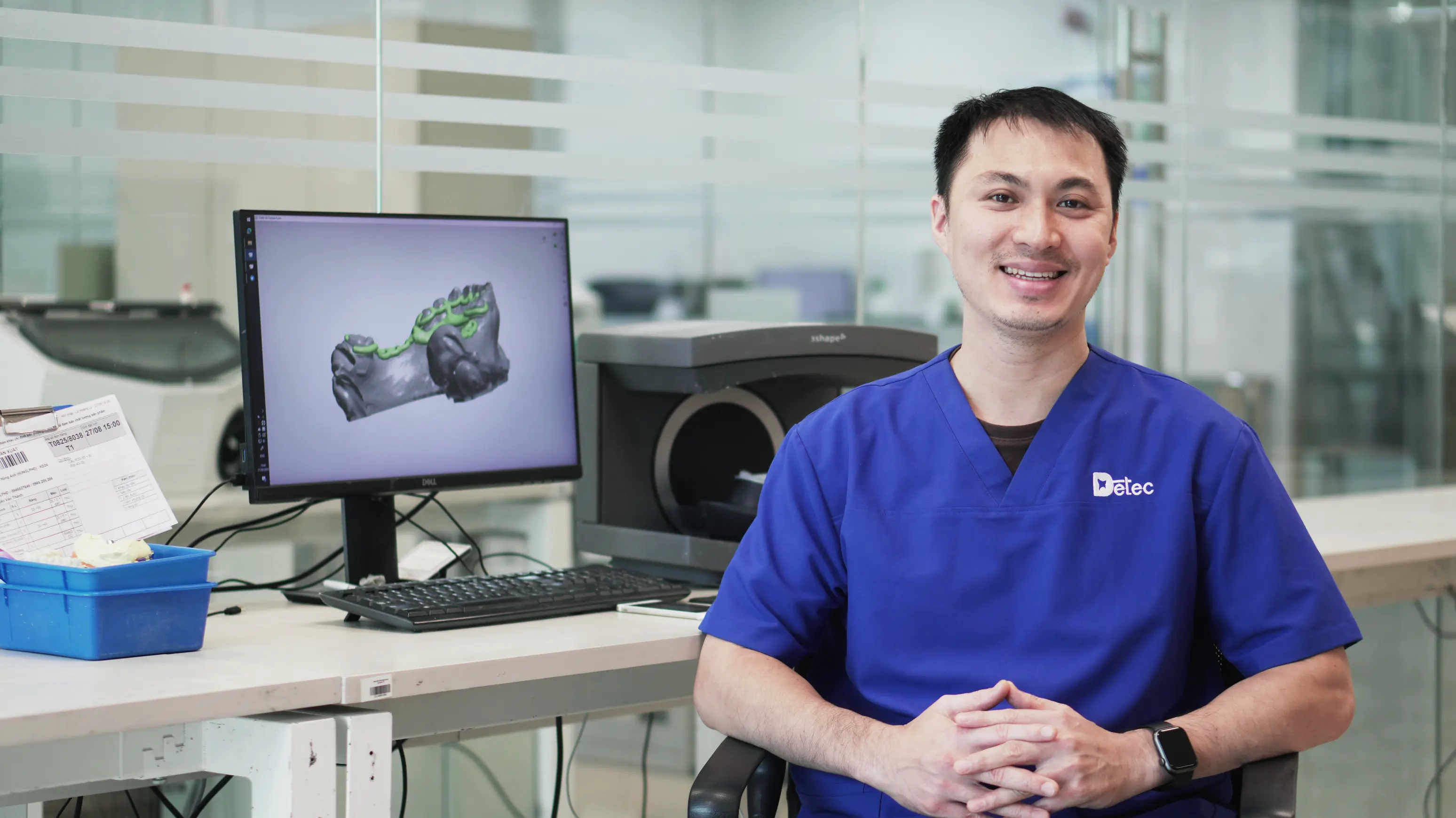
Review CAD/CAM systems, 3D scanning, and milling equipment
Ask which CAD/CAM platforms, 3D scanners, milling machines, and design software are used for the cases you send. The answer should be specific enough to explain how your files are received, designed, checked, and fabricated. It is also reasonable to ask how equipment is maintained and how production continues when a machine requires service.
Detec describes its facilities as fully digital and identifies CAD/CAM milling machines, 3D scanners, and design software as core technology used for precision. For a prospective partner, the larger lesson is to connect equipment to a documented workflow, not simply to count machines.
Understand how STL files move from submission to fabrication
A dependable process makes each stage visible. The team should be able to show how a secure portal receives the digital case file, how experts prepare a design for approval, and how the approved file moves into fabrication. Clear file status, revision history, and approval records reduce uncertainty for both the dentist and the technician.
Ask for a walkthrough using a representative STL file. You should leave knowing who checks the scan, who contacts the clinic, when approval is required, and what happens if the file or margin information is insufficient.
Examine the role of 3D printing in modern prosthetics
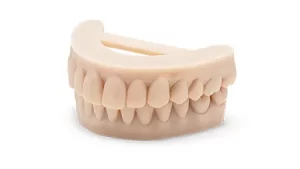
3D printing can support selected prosthetic and appliance workflows, but its value depends on material validation, printer control, post-processing, and inspection. Ask which types of work are printed, how printed components are finished, and which checkpoints confirm dimensional accuracy. The lab should distinguish clearly between printed elements and milled or conventionally fabricated restorations.
A credible discussion will also cover traceability. Production records, material information, and post-processing instructions help the clinical team understand what it is receiving and how the result was controlled.
Confirm design review and approval procedures
Design approval is a practical safeguard, particularly for cases where occlusion, emergence profile, contacts, or esthetics require close collaboration. Clarify whether the dentist receives a digital design, how comments are recorded, and how revisions are authorized before manufacturing begins.
The approval process should protect clinical judgment without creating unnecessary delays. A good laboratory makes the review easy to understand and keeps the final approved version identifiable.
Verify restoration quality and clinical consistency
A quality dental lab earns trust through consistent clinical results, not through attractive equipment alone. Review how the lab selects materials, manages shade information, checks fit, and handles remakes. Ask for examples of its quality documentation and discuss how feedback from your clinicians becomes a process improvement. The quality assurance principles used by a laboratory should be visible in everyday case handling.
Compare materials for crowns, bridges, veneers, and implants
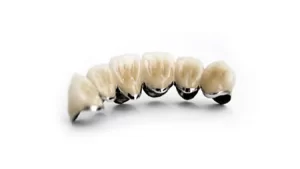
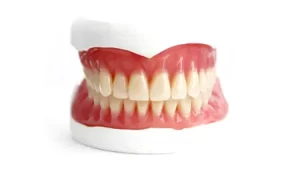
Material selection should follow the indication, design, functional demands, and esthetic expectations of the case. Discuss the available options for zirconia crowns and bridges, E.max veneers and crowns, PFM, custom abutments, screw-retained crowns, and All-on-X full-arch restorations. The lab should explain what information it needs from the clinician before recommending or using a material.
Do not judge materials by brand familiarity alone. Compare documented indications, preparation requirements, finishing protocols, and the laboratory’s experience with the material in cases similar to yours.
Assess fit, function, esthetics, and shade accuracy
Clinical consistency includes marginal adaptation, proximal contacts, occlusion, contour, surface texture, and shade communication. Ask how photographs, shade tabs, preparation scans, and clinical notes are used together. For esthetic cases, clarify who reviews the design and how the lab manages changes requested after try-in.
Clear acceptance criteria make conversations more useful. Instead of saying that a case should look natural, agree on the specific clinical and esthetic details your team will inspect before seating.
Review quality assurance checkpoints throughout production
Quality assurance should not be a single inspection at the end of production. Ask where checks occur during design, milling or printing, sintering, finishing, and final release. A written remake policy is also important, but it should complement—not replace—an effort to identify why a problem occurred.
Use a compact review framework when comparing laboratories:
- Prescription and scan completeness before design
- Digital design review before fabrication
- Material and production traceability
- Final inspection of fit, contacts, occlusion, and shade
This sequence gives your team a shared vocabulary for discussing quality. It also makes it easier to compare performance across restoration types and clinics.
Look for relevant certifications and industry standards
Ask which quality systems and professional memberships apply to the laboratory’s operations, and request current documentation where appropriate. Standards are most meaningful when they support documented procedures, training, traceability, and corrective action. For international clinics, confirm that the lab understands the regulatory and shipping requirements relevant to the destination market.
Detec identifies ISO 13485 and US NADL member standards among its quality signals. Whatever laboratory you assess, verify the scope of the stated standard rather than treating a logo or general claim as proof of every capability.
Examine the lab’s product and service capabilities
Product range should support your treatment planning without encouraging unnecessary complexity. Compare the laboratory’s restorative, implant, and orthodontic services with the cases your clinicians actually prescribe. A global lab partnership is most useful when the partner can combine product breadth with dependable case communication and production discipline.
Explore zirconia crowns, bridges, and implant solutions
Review how the lab handles zirconia crowns and bridges alongside implant solutions such as custom abutments and screw-retained crowns. Ask about the prescription details needed for implant cases, the design approval stage, and how the team manages implant system information. Full-arch work deserves a separate conversation about records, verification, provisional planning, and communication.
Detec lists zirconia crowns and bridges, implant solutions, custom abutments, screw-retained crowns, and All-on-X full-arch restorations in its service portfolio. Keep the discussion tied to the cases your practice is prepared to document and approve carefully.
Consider veneers, full-arch restorations, and SmartVeneer®
Veneers and full-arch restorations require close attention to design intent, tooth preparation, occlusion, and patient expectations. Ask how the lab supports mock-ups, digital design review, and revisions before fabrication. A named solution should be evaluated by its documented workflow and training requirements, not just by its marketing language.
SmartVeneer® is described as a complete ecosystem for minimally invasive aesthetics, and the associated training material includes a SmartVeneer® Certified Partner Program. If this type of work is relevant to your practice, ask what certification, case documentation, and communication are expected.
Evaluate clear aligners, retainers, and orthodontic appliances
Orthodontic services should be assessed separately from fixed restorative work. Ask what digital records are required, how treatment designs are reviewed, and how retainers or appliances are prescribed and adjusted. Clear ownership of the clinical plan is essential, especially when a case involves several stages.
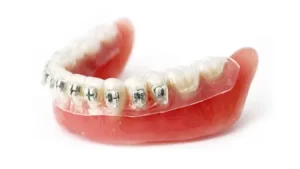
Detec’s listed orthodontic services include advanced clear aligners featuring its Smartalign partnership, along with custom retainers and appliances. Confirm that the laboratory’s workflow fits your clinicians’ preferred review and delivery process.
Confirm support for custom and complex cases
Complex cases need access to people who can interpret the prescription, identify missing information, and suggest practical next steps. Ask whether the lab can review unusual preparations, implant records, combined restorative and orthodontic needs, or cases involving several providers. The answer should describe a process, not merely promise flexibility.
Request a sample case protocol for the most demanding category you expect to send. This helps reveal whether consultation, design approval, production, and shipping remain coordinated when the case has more variables.
Assess communication, collaboration, and case support
Even excellent technical work can become difficult if communication is slow or fragmented. Establish how clinicians reach technicians, how urgent questions are handled, and which information is recorded in the case file. For international work, logistics and documentation deserve the same attention as design quality. A crown outsourcing guide can provide useful context, but your own service agreement should reflect your actual cases.
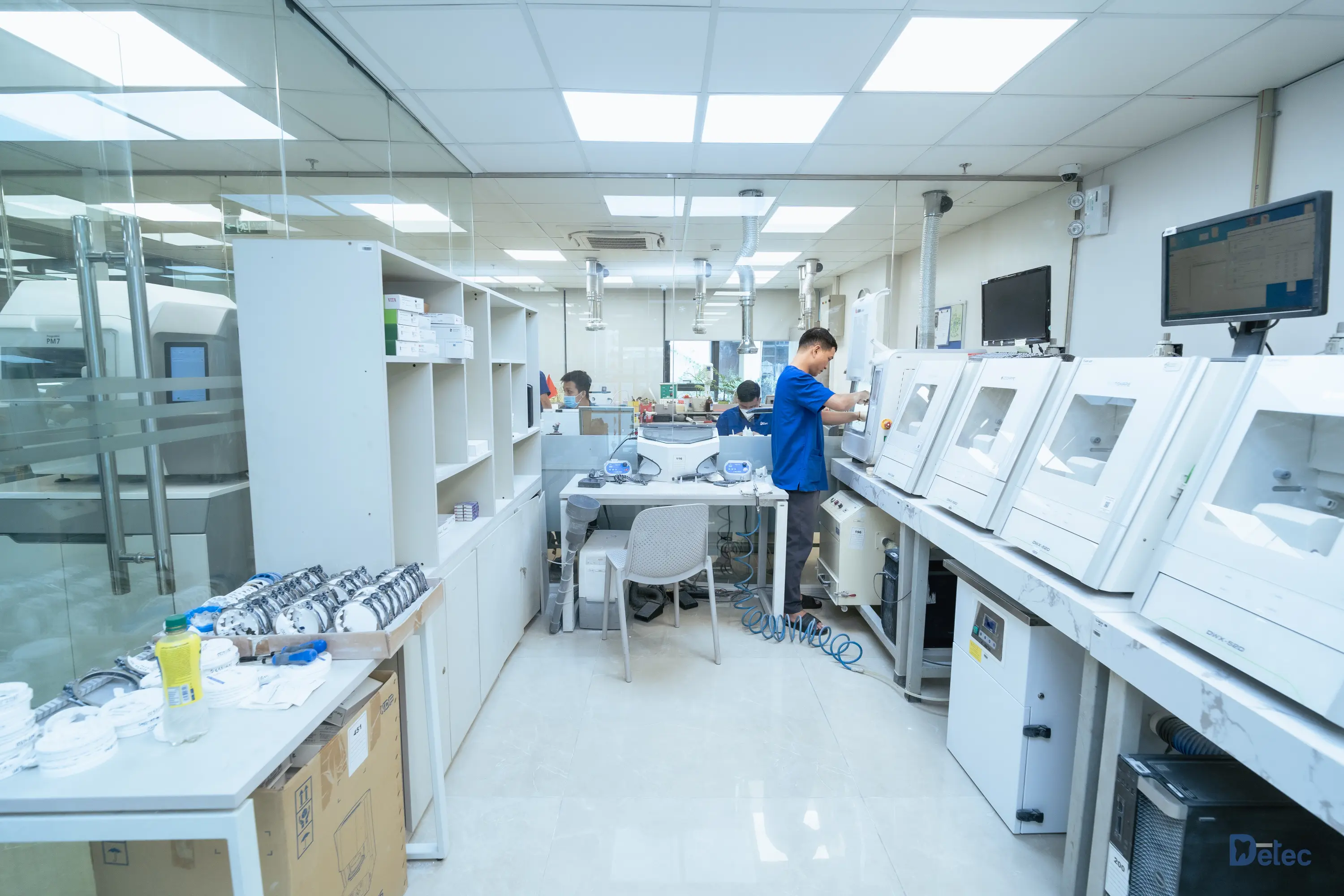
Establish direct access to experienced technicians
Ask whether your clinicians can speak directly with experienced technicians when a case needs discussion. Direct access can shorten clarification cycles and help both sides understand preferences around contour, contacts, occlusion, and esthetics. Define normal response times and identify an escalation contact for cases that cannot wait.
The goal is not constant informal messaging. It is a dependable route to informed answers when a prescription, scan, or design decision needs professional discussion.
Clarify case consultation and revision processes
Before sending a case, find out how consultations are requested and how design revisions are recorded. Ask whether a revision affects the promised turnaround and whether the clinician receives an updated approval record. These details matter when several people work on the same patient or when a group practice has centralized review.
A dental crown service guide is helpful as a general planning resource, while a laboratory’s own protocol should explain exactly how your team submits comments and confirms the final design.
Review shipping, tracking, and international logistics
International outsourcing requires a clear chain of custody from fabrication to delivery. Confirm the shipping partners used, how tracking is shared, what documents accompany the shipment, and how delays or customs questions are handled. Packaging should protect the restoration and make the case easy to identify on arrival.
Detec describes shipping through trusted partners such as DHL and FedEx with tracking. Ask how that tracking is connected to the case record so your front desk can provide a useful update without chasing several contacts.
Set expectations for service responsiveness and documentation
Write down response-time targets, required case documents, remake procedures, and the format of invoices or packing slips. Consistent documentation helps clinics compare cases, train new staff, and identify recurring sources of delay. It also gives lab directors a fair basis for evaluating service rather than relying on anecdotes.
When a problem occurs, focus first on restoring the patient schedule and then on documenting the cause. That habit supports a calmer, more collaborative relationship.
Compare the business value of dental lab outsourcing
Outsourcing should be evaluated as a total operating decision. The quoted restoration price is only one input; internal labor, equipment investment, storage, remakes, shipping, delays, and administrative time also affect the result. A practical outsourcing value guide can frame the conversation, but each clinic should model its own case mix and capacity.
Calculate costs beyond the quoted restoration price
Build a simple cost model for representative cases. Include clinician and staff time, scanning and file preparation, shipping, remake handling, chair-time consequences, and the cost of maintaining in-house production capacity. Compare the complete cost of sending the case out with the complete cost of producing it internally.
The most useful comparison is not the cheapest line item. It is the option that provides predictable clinical quality and a manageable total cost over several months.
Evaluate how competitive pricing affects profitability
Competitive pricing can improve profitability when quality and turnaround remain stable. It should not be treated as a reason to reduce clinical review or choose materials without regard to indication. Discuss volume pricing, payment terms, shipping charges, and how revisions are handled before calculating expected margin.
For owners and lab directors, the key is transparency. A clear price structure makes it easier to plan treatment fees, forecast production, and explain the business case to partners.
Balance production capacity with quality and turnaround
A partner may expand capacity, but only if the additional volume does not create more remakes or communication delays. Review production limits, staffing, peak-period planning, and the laboratory’s approach to prioritizing cases. A reliable partner will be candid about what it can handle consistently.
Track capacity alongside outcomes. Faster output is not an advantage if it increases adjustments, patient visits, or chair-side corrections.
Consider the advantages of a global manufacturing partner
A global partner can give clinics access to specialized production, digital submission, and manufacturing capacity without requiring every investment in-house. Vietnam-based manufacturing may also offer competitive production economics, but the decision must include quality systems, export experience, shipping visibility, and communication across time zones.
Detec positions its Vietnam operations around international dental laboratory service, digital production, and competitive pricing. As with any overseas partner, validate the operational details through a pilot rather than assuming that geographic reach alone guarantees reliability.
For broader procurement perspective, teams may also encounter unrelated precision-sourcing topics such as cartridge quality guidance, healthcare technology considerations, or contractor payment platform criteria. These are not substitutes for dental due diligence, but they reinforce the value of checking compliance, workflow fit, and support before committing.
Confirm the lab’s experience, training, and trust signals
Trust signals should answer practical questions: Has the laboratory managed similar cases? Does it train technicians continuously? Can it show a stable quality system? Does it have the operational maturity to support your locations and volume? Review trusted dental lab services for a useful benchmark, then ask each prospective partner for evidence that applies to your needs.
Review years of experience and international reach
Experience matters most when it is relevant to your restoration mix and delivery model. Ask how long the lab has operated, which markets it serves, and how it manages international case flow. Longevity should be considered alongside current equipment, staffing, and quality procedures.
Detec describes a history of nearly 30 years and a global mission from Vietnam. If international export is central to your plan, ask how the laboratory supports tracking, documentation, and communication from submission through delivery.
Investigate technician training and professional development
Technician skill is part of the production system, particularly for cases where digital design still requires clinical judgment and careful finishing. Ask how technicians are trained, how new equipment or materials are introduced, and how advanced skills are assessed. A dedicated training structure is stronger evidence than a generic statement about experience.
Detec identifies a Training Center that offers advanced courses and includes an exclusive SmartVeneer® Certified Partner Program. Practices considering advanced aesthetic workflows should ask how training translates into case review and clinician support.
Look for patents, partnerships, and recognized memberships
Patents and partnerships can be useful trust signals when their scope is clearly explained. Ask what the intellectual property or partnership relates to, whether it affects the case type you plan to send, and which professional memberships or quality standards are current. Avoid treating a long list of logos as a substitute for technical answers.
The strongest evidence connects recognition to an operating practice: documented training, controlled production, clear communication, or a verifiable quality system.
Assess whether the lab has experience with similar practices
A laboratory accustomed to your practice model will understand the difference between a single-site clinic, a dental group, and a laboratory that outsources selected production. Ask for an onboarding conversation focused on your case mix, approval chain, file sources, and expected growth. References may help, but your own pilot cases will provide more relevant evidence.
You can also use precision dental solutions as a starting point for a quote discussion, provided the conversation moves quickly from general capability to your actual clinical requirements.
Build a reliable long-term partnership
The best laboratory relationships are built through shared procedures and measured learning. Begin with a manageable case set, agree on what will be reviewed, and give both teams time to adjust. A partnership should become easier as preferences, file standards, and escalation routes become familiar. That is how quality becomes repeatable rather than dependent on one exceptional case.
Start with a structured trial case or pilot program
Choose pilot cases that represent routine work and, if appropriate, one moderately complex indication. Define the information that will be submitted, the expected approval process, the delivery target, and the criteria for acceptance. Review the result with the clinician, assistant, and operations lead rather than relying on one opinion.
A pilot should test the whole experience: file submission, communication, design, fabrication, packaging, delivery, and post-delivery support.
Create shared protocols for digital files and approvals
Document scanner settings, file naming, prescription requirements, photographs, shade information, and approval responsibilities. Keep the protocol short enough to use in practice, then update it when a recurring issue appears. Shared standards reduce avoidable clarification and make onboarding new team members simpler.
The laboratory should maintain its own version of the protocol and confirm changes before they affect production. Small agreements made early can prevent large delays later.
Track KPIs for quality, turnaround, and communication
Choose a small group of measures that both sides can understand. Useful indicators include remake rate, first-pass acceptance, turnaround by case type, response time, shipping reliability, and the number of cases delayed by incomplete information. Review trends rather than reacting to one isolated case.
A simple scorecard keeps the partnership accountable without turning clinical collaboration into a purely numerical exercise. Pair each metric with a discussion of what caused the result and what should change.
Use regular feedback to improve outcomes over time
Schedule periodic reviews with the people who prescribe, design, coordinate, and receive the work. Share photographs or case notes when clinically appropriate, identify patterns, and agree on one or two improvements for the next review period. Feedback is most effective when it is specific, timely, and directed toward a process rather than a person.
With that rhythm in place, the laboratory becomes an extension of the practice’s workflow. The relationship can then scale with greater confidence while keeping clinical standards visible.
A Practical Next Step
If your clinic or laboratory is evaluating a digital outsourcing partner, contact Detec through detecdental.com to discuss your case mix, workflow, and requirements, then request a tailored quote.
Conclusion
Choosing a quality dental lab means evaluating the complete relationship: clinical capability, digital production, material control, communication, shipping, economics, and long-term accountability. A structured pilot and a shared scorecard will reveal whether a laboratory can deliver precision and scalability in your real workflow, not just in a presentation. The right partner should make excellent clinical work easier to repeat as your practice grows.
Frequently Asked Questions
What is the most important factor when choosing a quality dental lab?
The most important factor is consistent performance across the restoration types your practice actually provides. Evaluate clinical quality, communication, turnaround, and support together rather than selecting on price alone.
How can a clinic compare dental lab turnaround times fairly?
Compare turnaround by case category and include design approvals, shipping, revisions, and remakes. A laboratory should explain how it handles urgent cases and peak-volume periods.
Why does a digital dental lab workflow matter?
A digital workflow can make file submission, design review, approvals, and case tracking more organized. Its value depends on secure handling, clear responsibilities, and a process that clinicians can use consistently.
What quality standards should a dental practice review?
Review the laboratory’s applicable quality certifications, documented inspection procedures, traceability, technician training, and remake process. Confirm the scope and current status of any stated certification or membership.
Should a practice choose a full-service dental lab?
A full-service lab can simplify vendor management when its capabilities match the practice’s needs. Confirm that breadth is supported by reliable processes and relevant experience in each case category.
What should a pilot case with a new lab include?
A pilot should include representative case files, defined acceptance criteria, design approval, delivery expectations, shipping tracking, and a post-case review. Testing the entire workflow is more informative than reviewing the finished restoration alone.
How should a clinic measure an ongoing lab partnership?
Track first-pass acceptance, remake rate, turnaround by case type, response times, shipping reliability, and delays caused by incomplete prescriptions. Review the trends regularly and use them to agree on practical improvements.


